
Real Technicians. Real Control Panels. Real Results.
Controls training isn't just about learning ladder logic. It's about changing your career trajectory. See how maintenance techs and control engineers build total plant-floor independence, command higher earnings, and step up at the PLC Lab in Roanoke, VA.
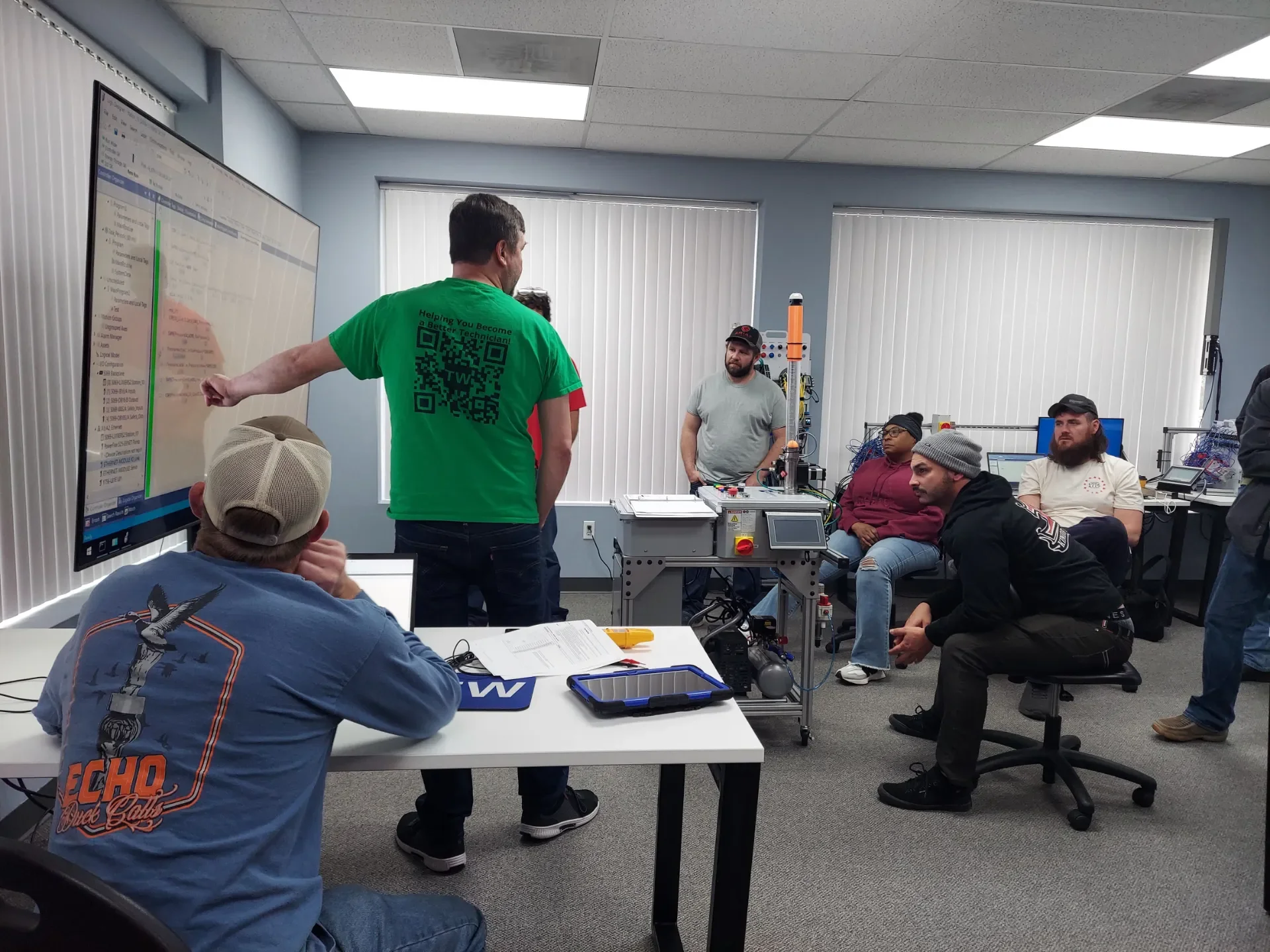
Shifting mindset from 'parts swapper' to methodical controls troubleshooter before touching hardware.
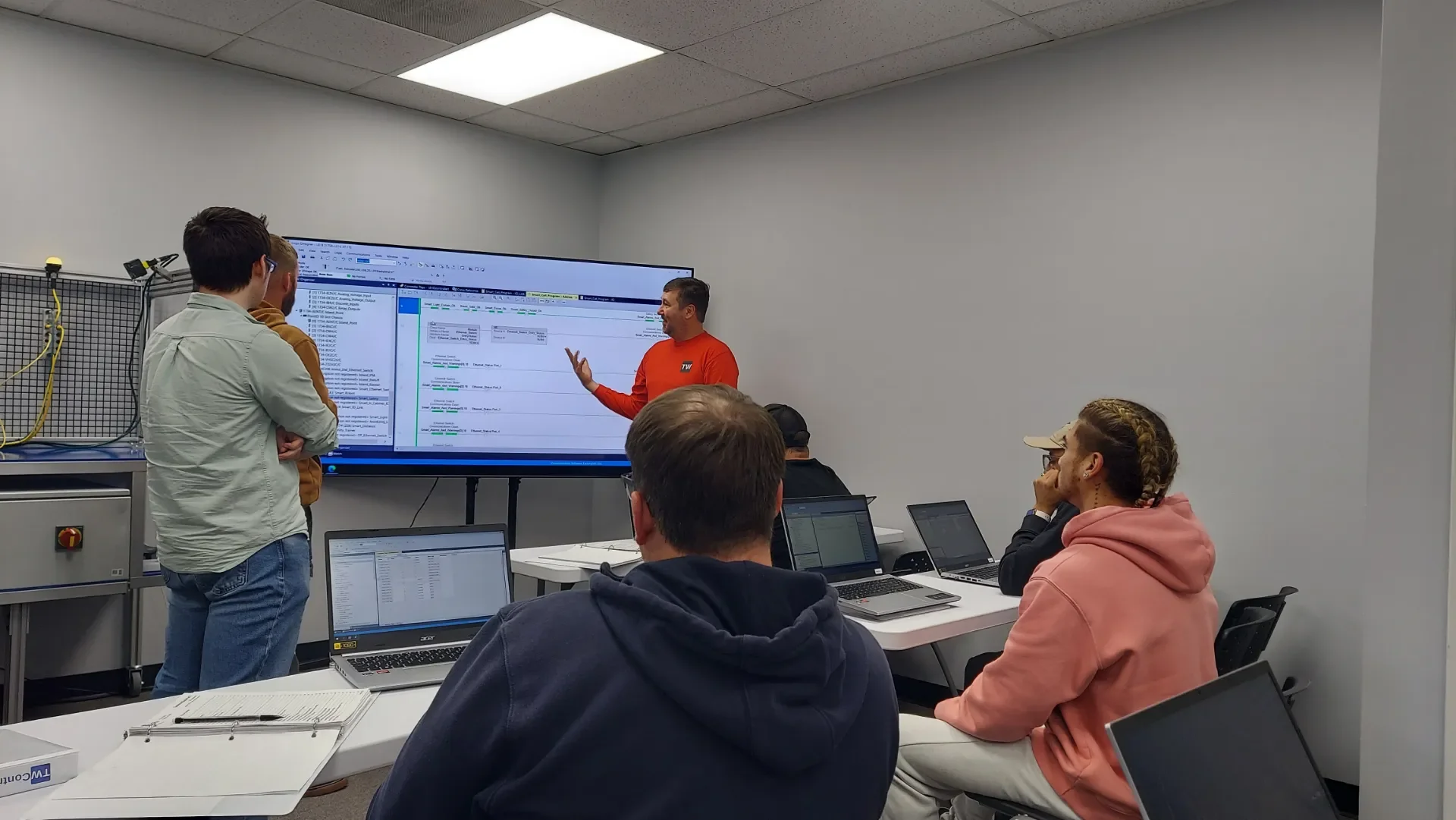
Connecting logic execution directly to physical terminal blocks—no theoretical fluff.
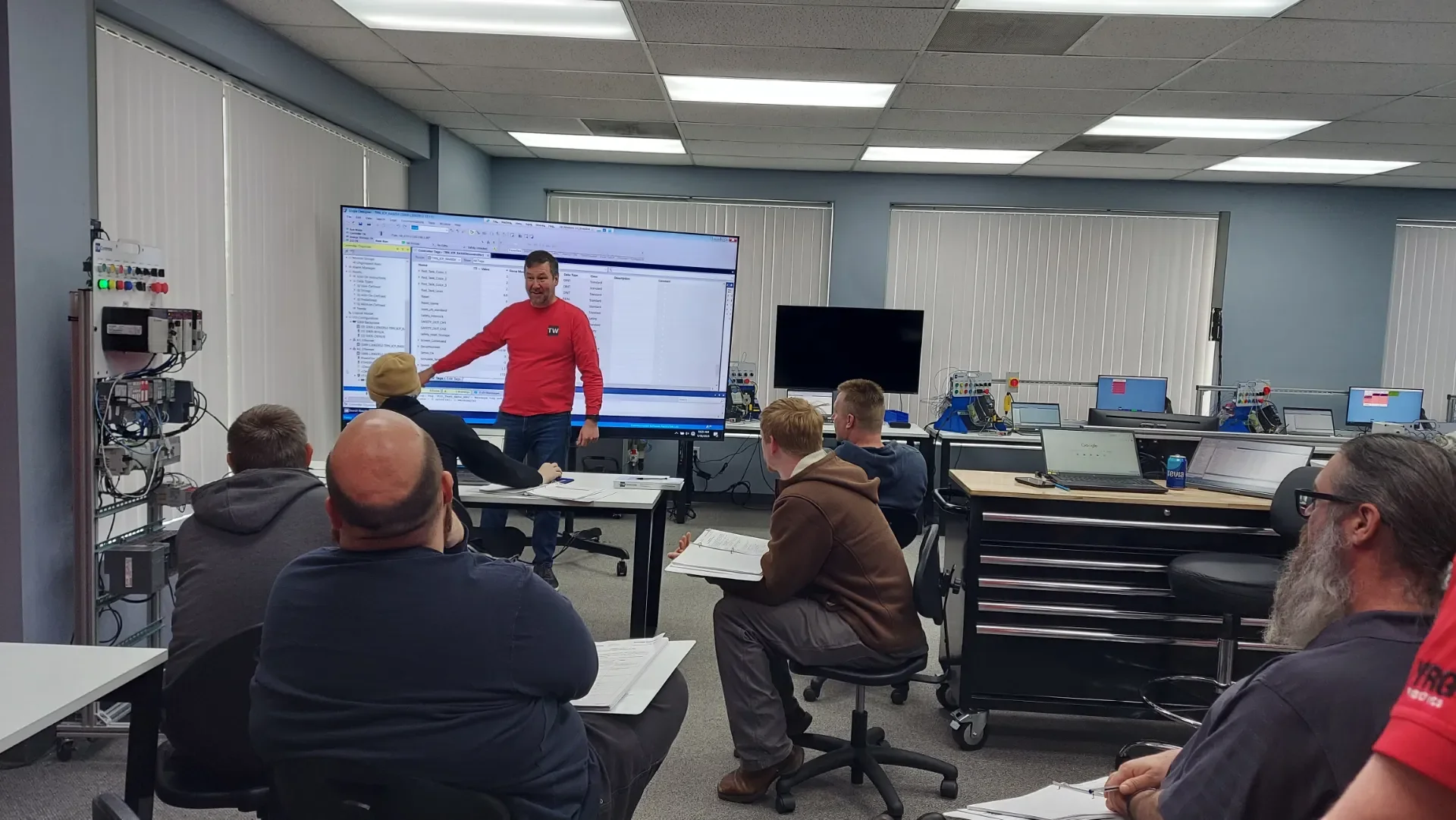
Eliminating off-shift panic by mastering live circuit isolation on physical trainer rigs.
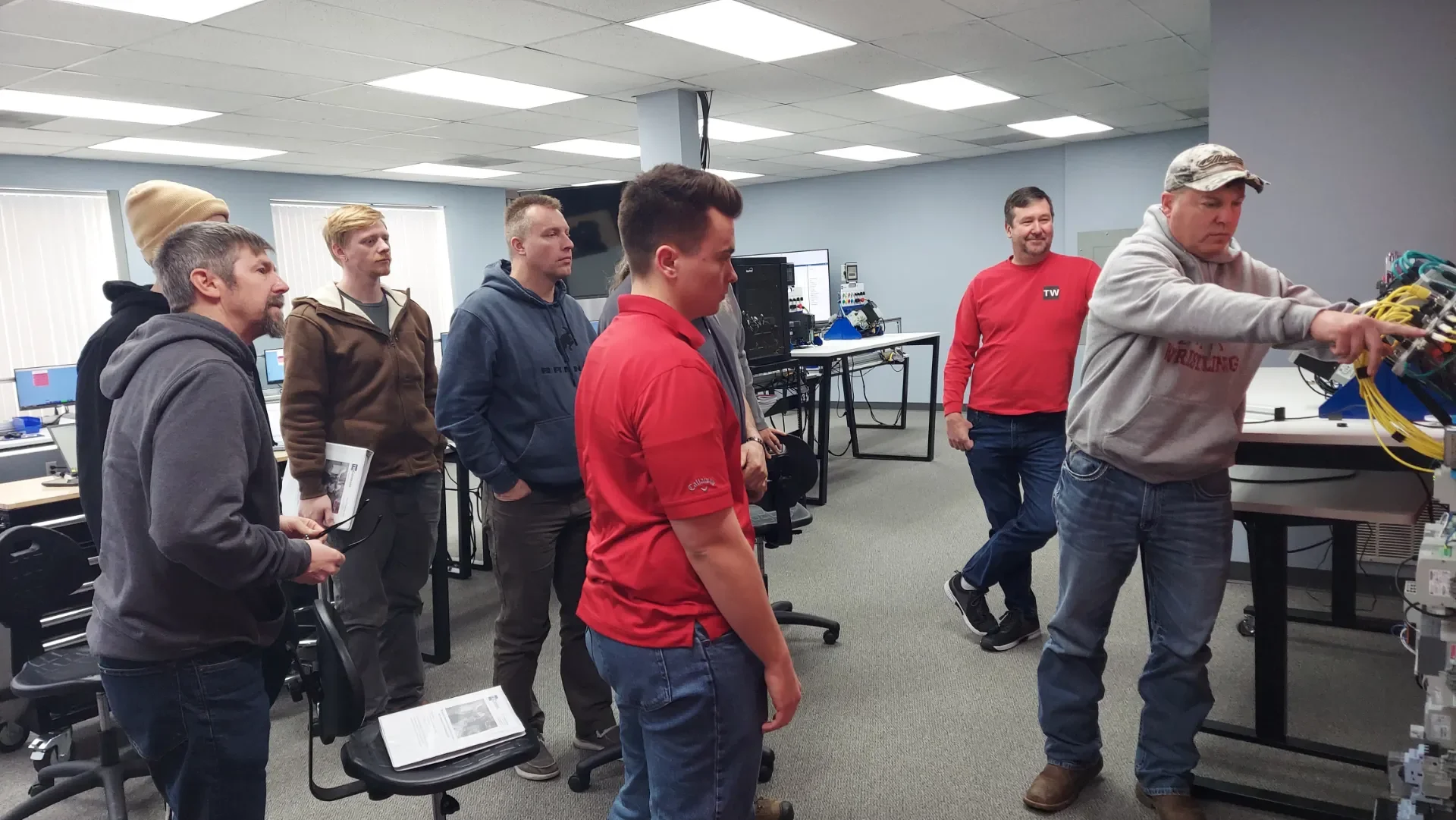
Building the exact muscle memory needed to clear line-down emergencies under pressure.
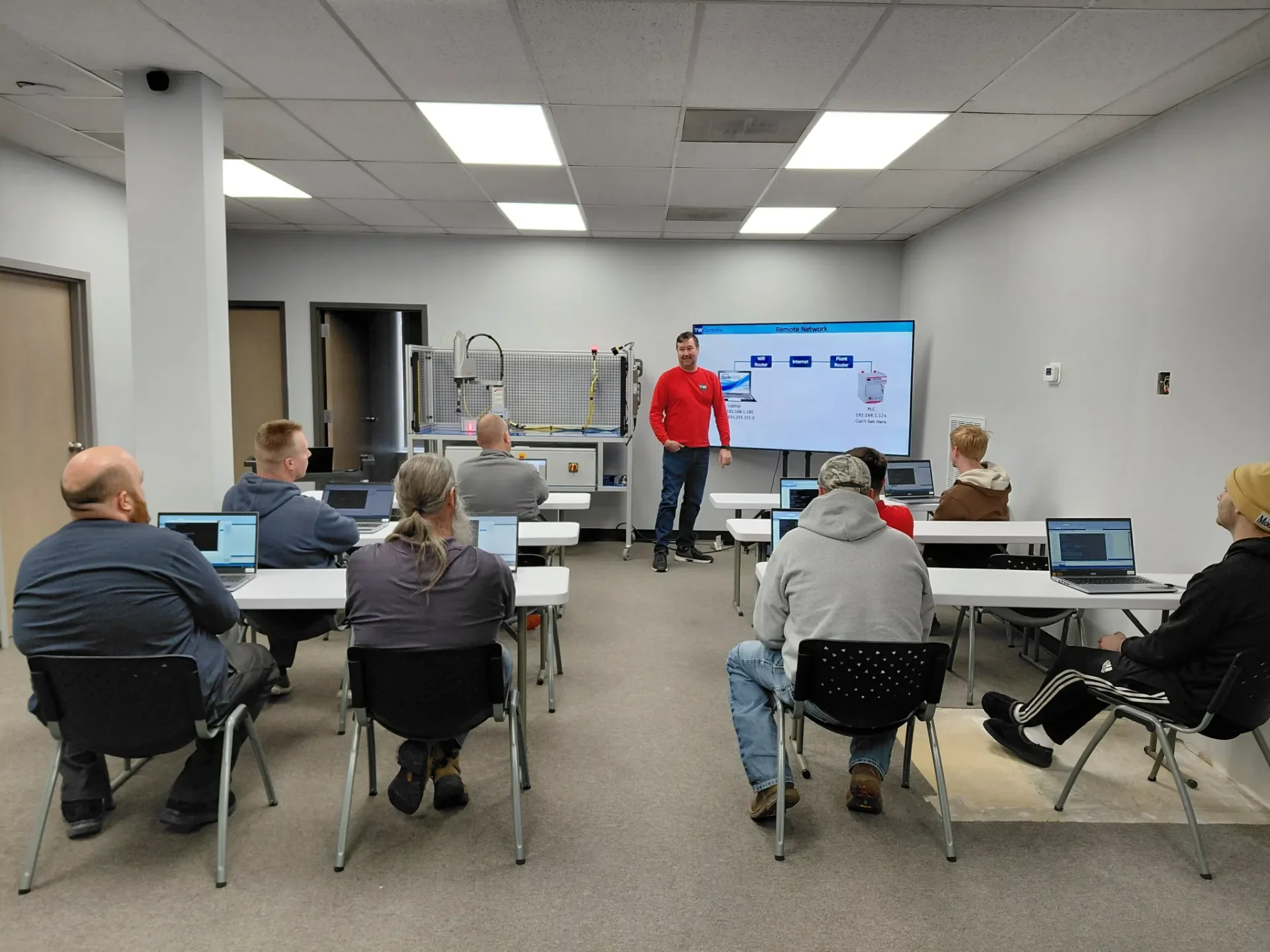
Deconstructing machine sequences to verify sensor feedback before swapping expensive components.
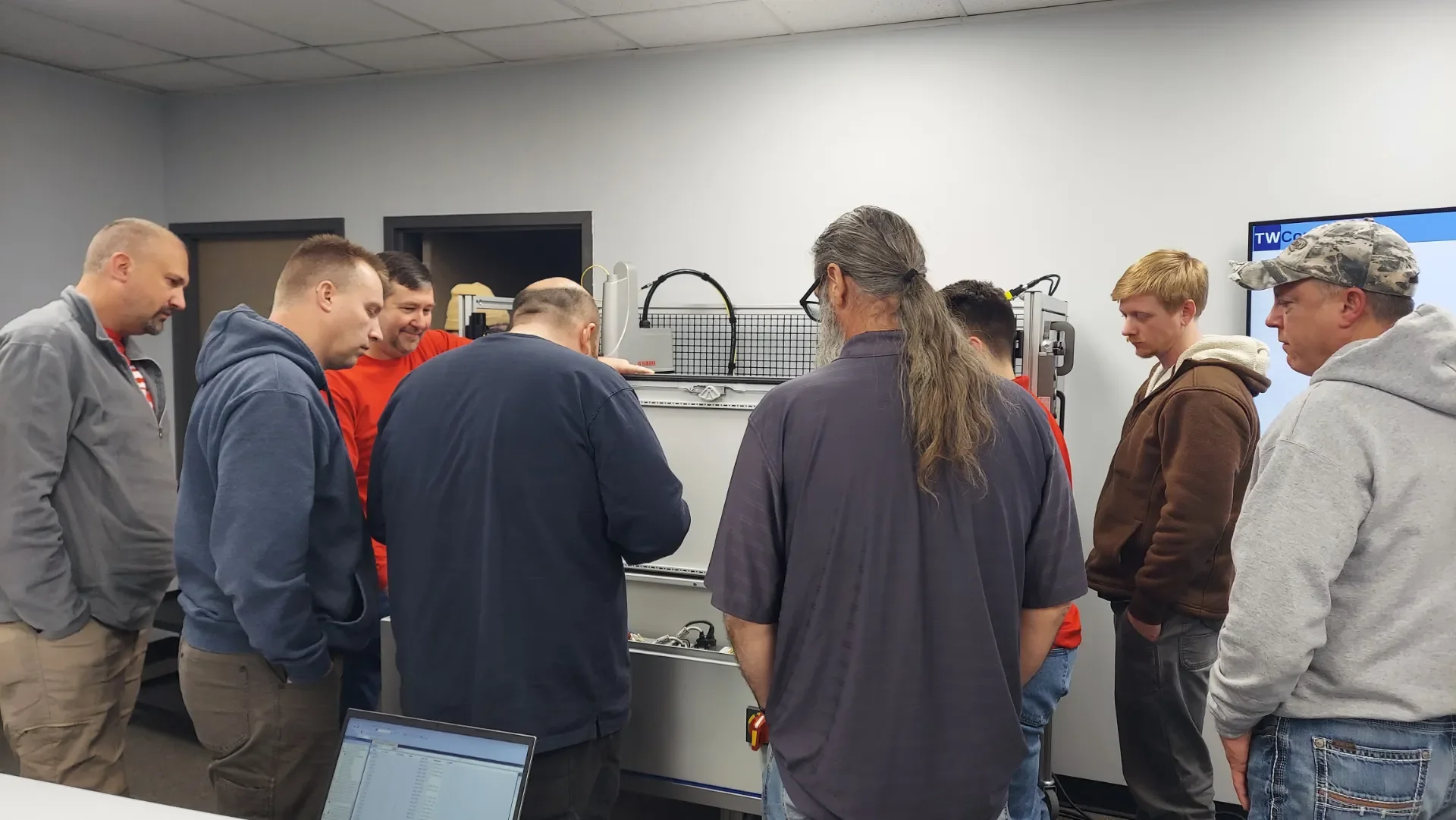
Going from guessing on 3rd shift to systematically tracing live 24V I/O loops in minutes.
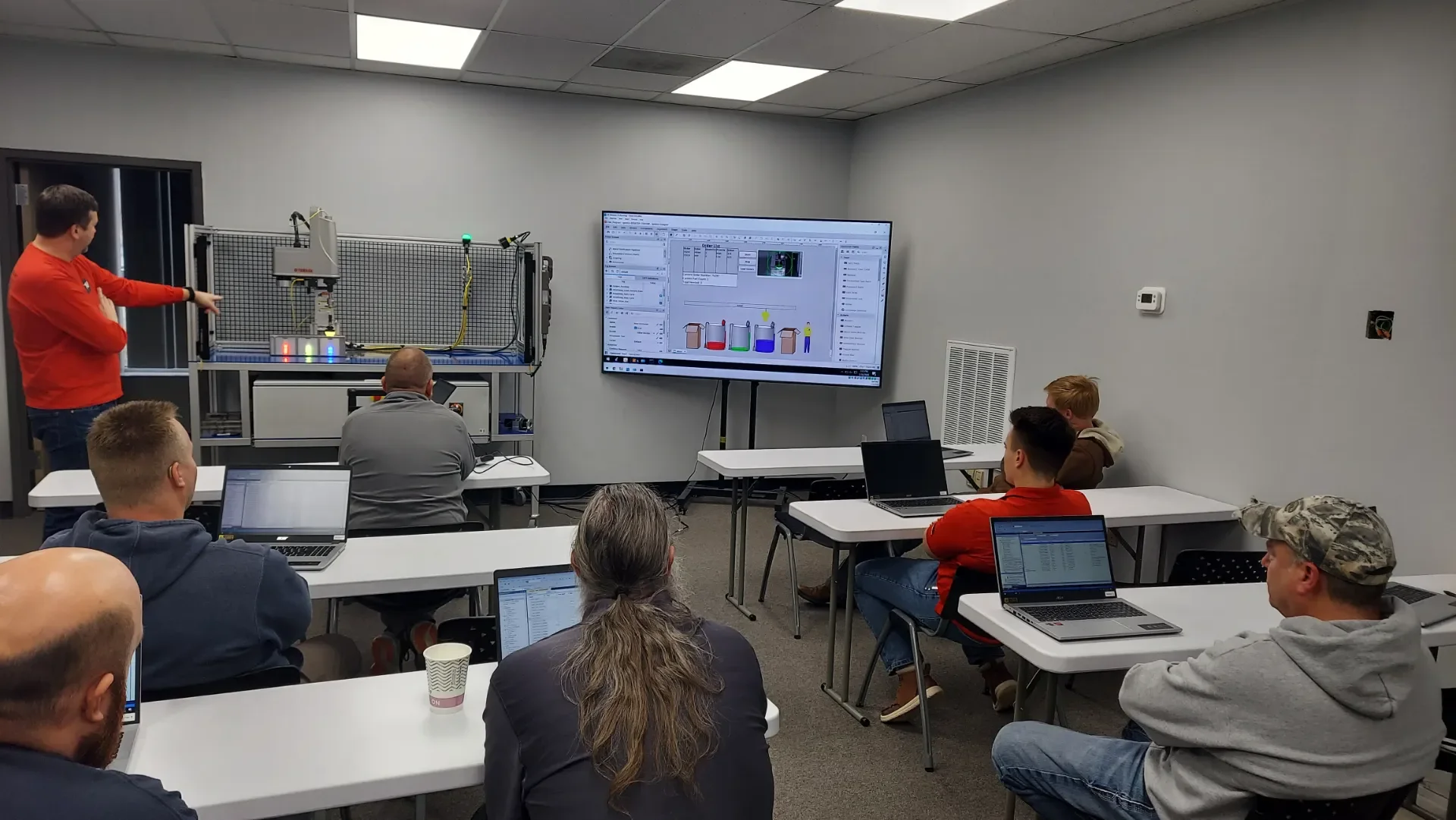
Reading ladder logic like a roadmap to pinpoint line faults instead of blindly resetting breakers.
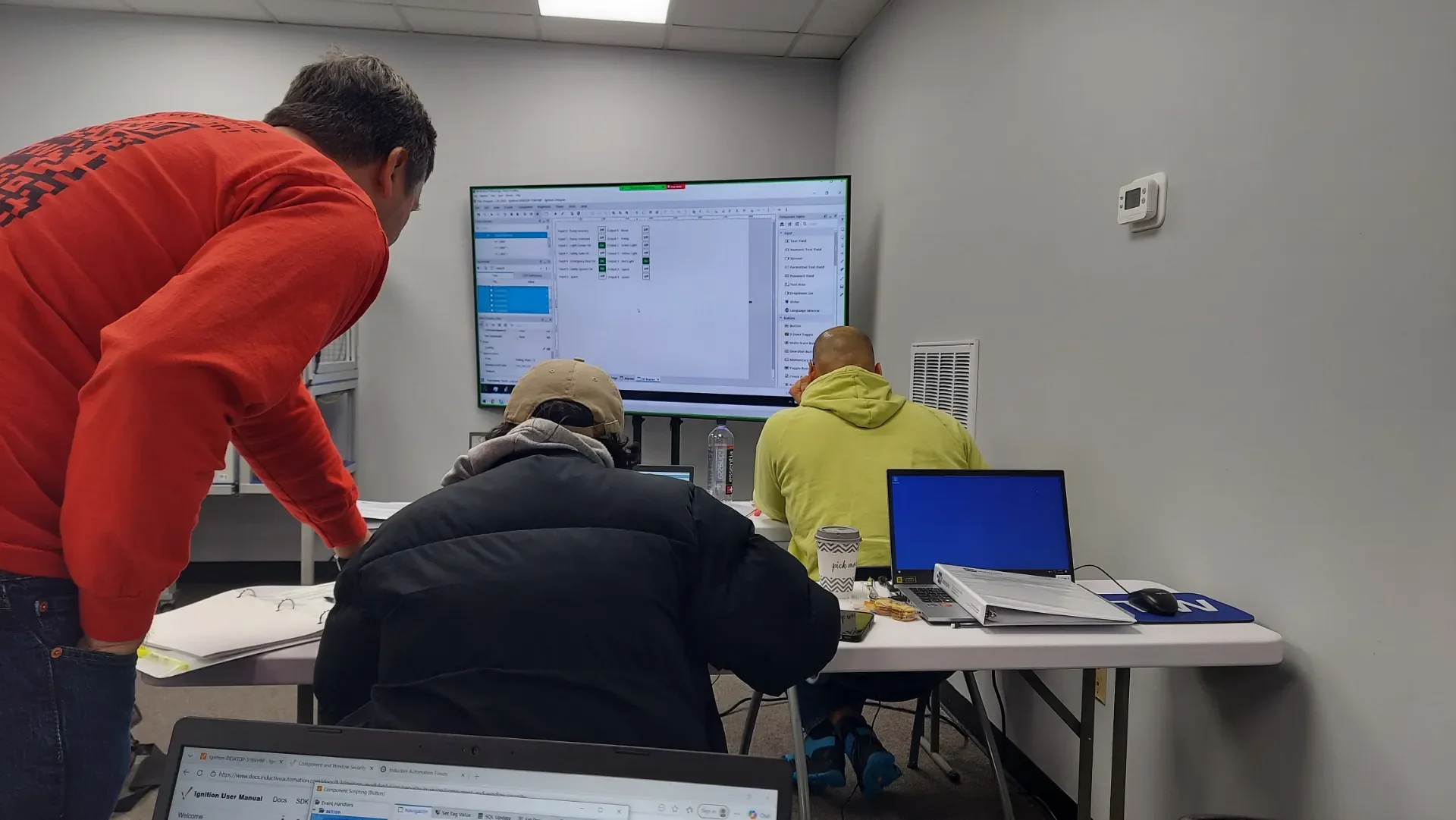
Learning to isolate root causes fast so you stop relying on outside integration support.
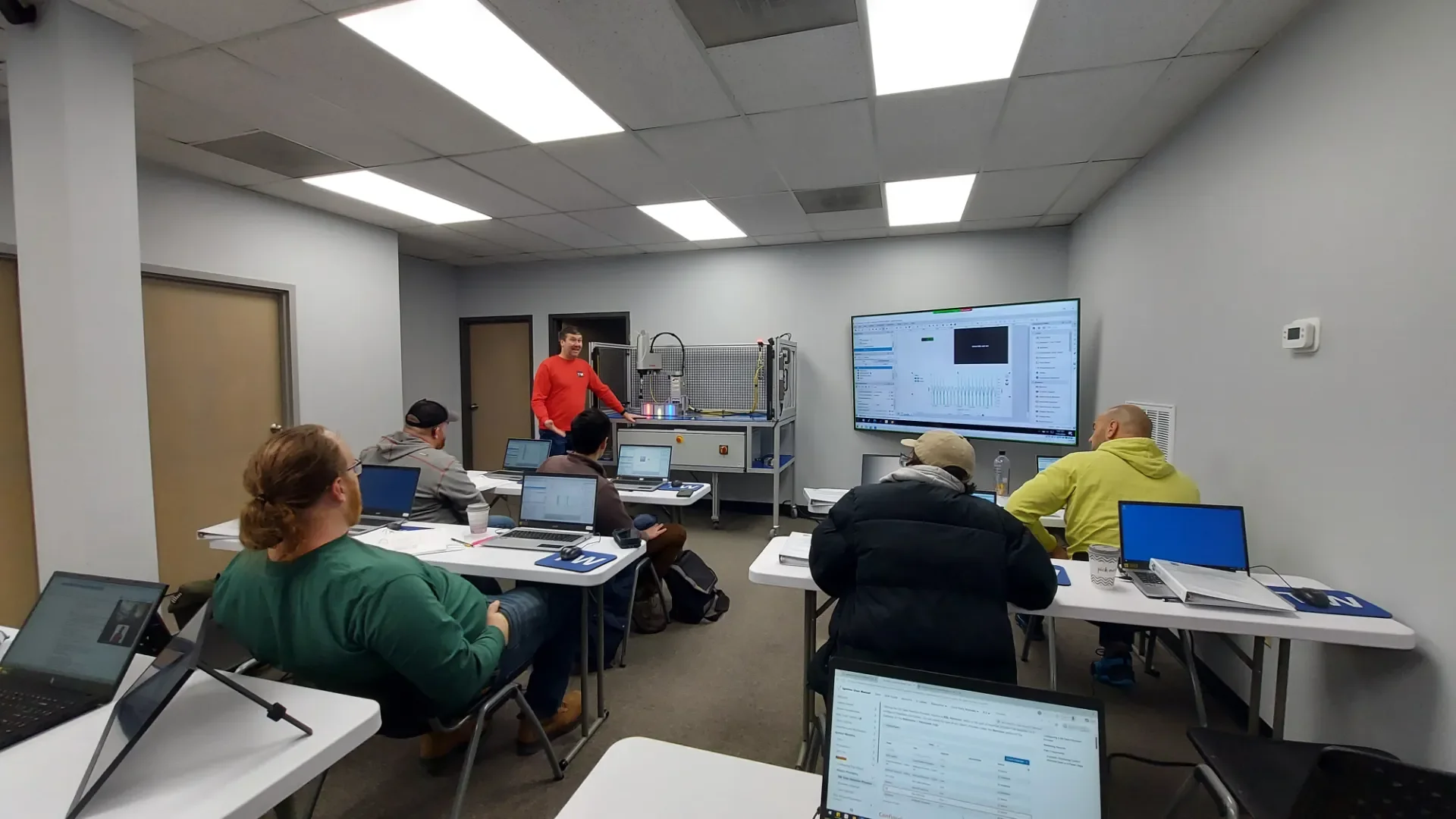
Zero spectator seats. Every technician gets dedicated hardware for 100% hands-on repetition.
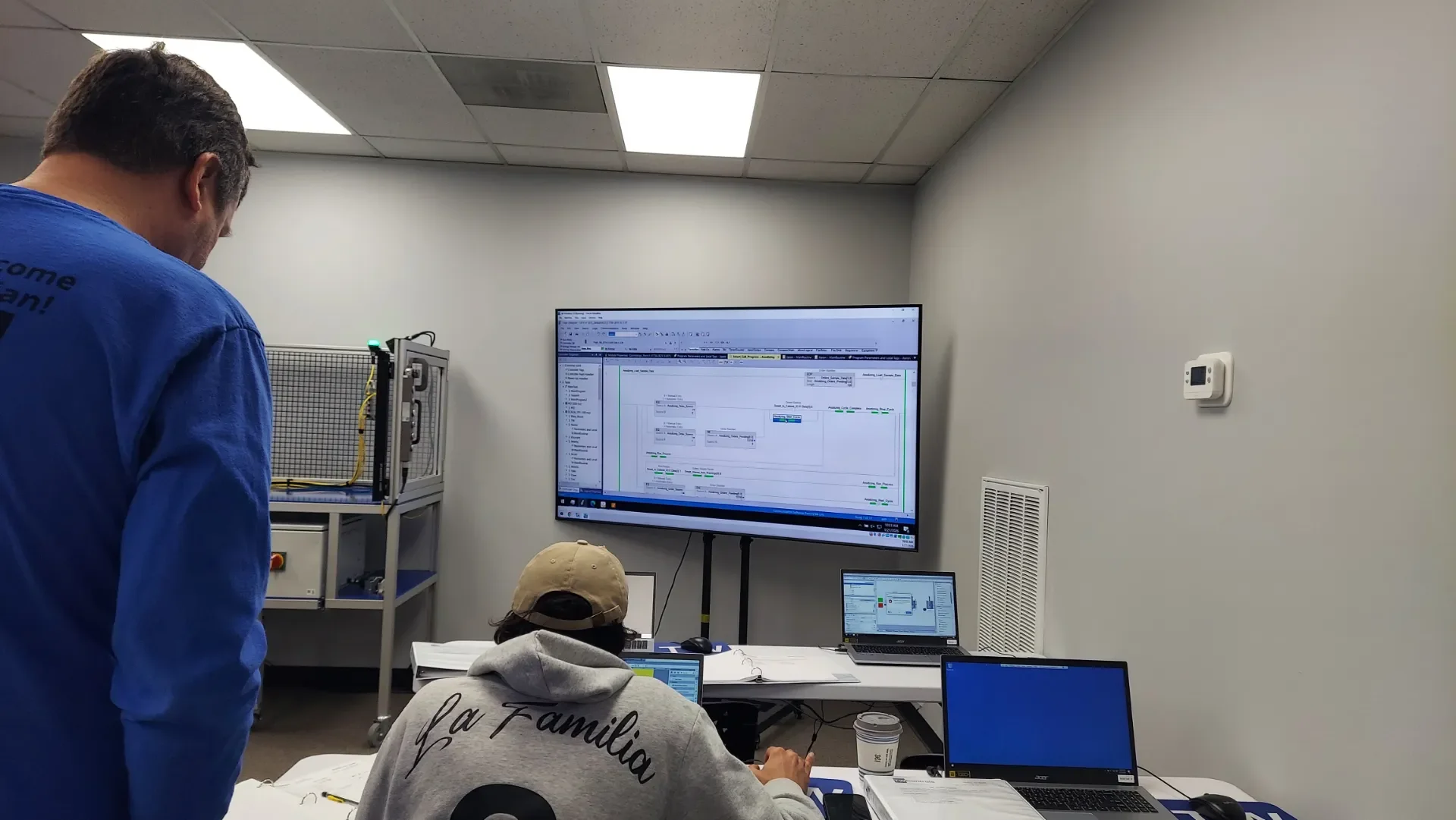
Deconstructing actual plant-floor breakdown calls to build a repeatable diagnostic workflow.
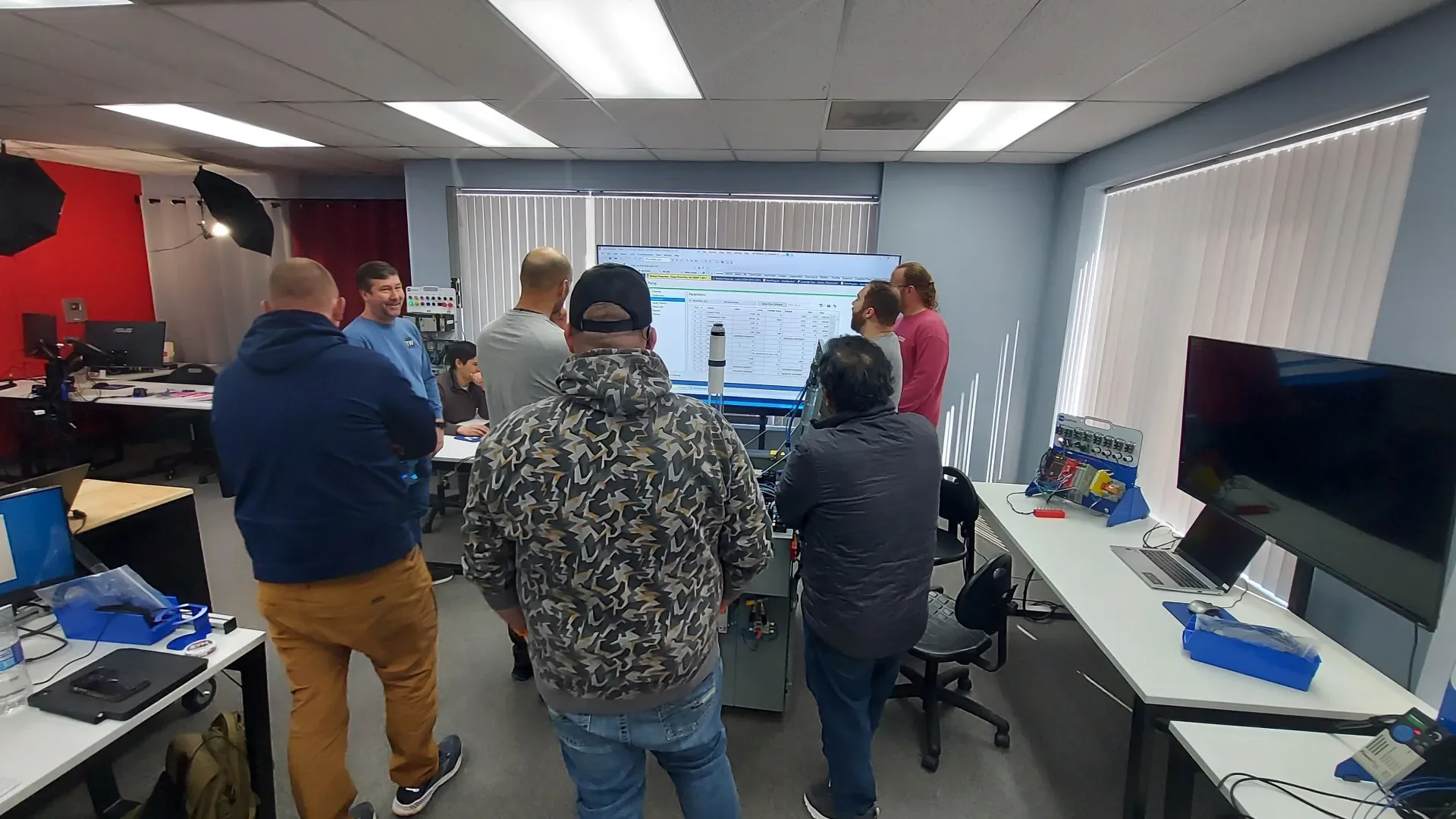
Instructor-led breakdown of control panel component layout, power distribution, and safety circuits.
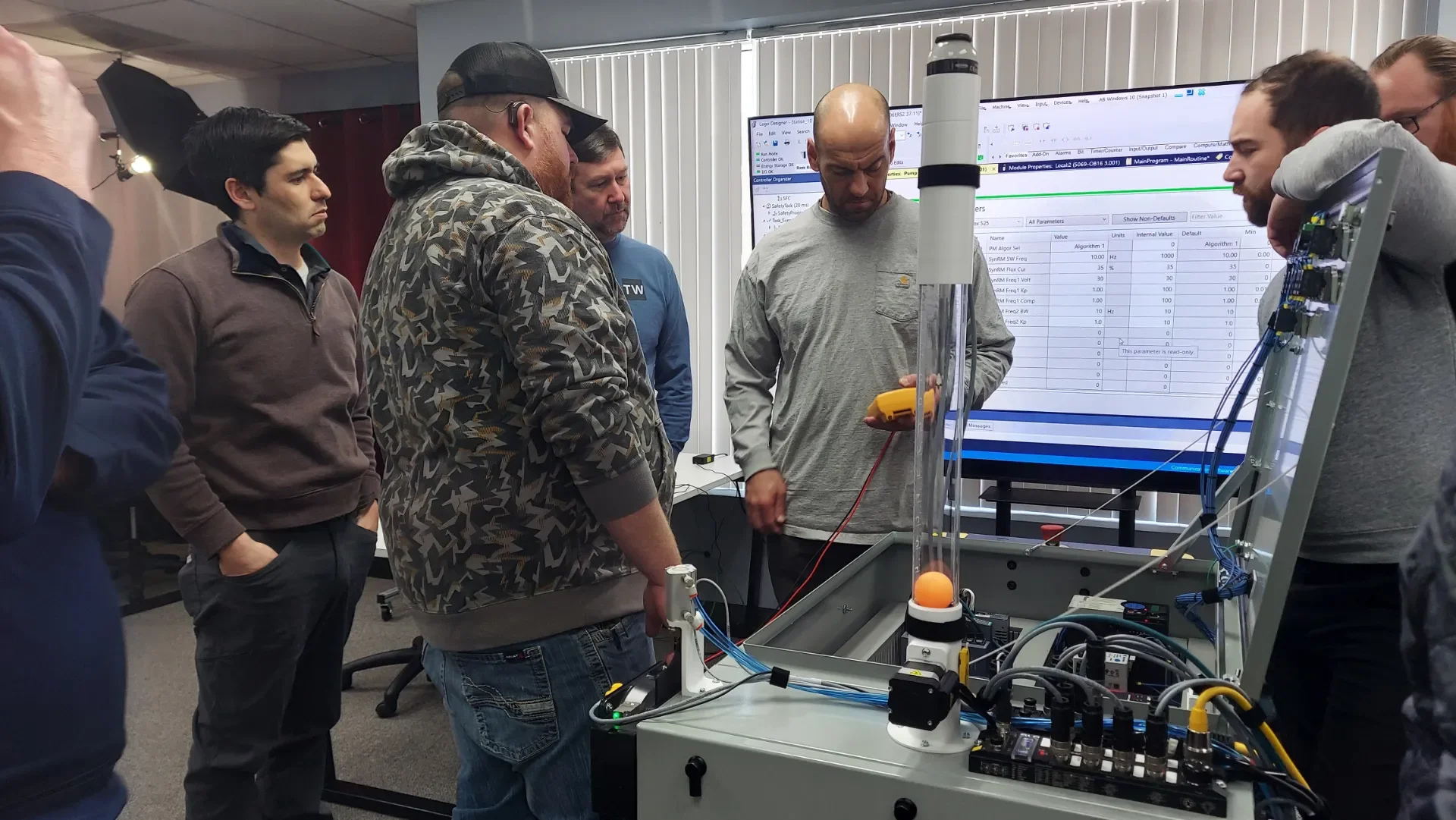
Handling real motor drives and sensor feedback loops without fear of causing plant downtime.
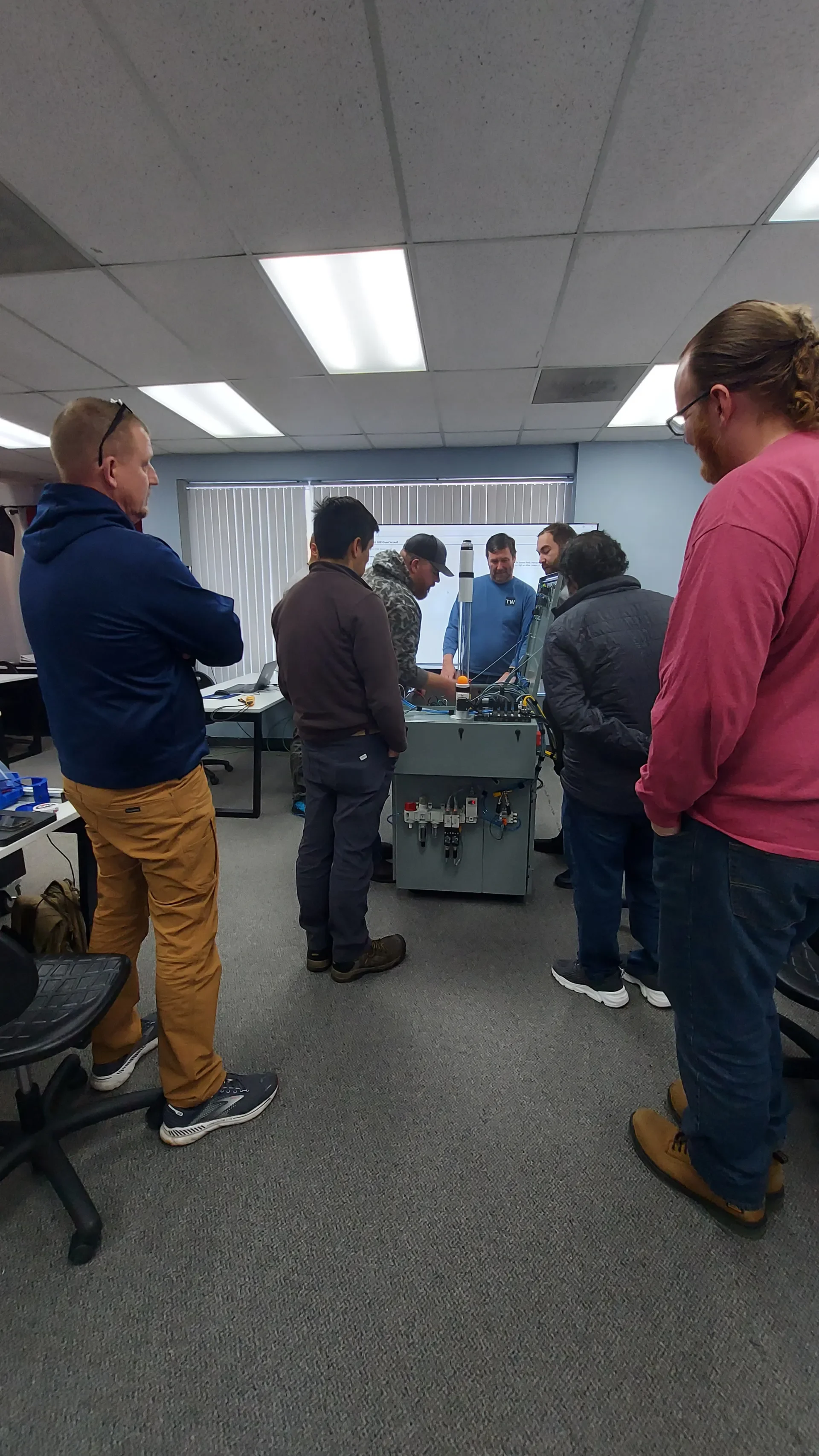
Proving circuit continuity and sensor states step-by-step using real industrial test meters.
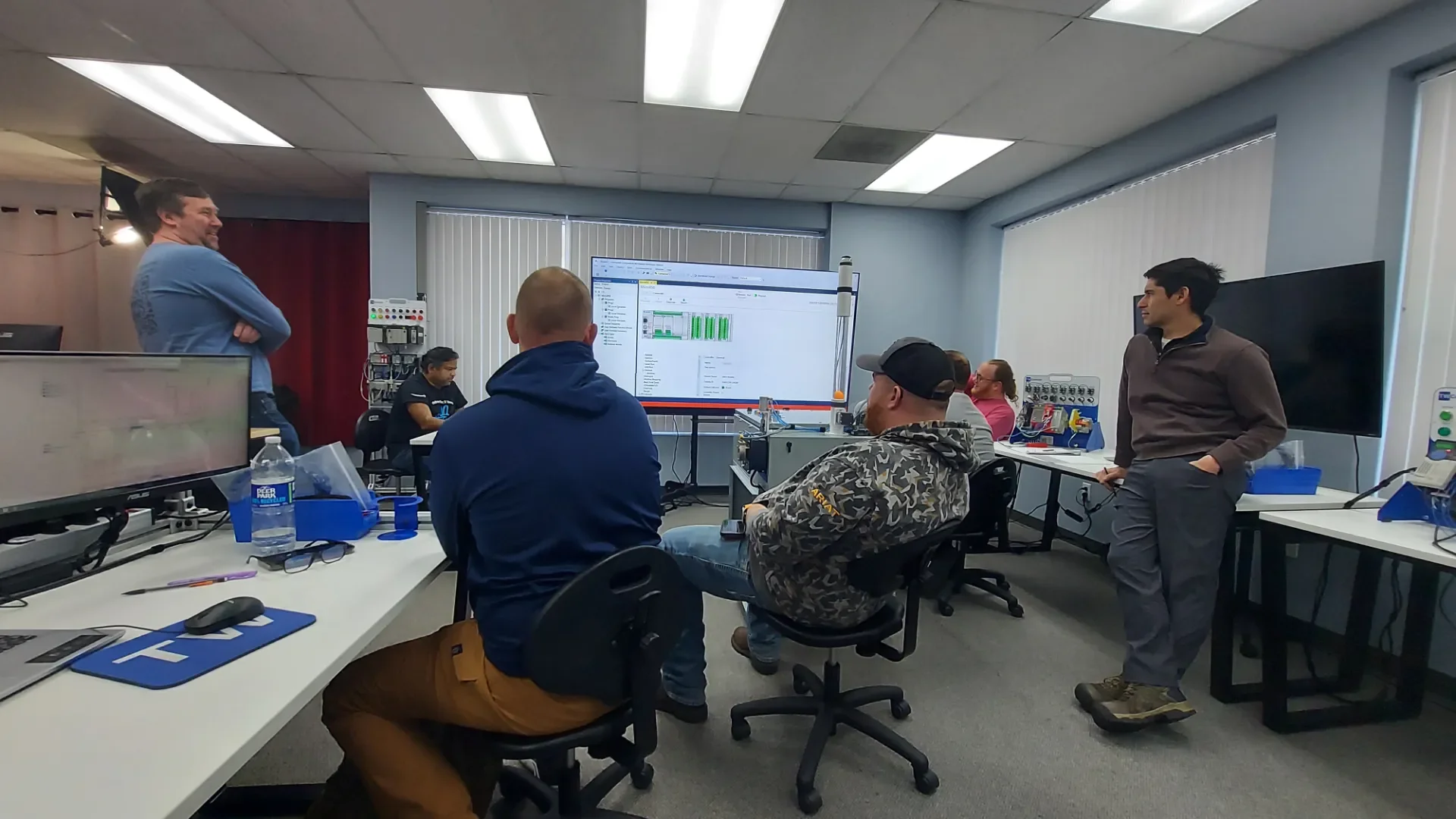
Evaluating real-world fault sequences to prevent repeat downtime on critical production lines.
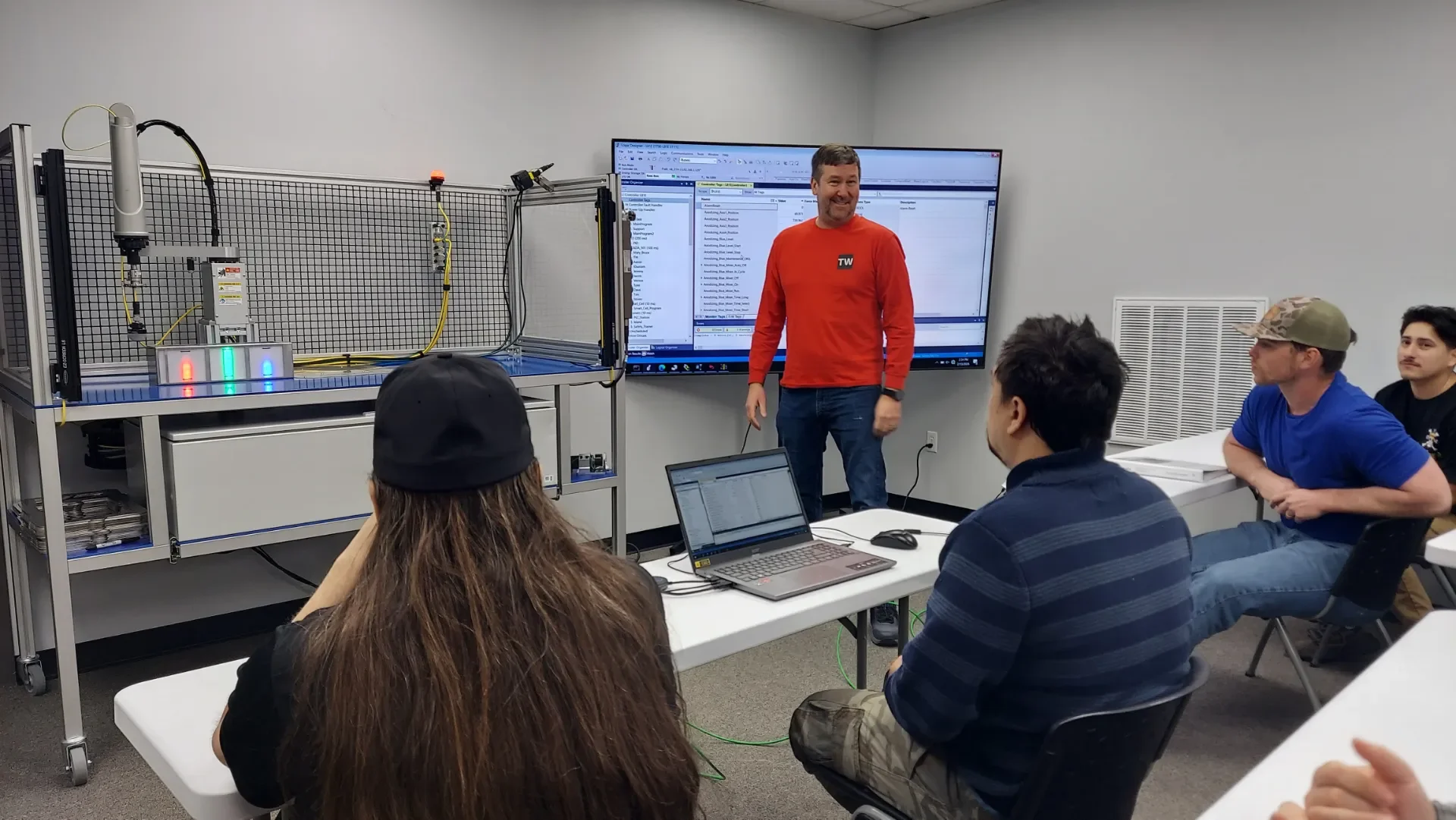
Demystifying control panel layout, safety circuits, and 24V power distribution.
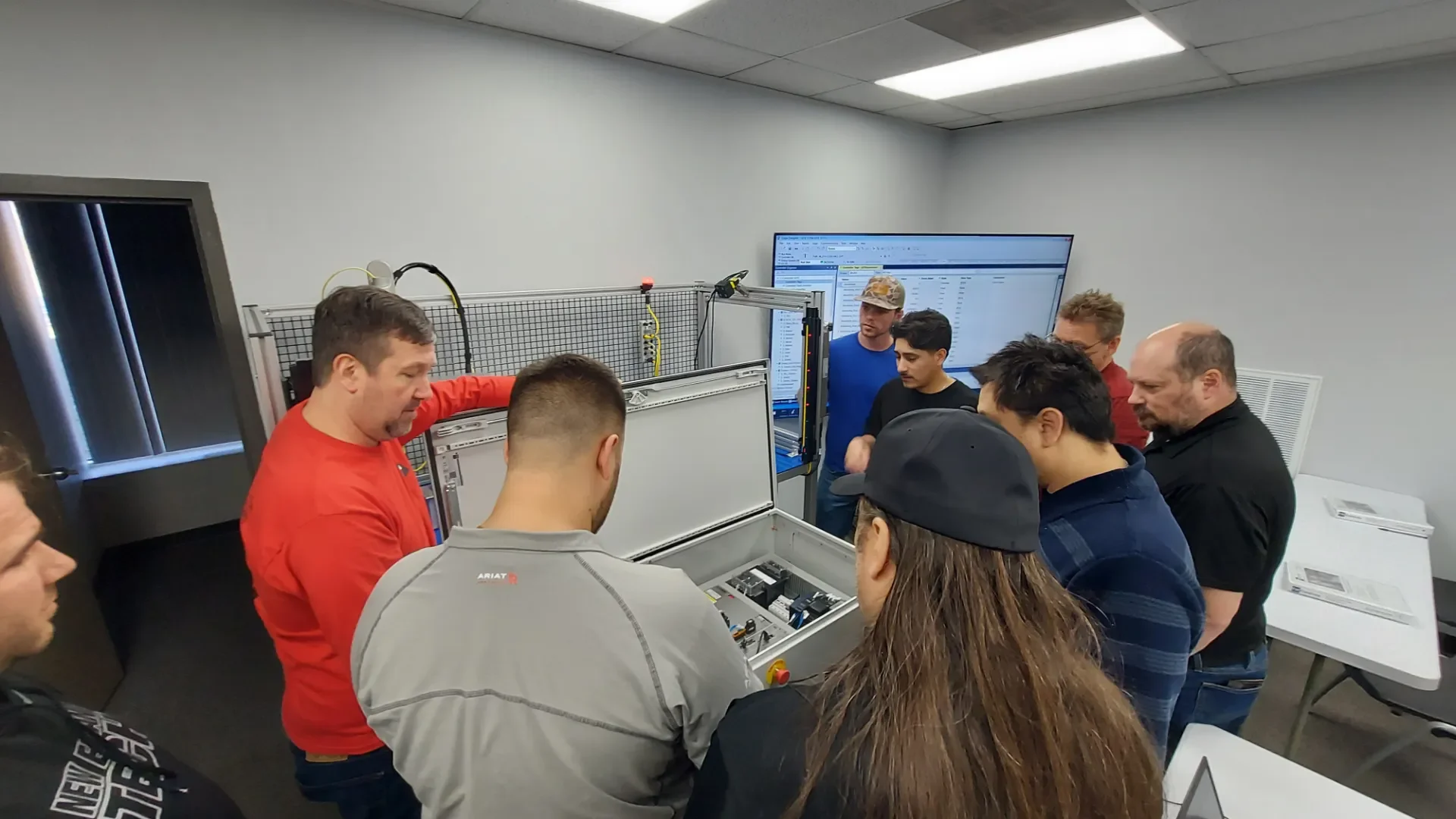
Gaining the total panel confidence required to step up and take charge on off-shifts.
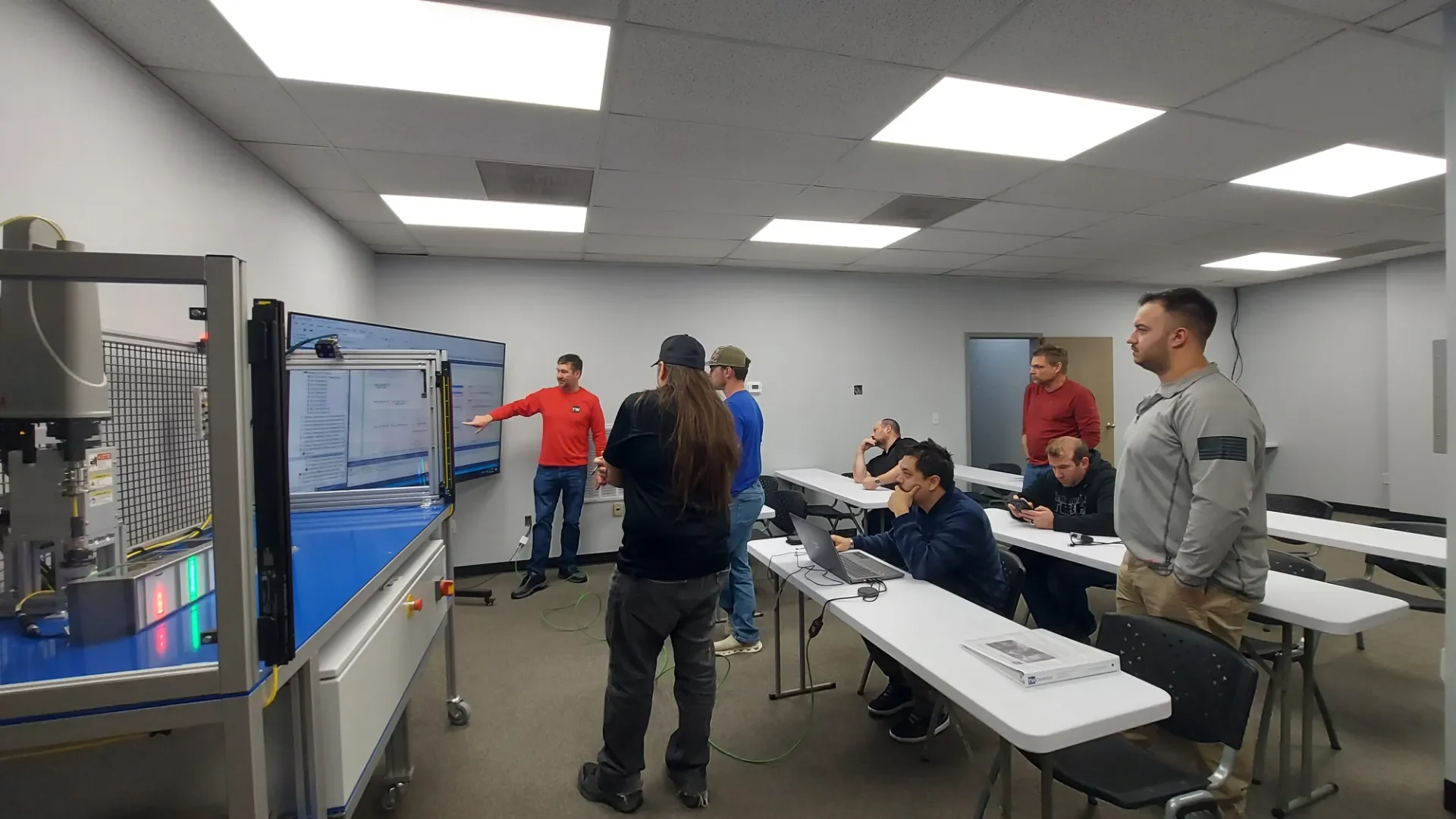
Connecting field wiring, network configuration, and PLC logic into one cohesive workflow.
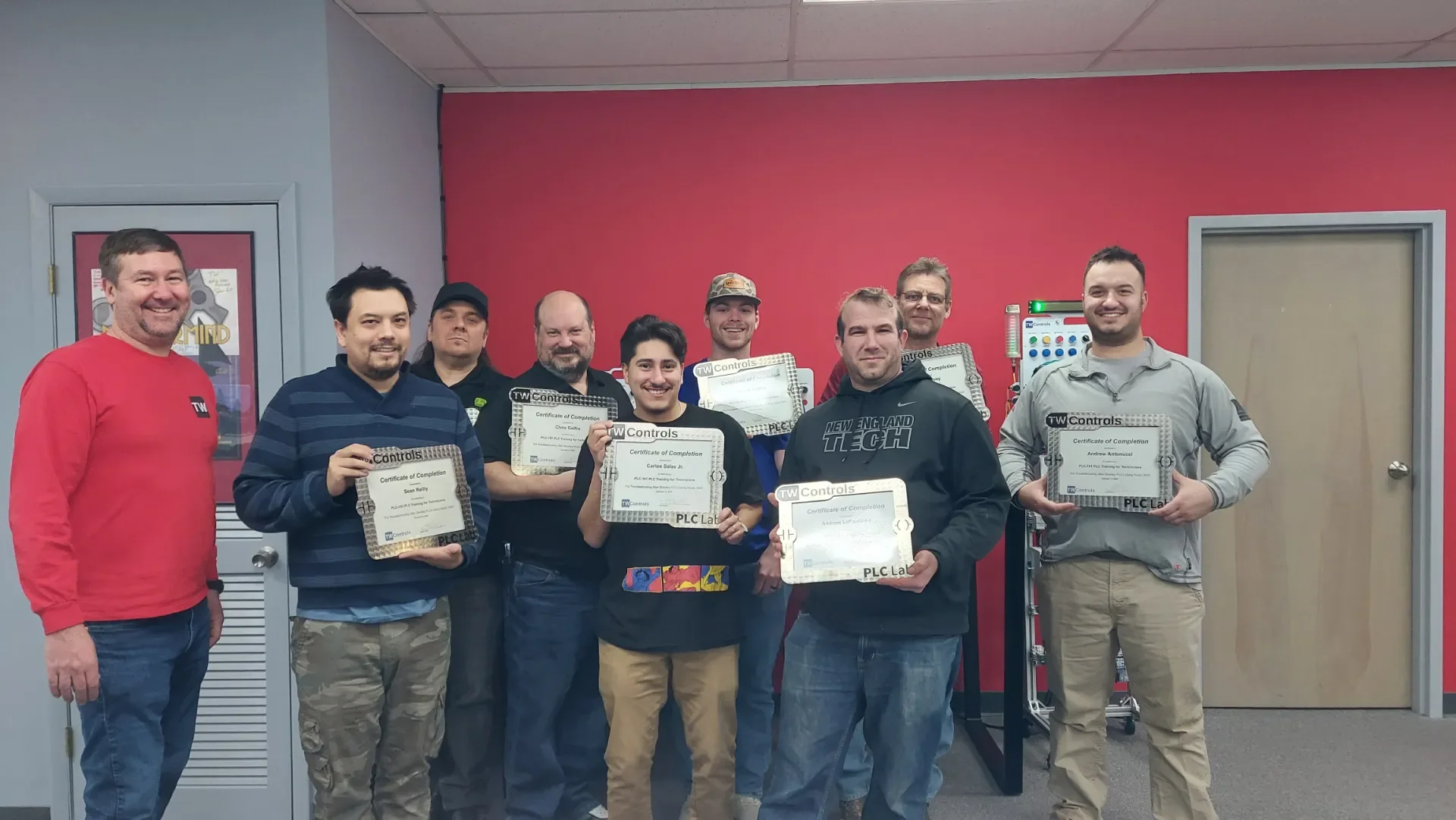
Real technicians leaving Roanoke with verified, practical skills to transform their careers.
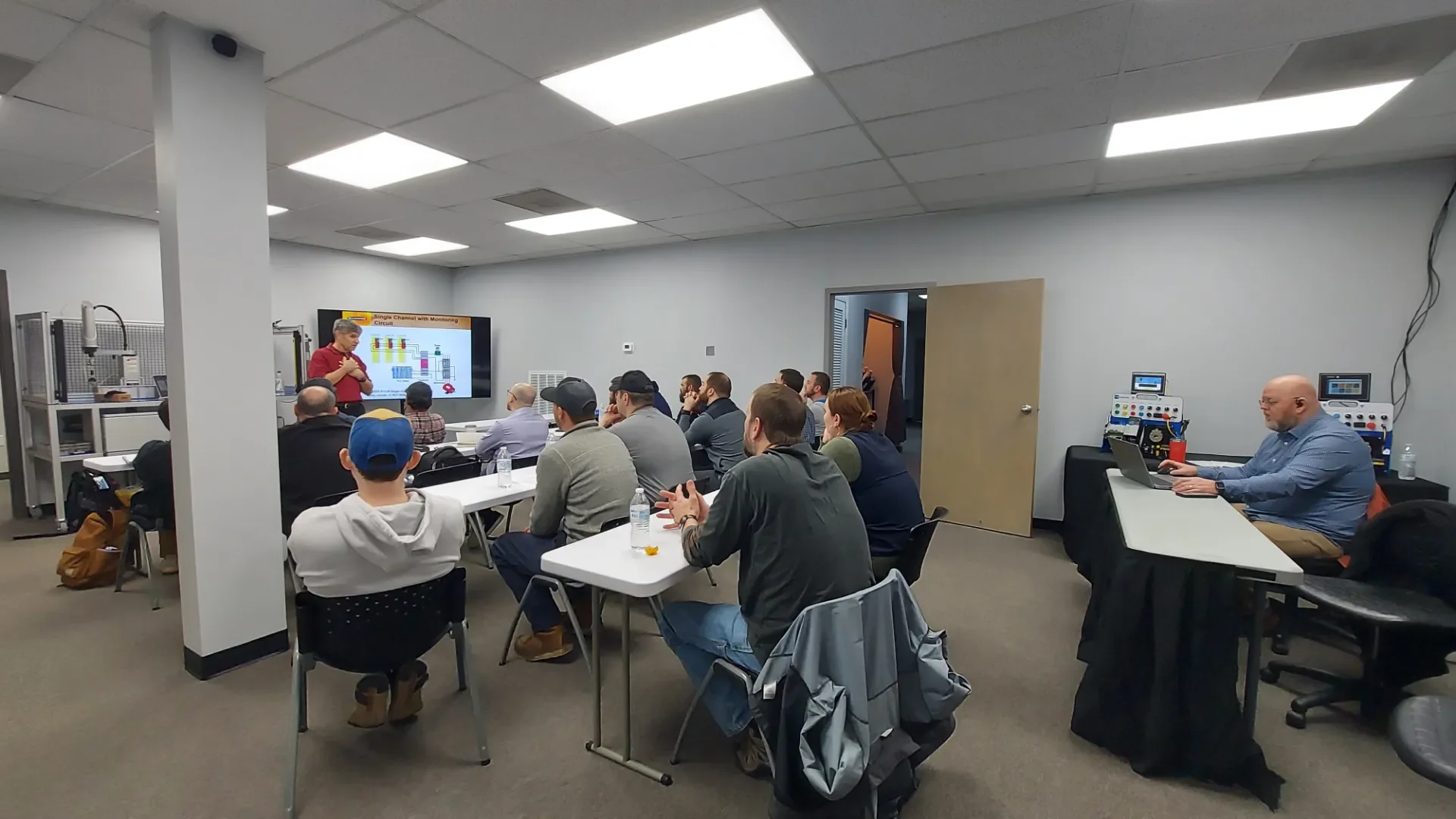
Stepping through complex fault routines so techs can clear 3rd-shift panel bugs in minutes.
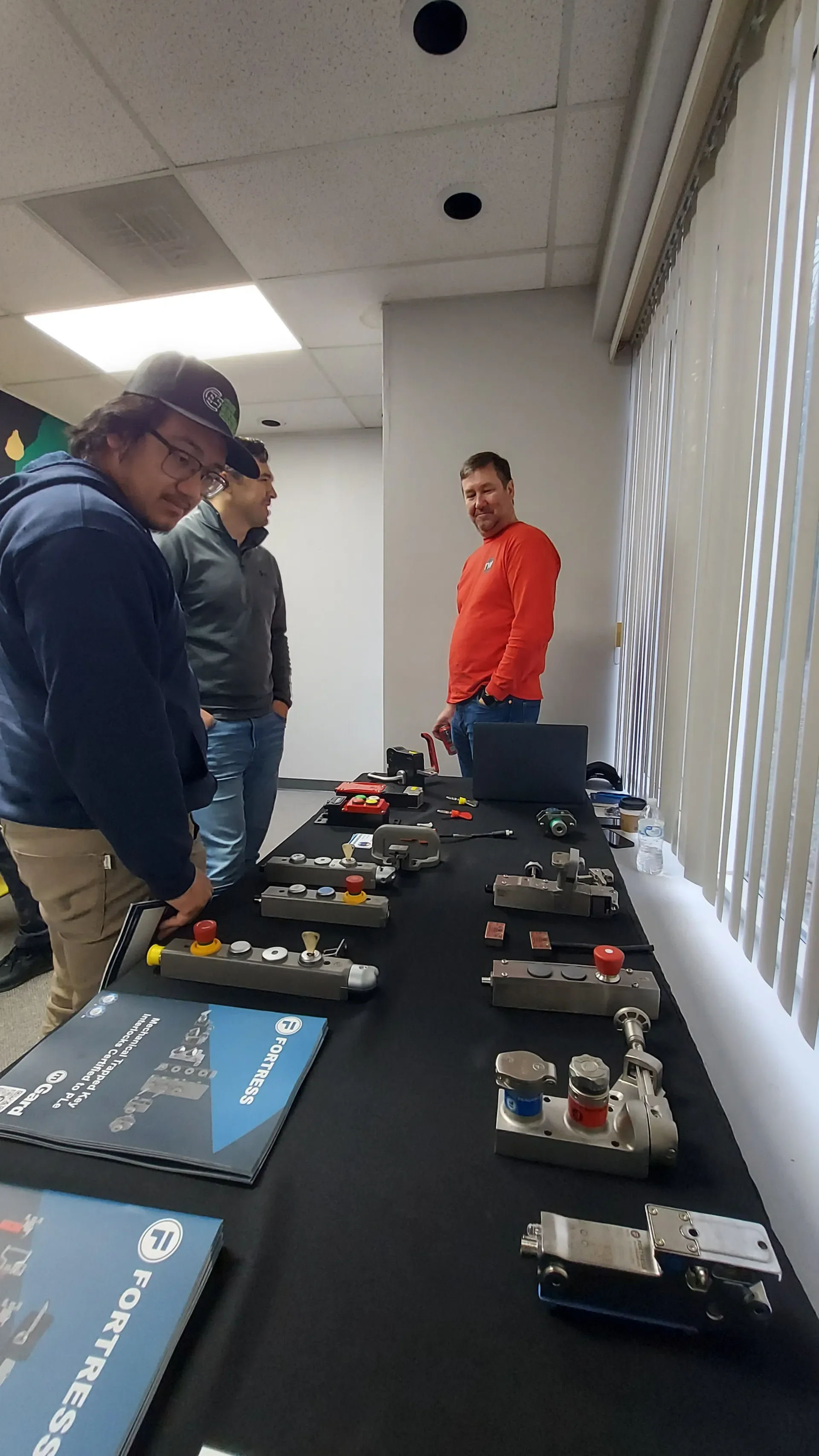
Building real panel confidence through hands-on wire tracing and live device wiring.
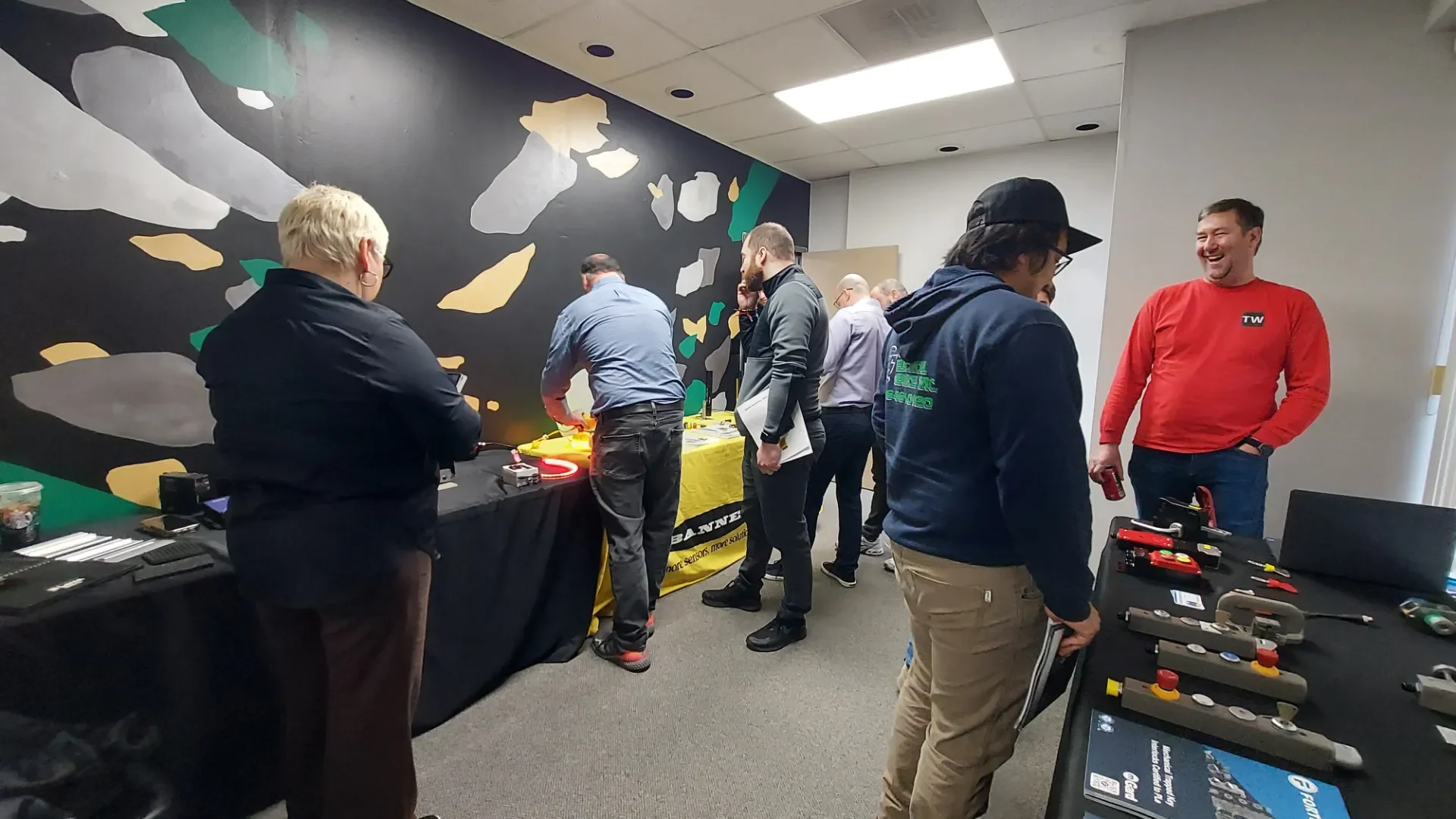
Evaluating real industrial hardware up close to understand failure modes before troubleshooting live panels.
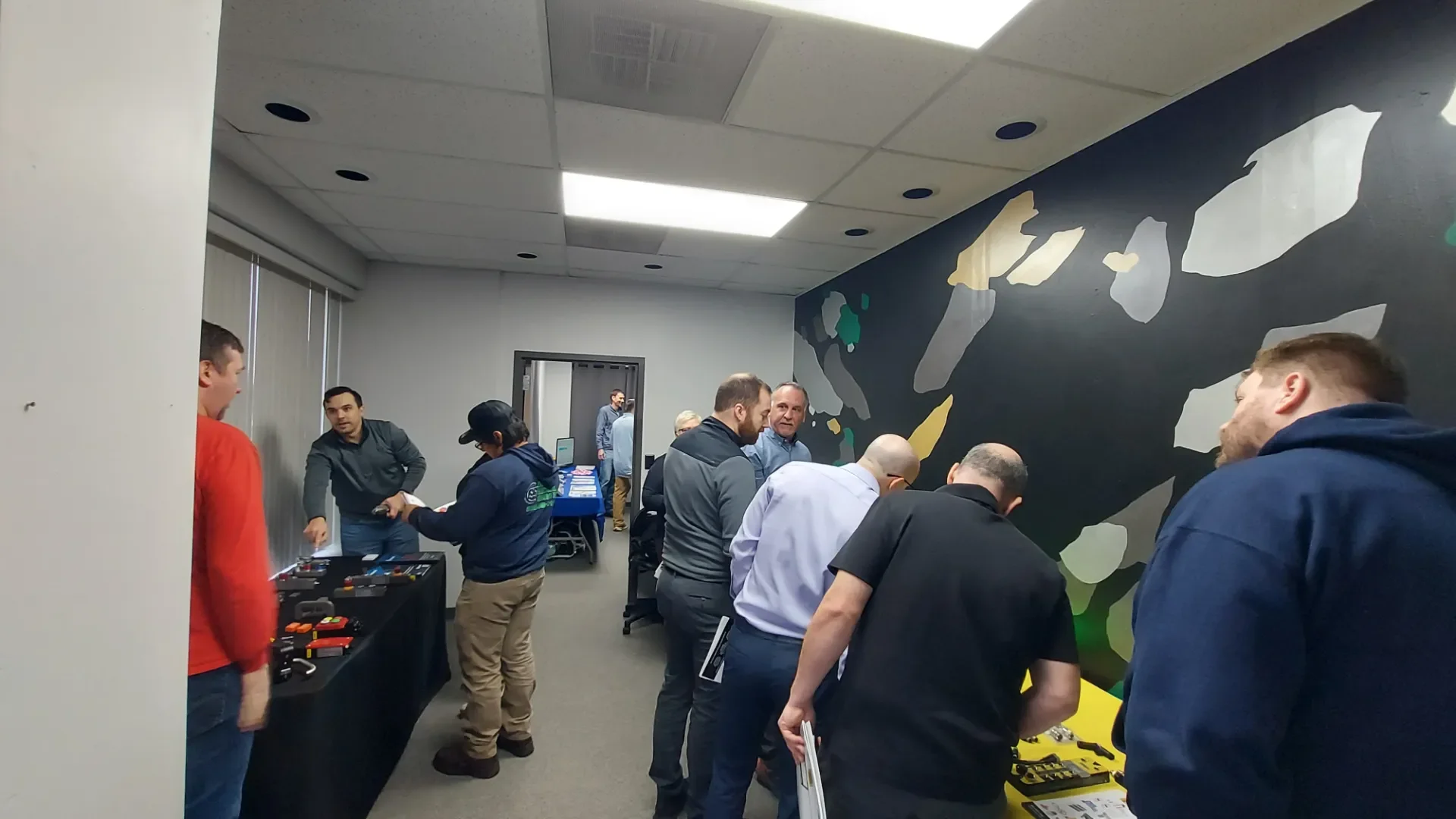
Hands-on familiarity with sensors, relays, and switches to build immediate plant-floor recognition.
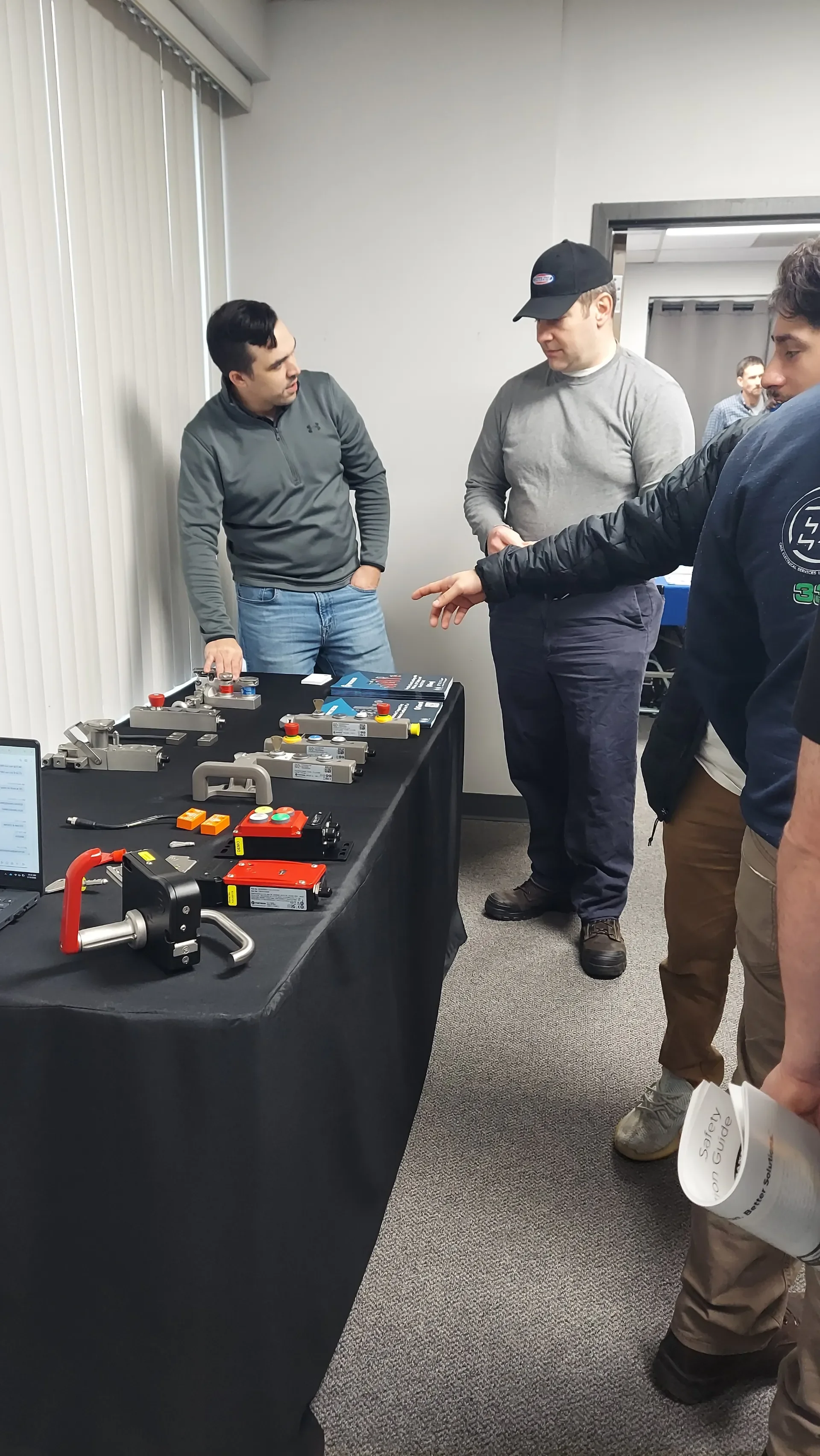
Mastering specialized test meters to verify component integrity without resorting to trial-and-error.
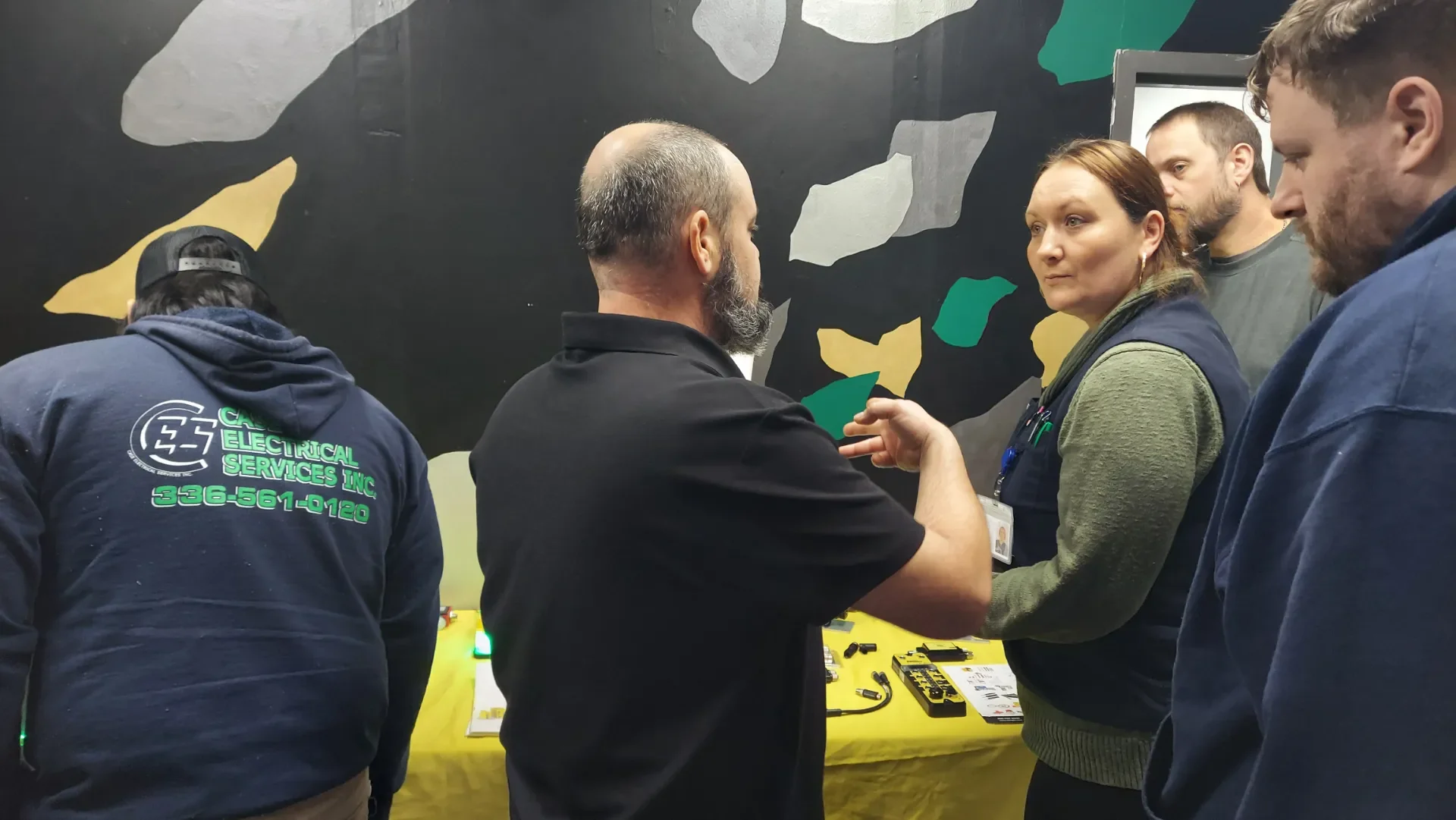
Collaborative teardowns that turn complex field device failures into simple, systematic diagnostics.
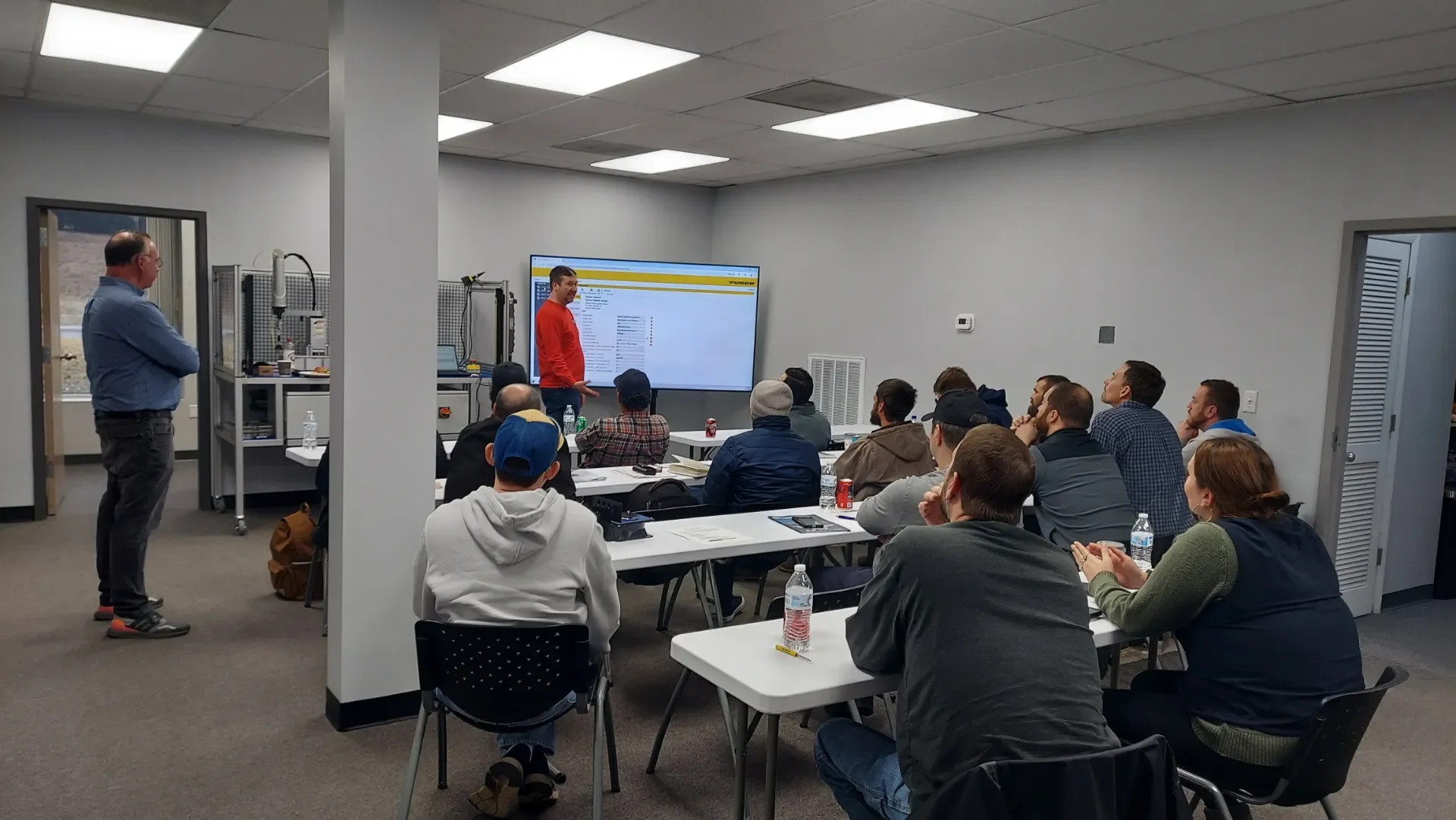
Building strong foundational control concepts in the Industrial Training Hub space.
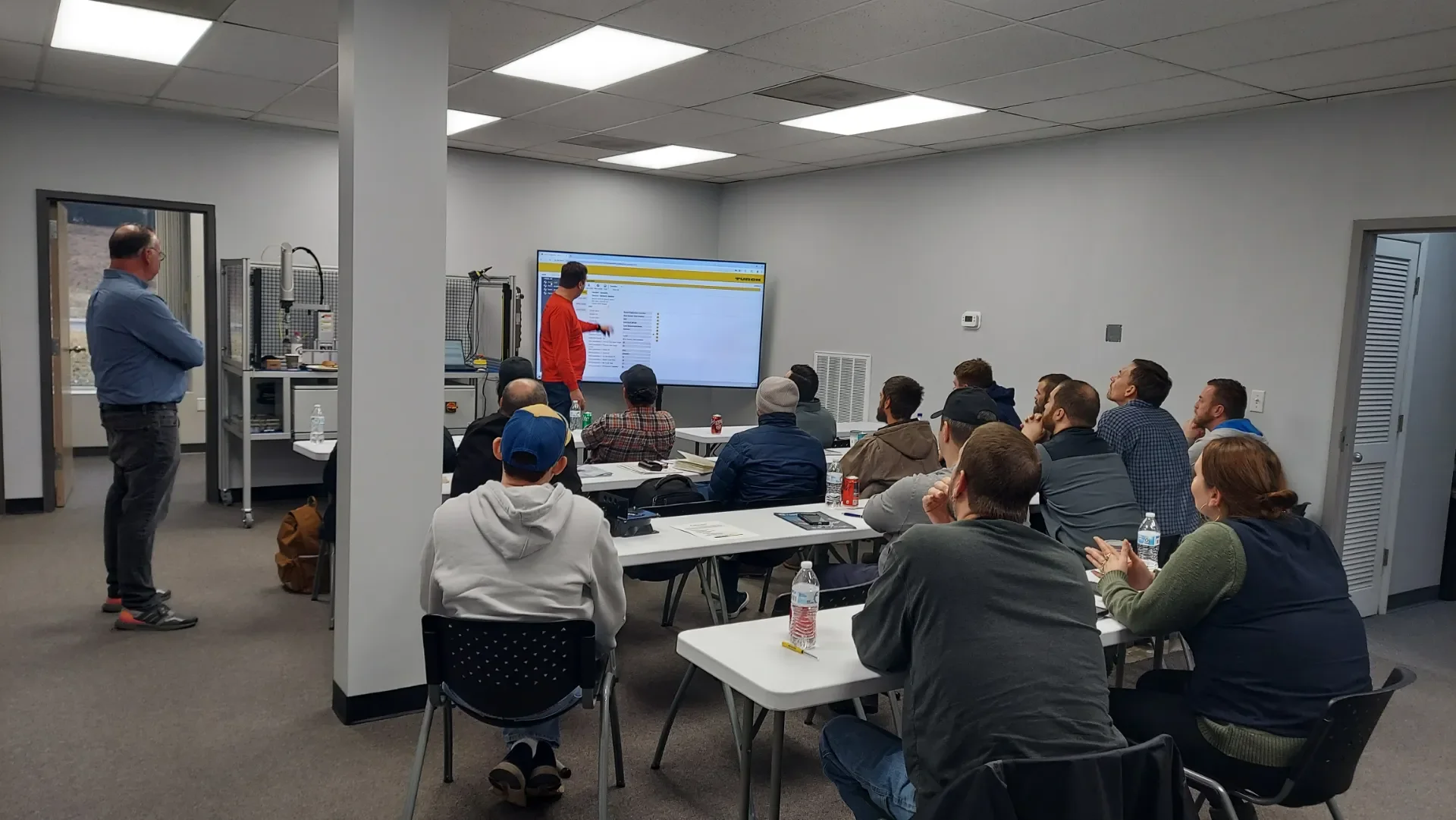
Mapping out logic structures and signal paths together before building physical circuits.
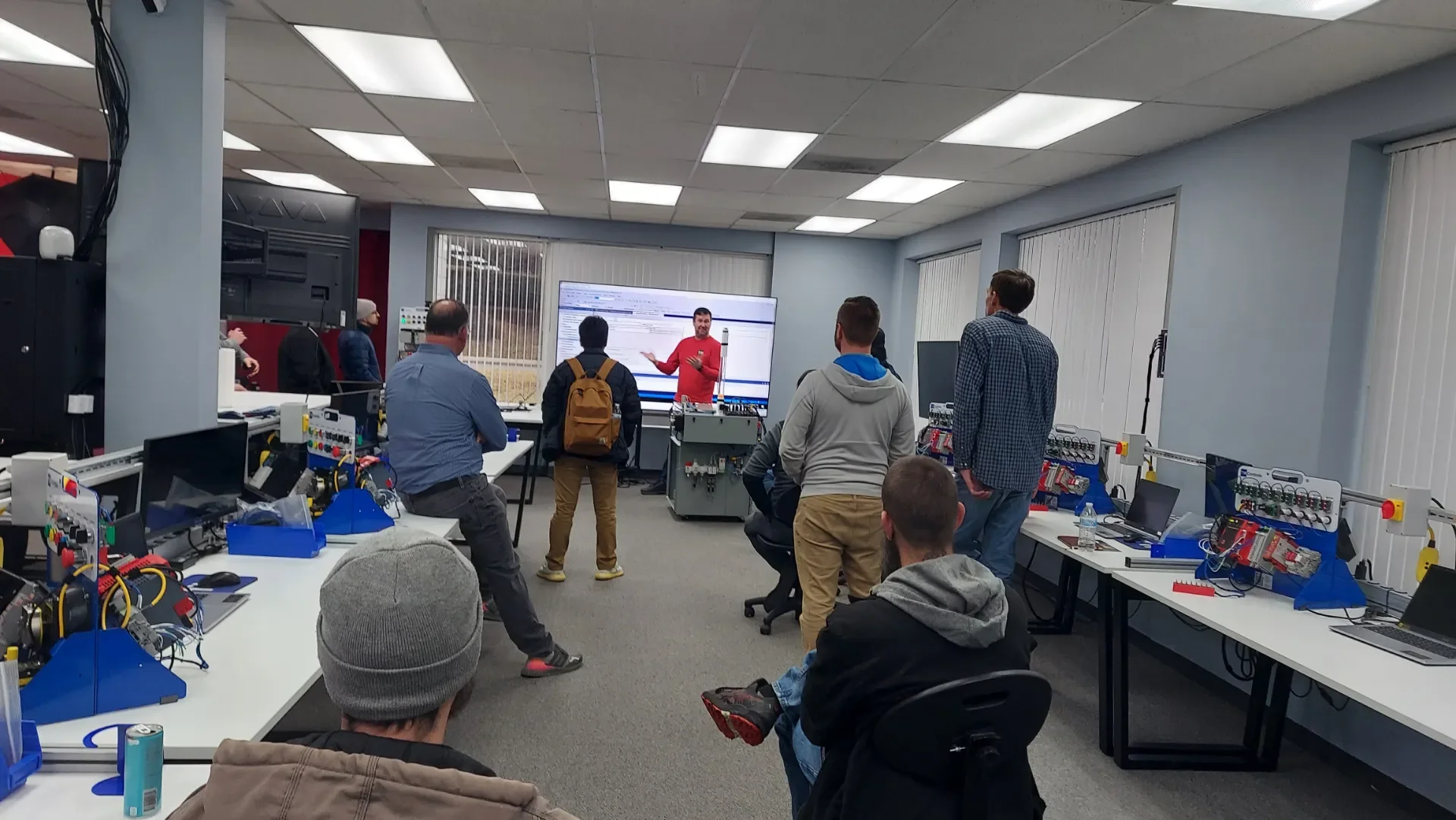
Connecting ladder logic routines directly to physical trainer behavior—zero theoretical fluff.
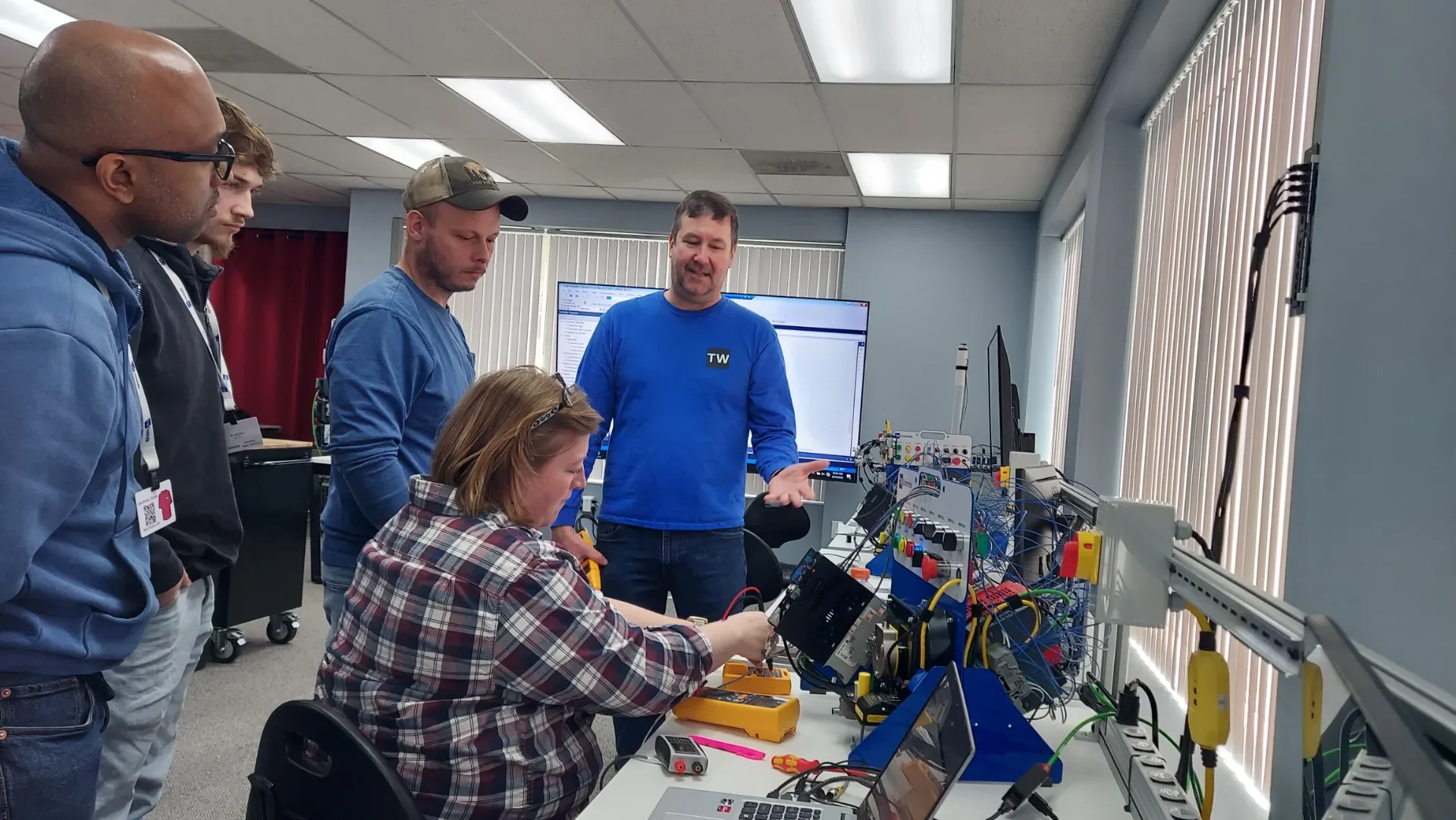
Hands-on signal tracing across dedicated trainer rigs to build total plant-floor independence.
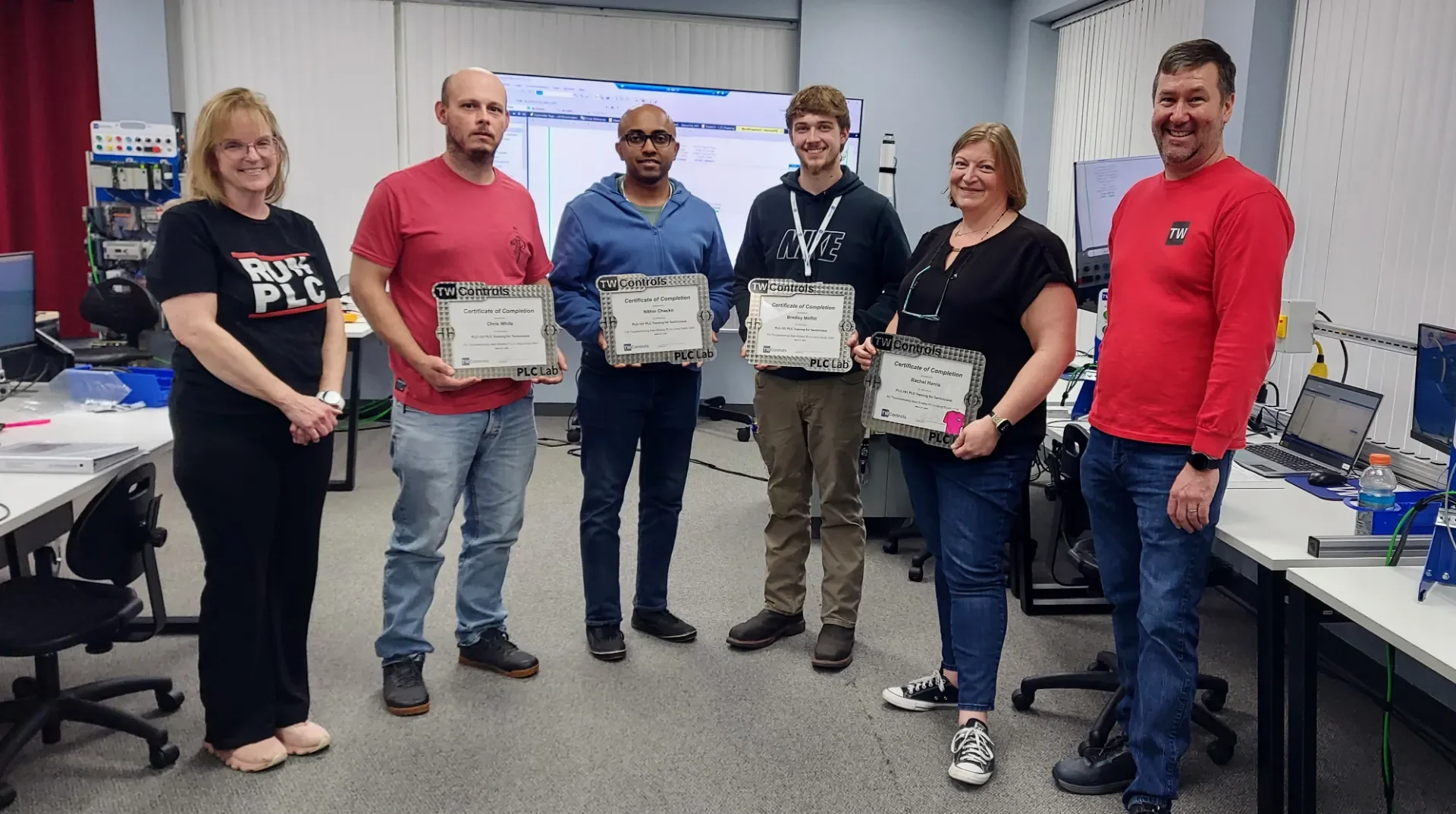
Technicians leaving Roanoke with proven, hands-on skills to transform their off-shift independence.
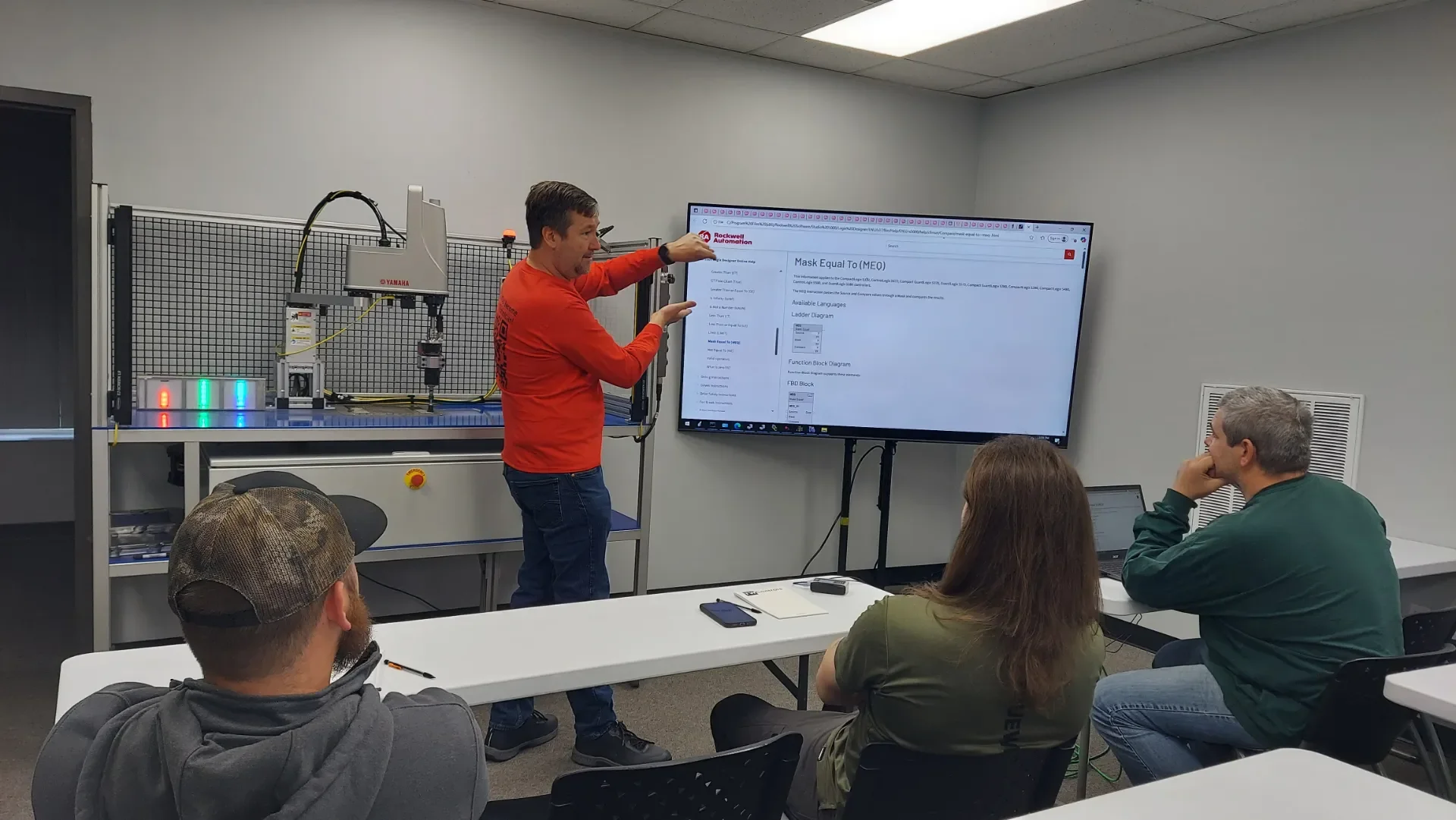
Deconstructing complex plant breakdown calls into clear, repeatable troubleshooting steps.
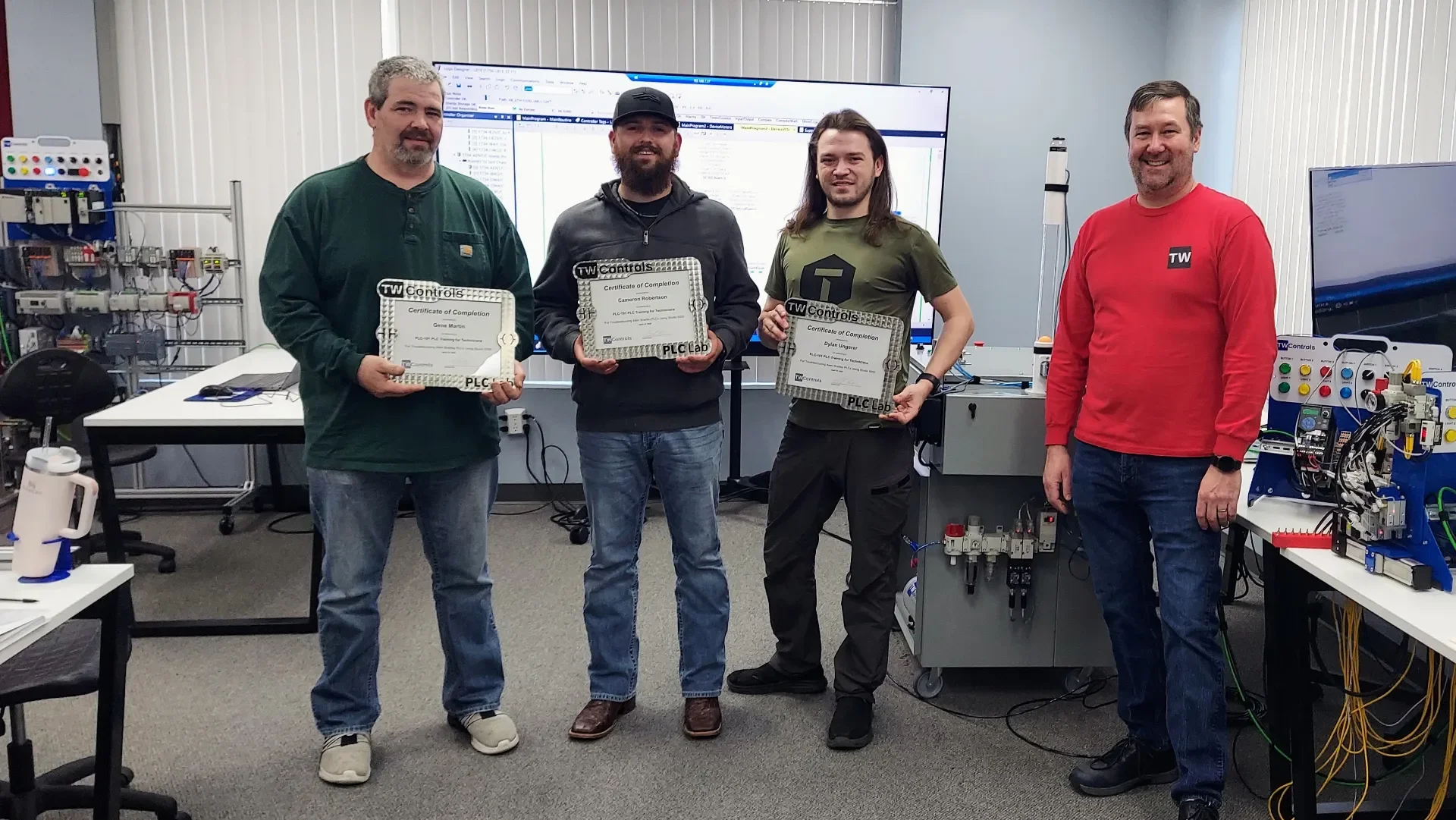
Earning practical credentials that turn maintenance techs into confident controls specialists.
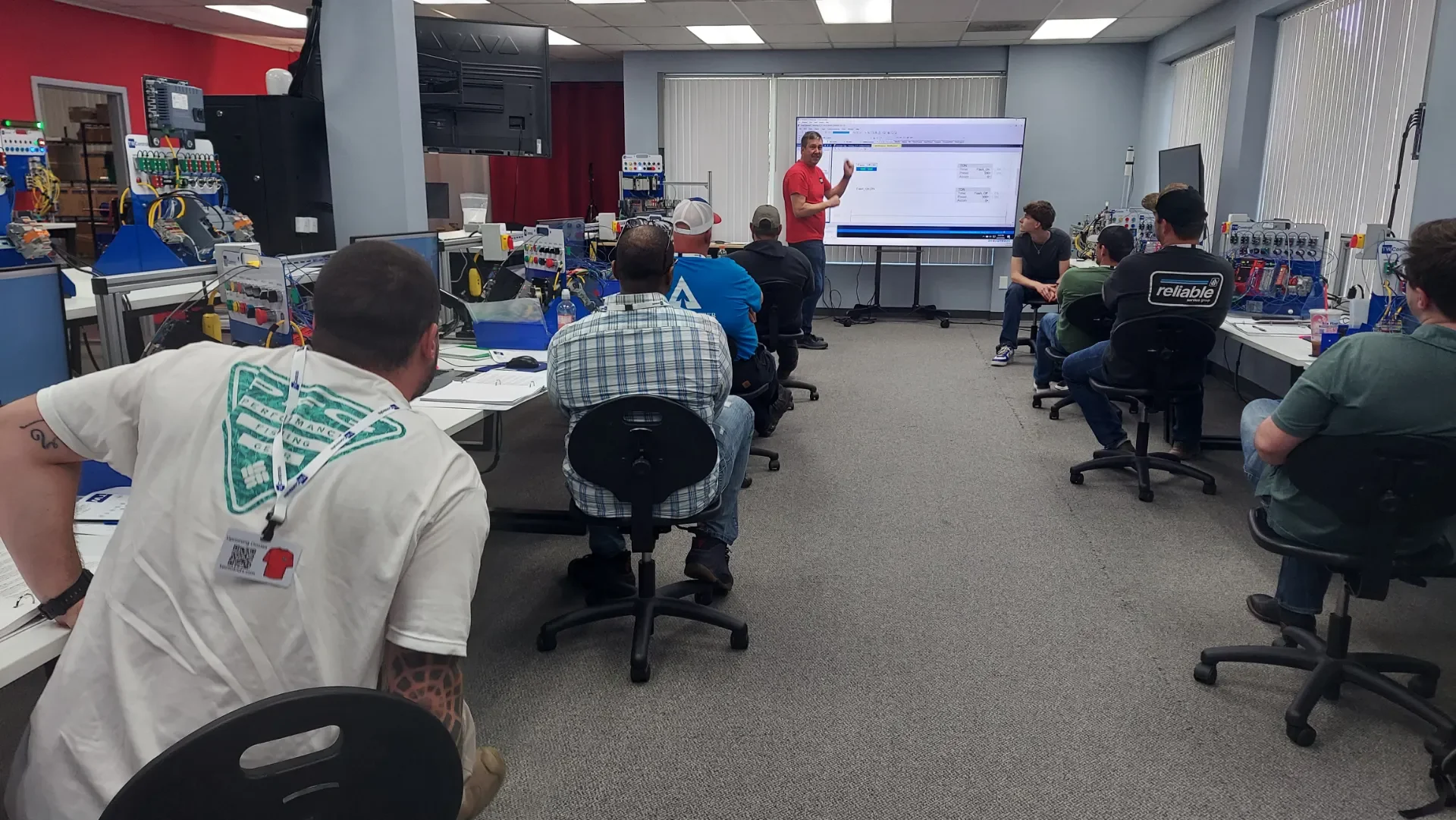
Maximized hands-on lab time ensuring every technician works directly on active control hardware.
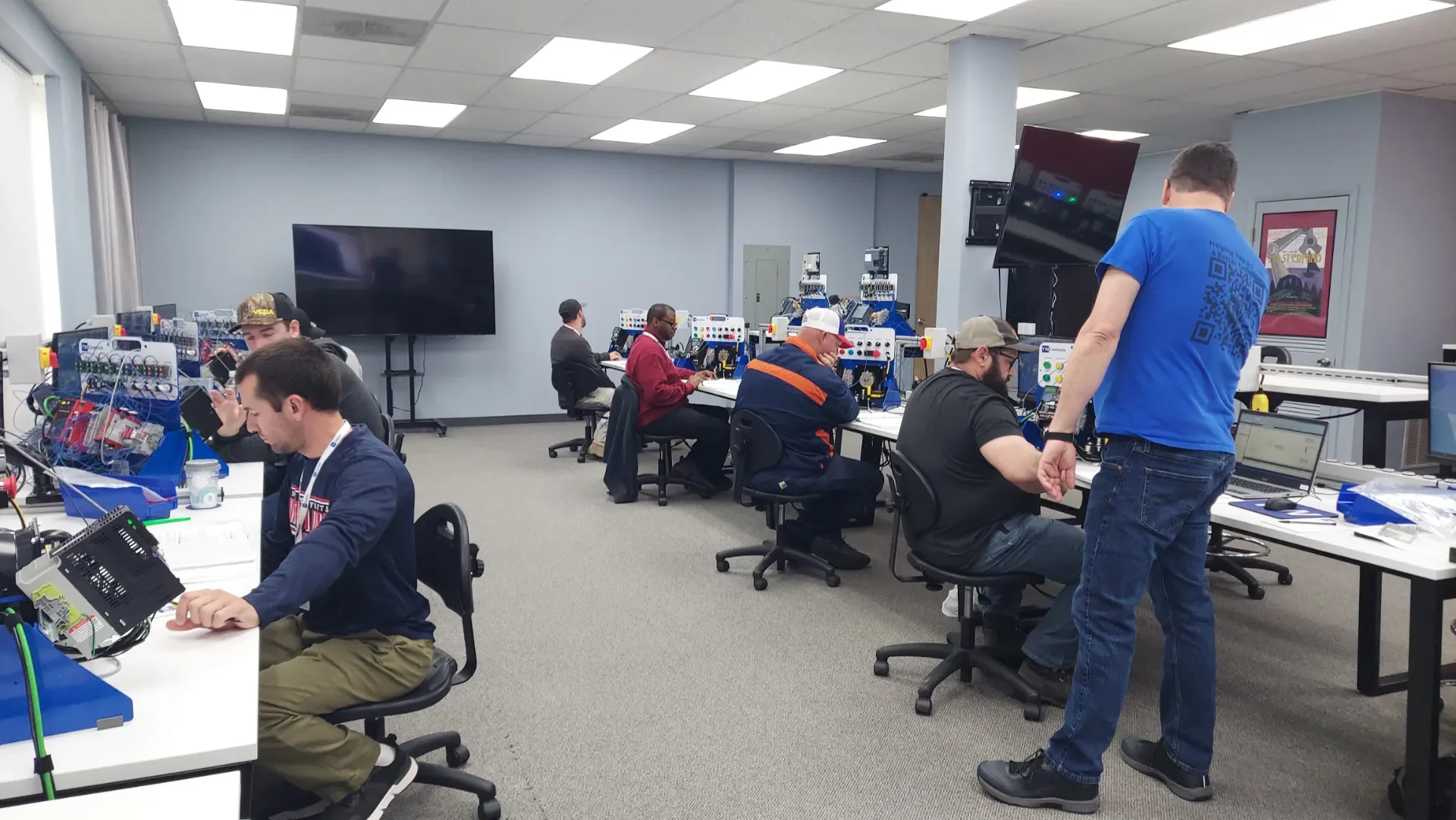
Tracing live 24V DC control power paths to isolate dropped safety signals in real time.
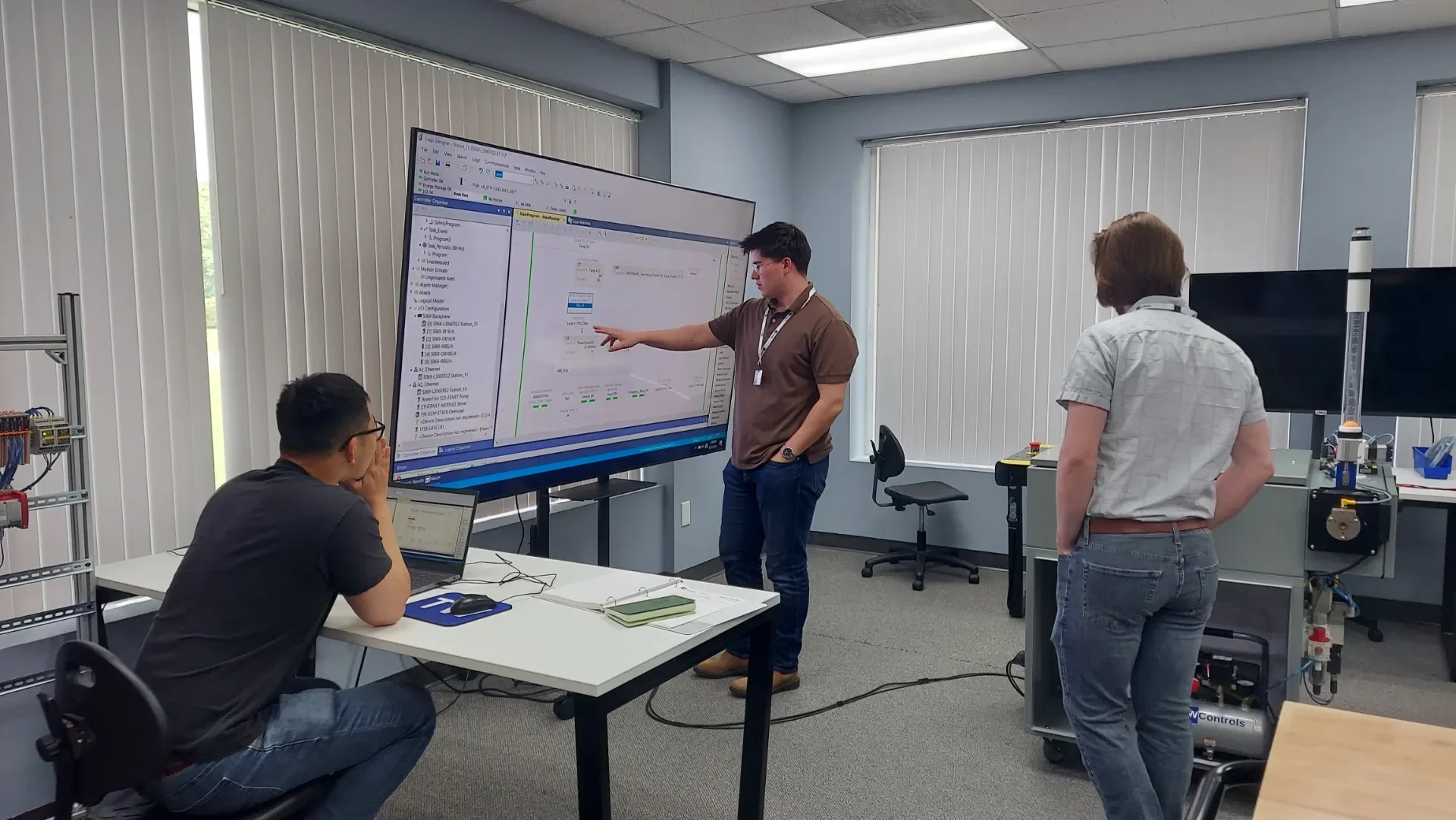
Walk-throughs of real ladder logic structures tied directly to live bench responses.
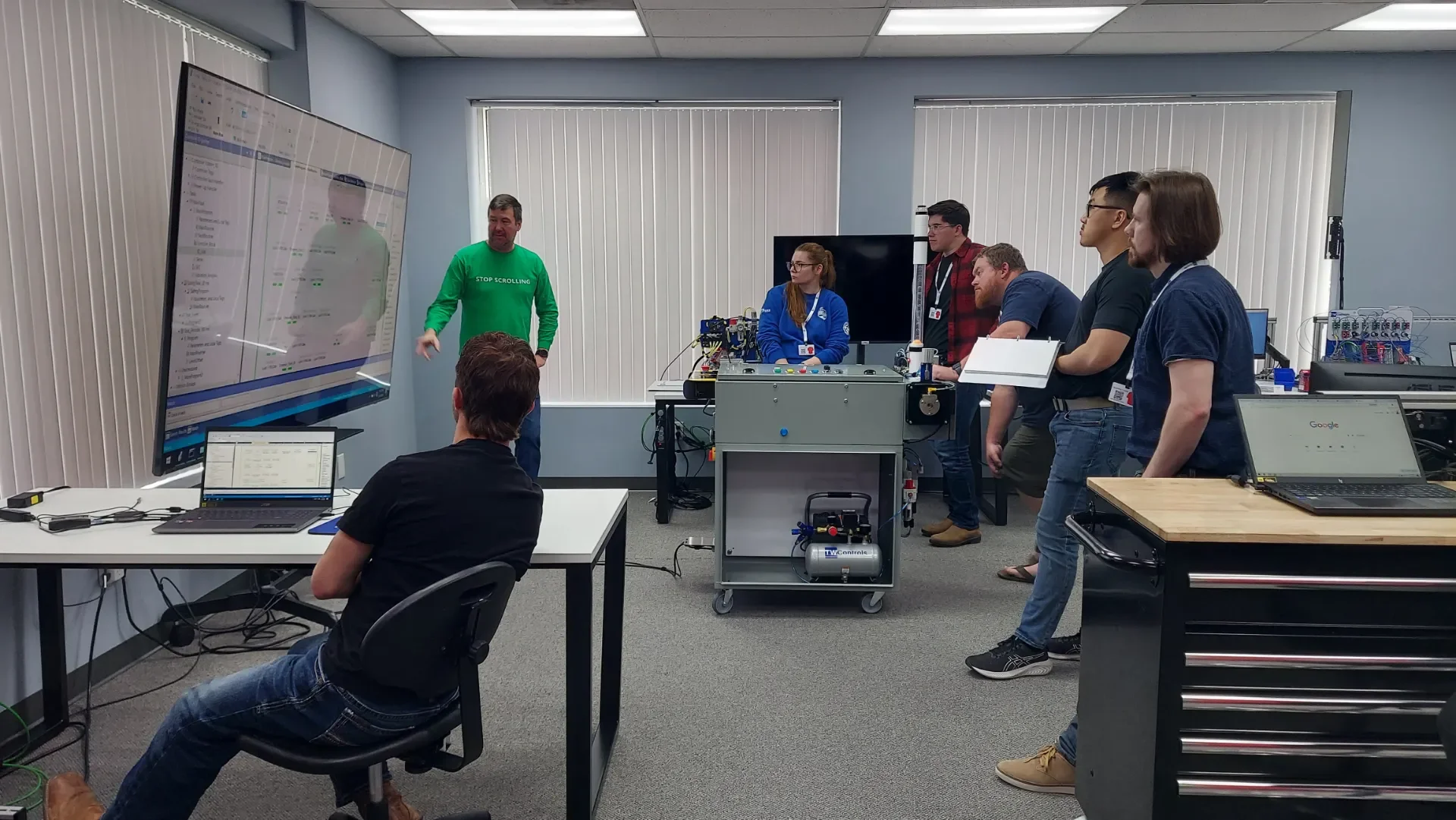
Analyzing field device feedback loops to prevent unnecessary part replacements during breakdowns.
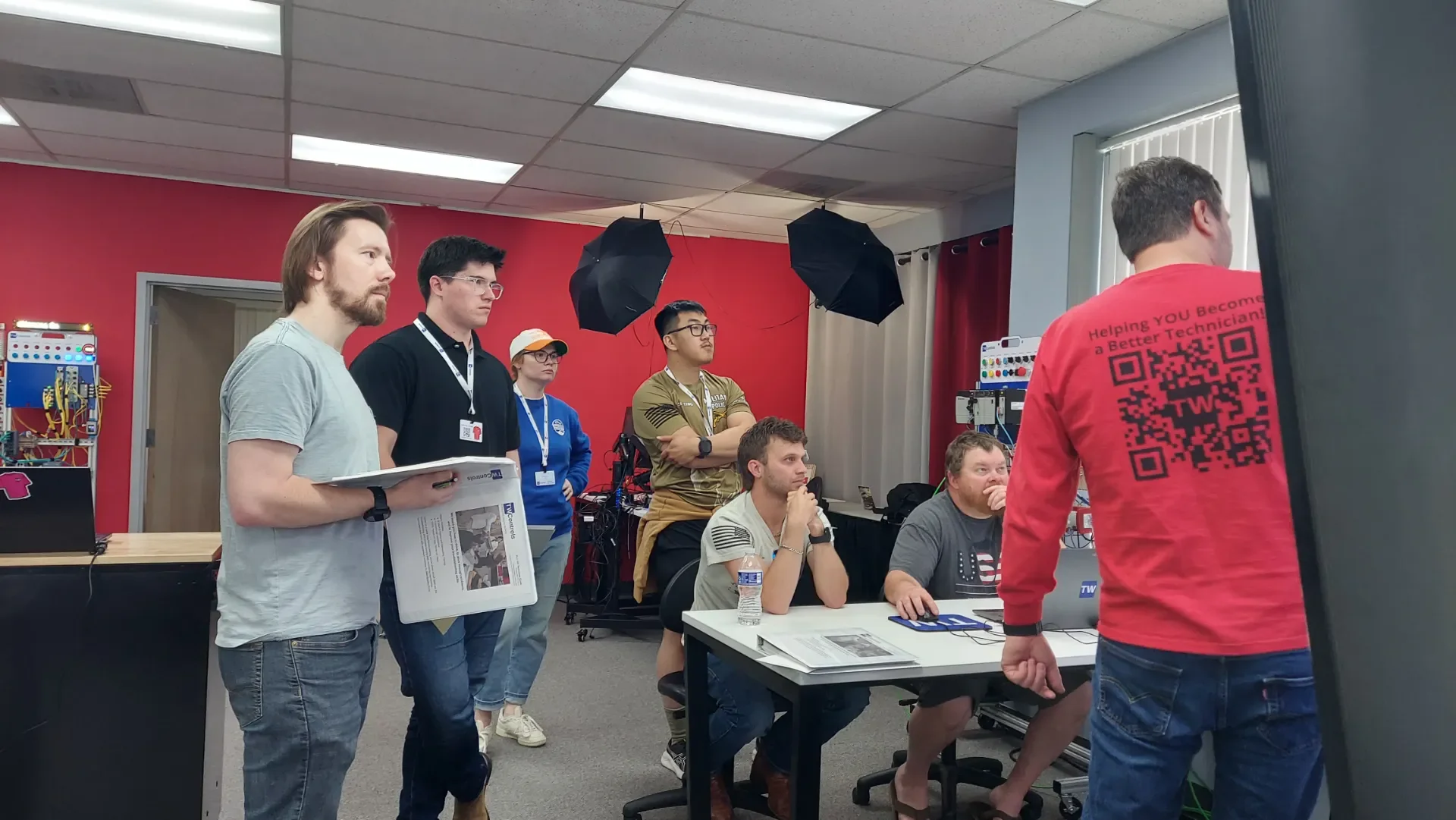
Deconstructing complex machine sequences into clear, step-by-step diagnostic workflows.
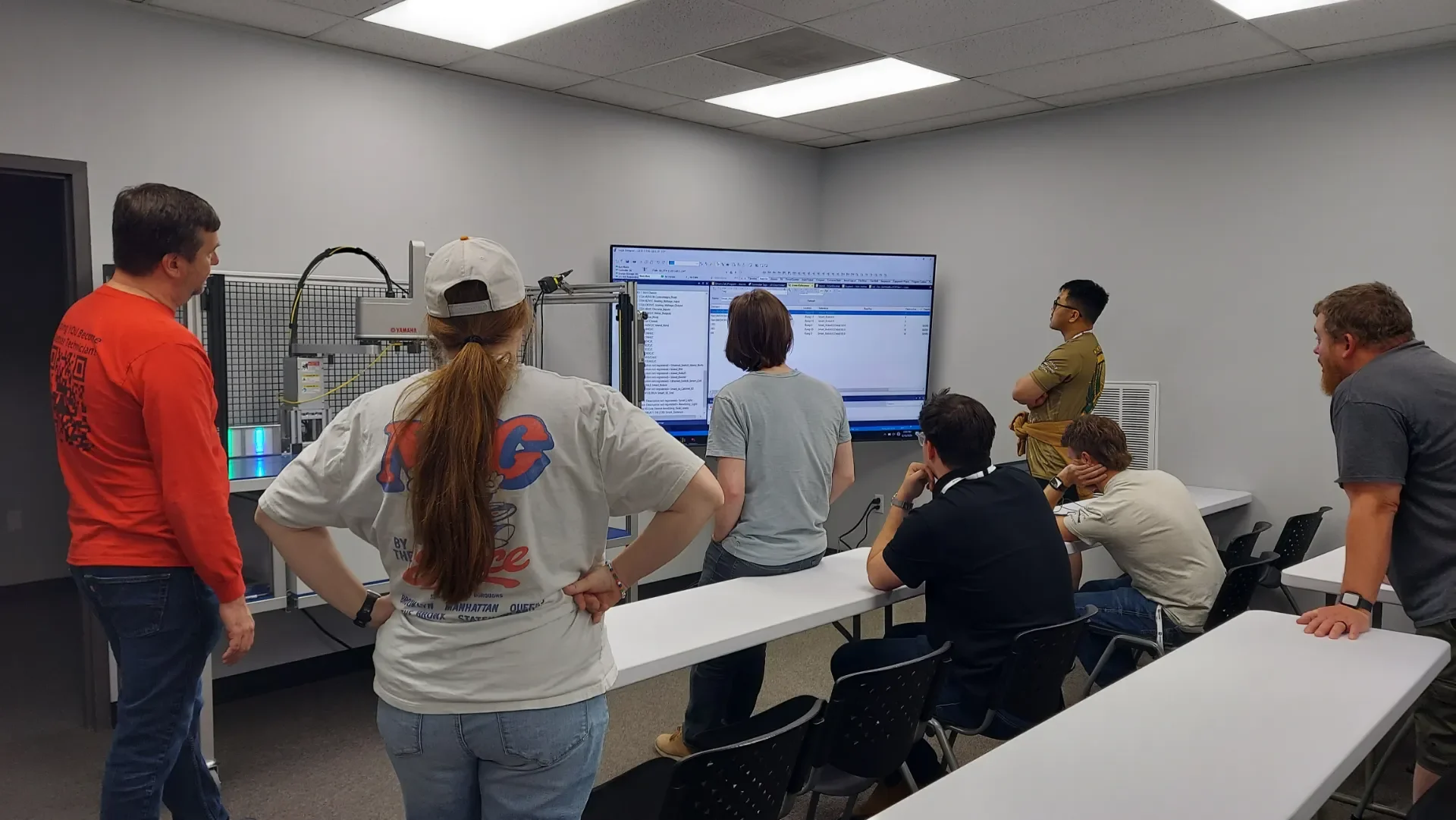
Shifting focus from basic ladder logic theory to high-speed plant-floor troubleshooting.
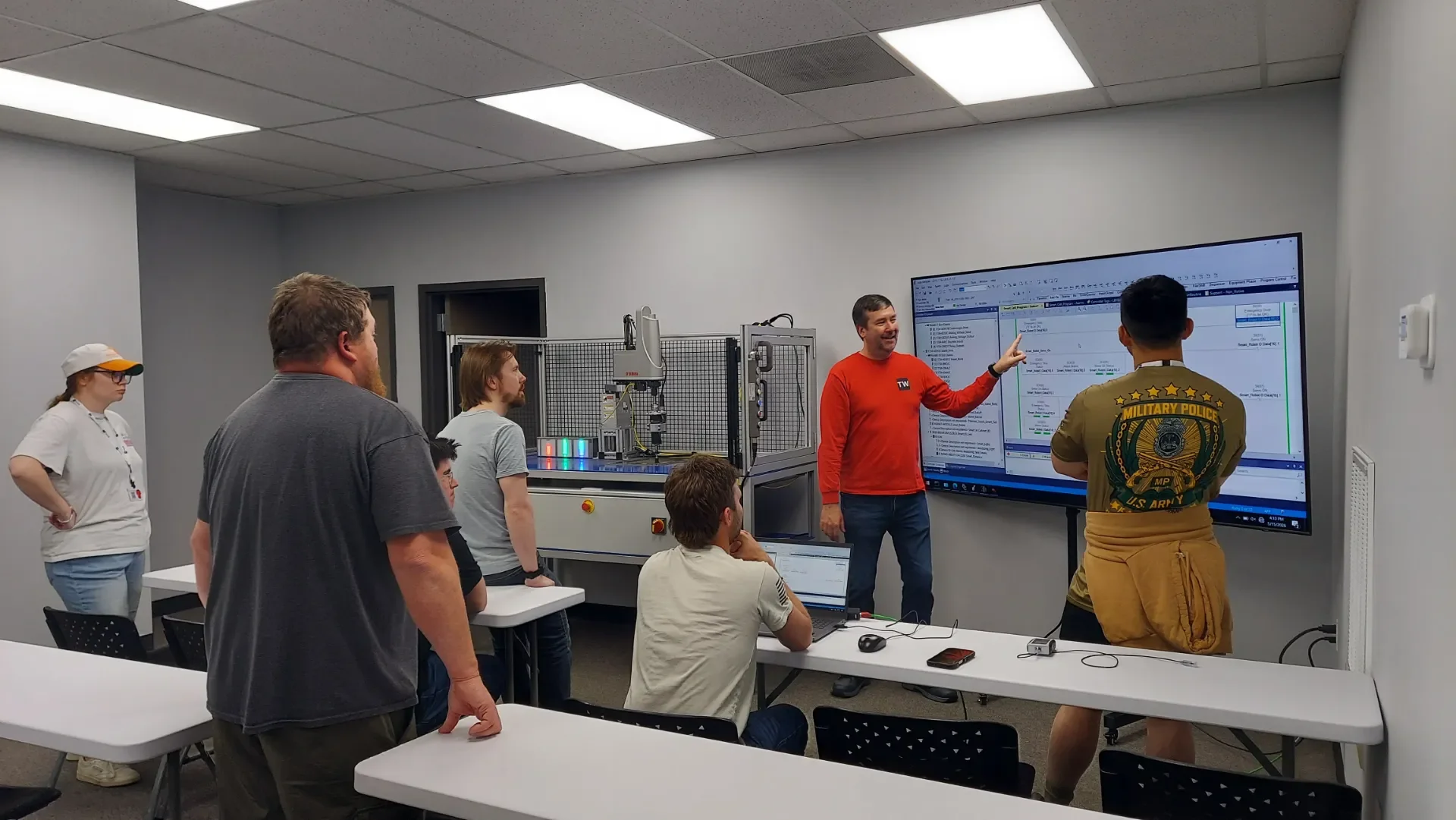
Pinpointing execution faults in Studio 5000 routines without resorting to trial-and-error.
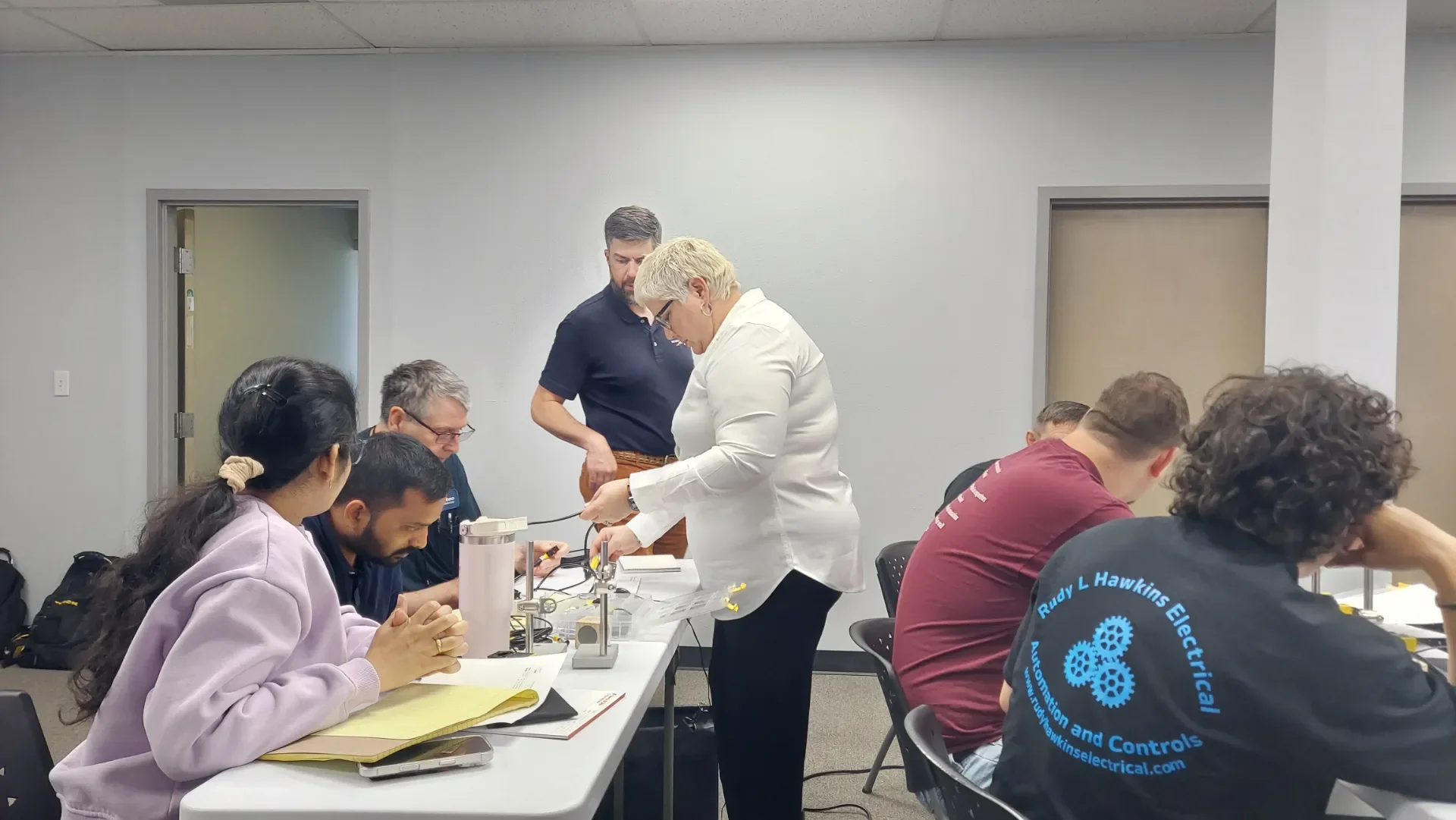
Hands-on wiring and signal verification to build confidence around live control cabinets.
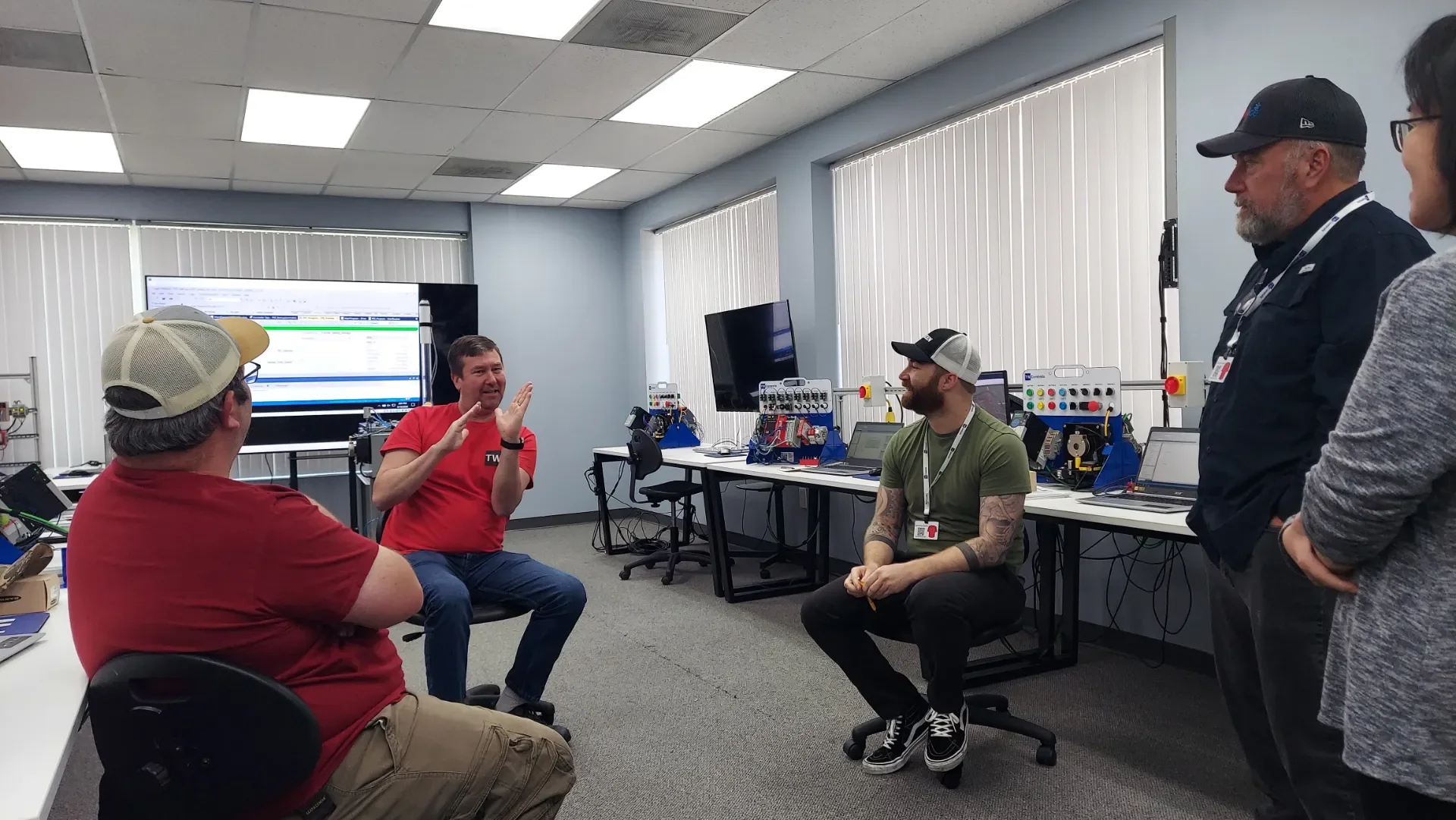
Teaming up to troubleshoot complex panel wiring faults and relay logic before touching live plant equipment.
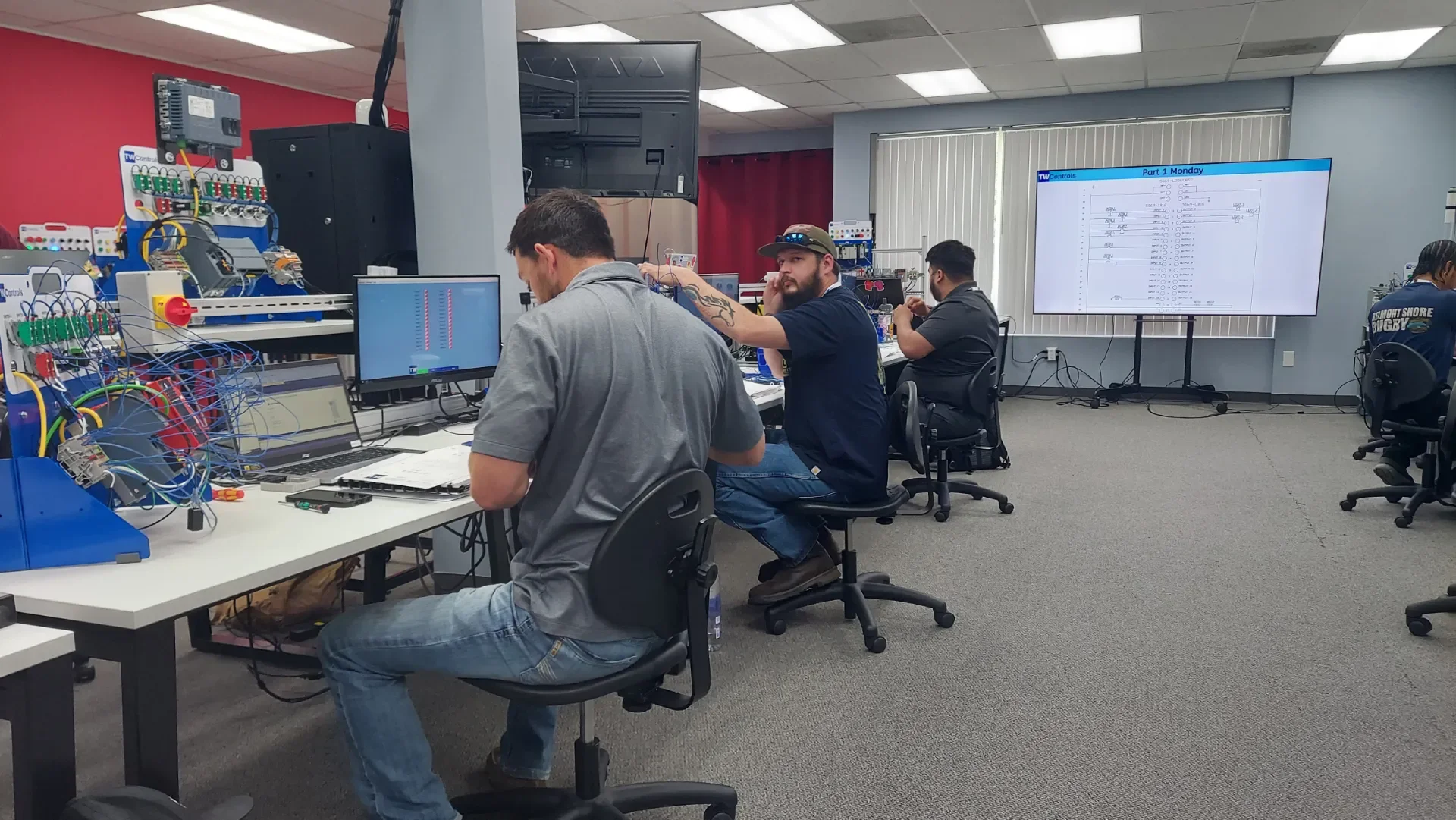
Using test meters to check signal continuity and verify input states without relying on trial-and-error.
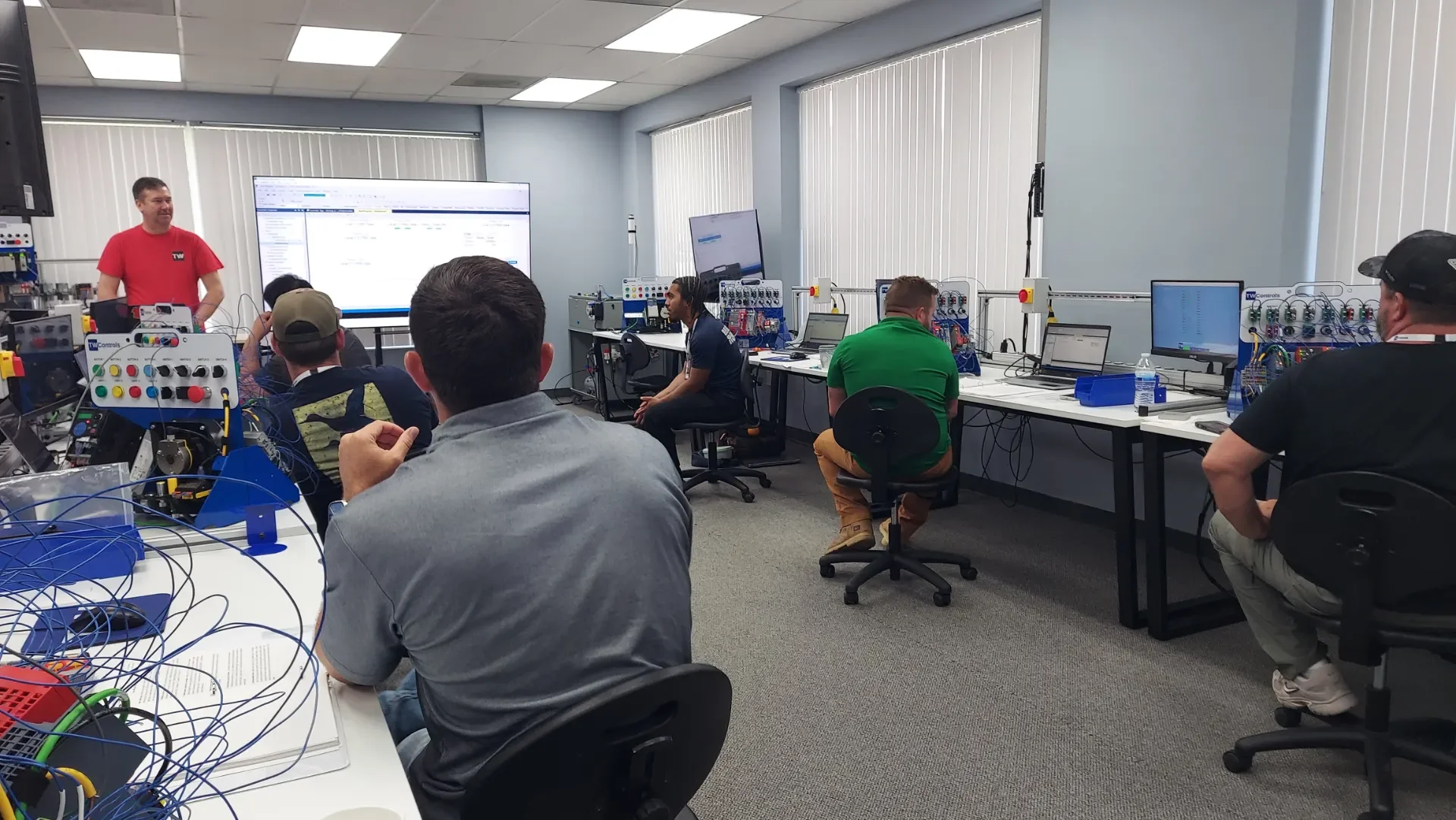
Every seat has direct access to live control hardware—no watching over someone else's shoulder.
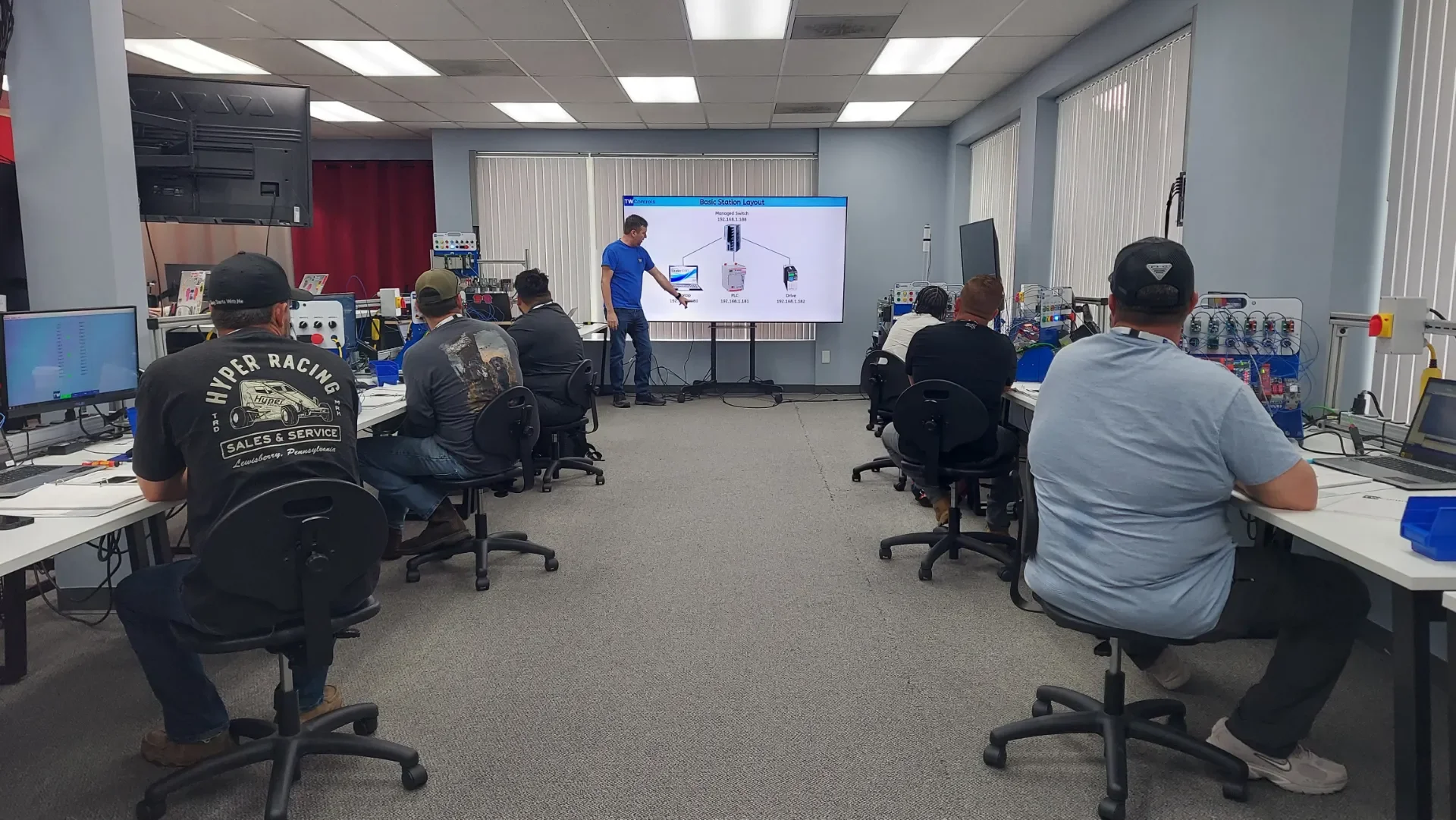
Connecting physical pushbuttons and field sensors directly to operational controller logic.
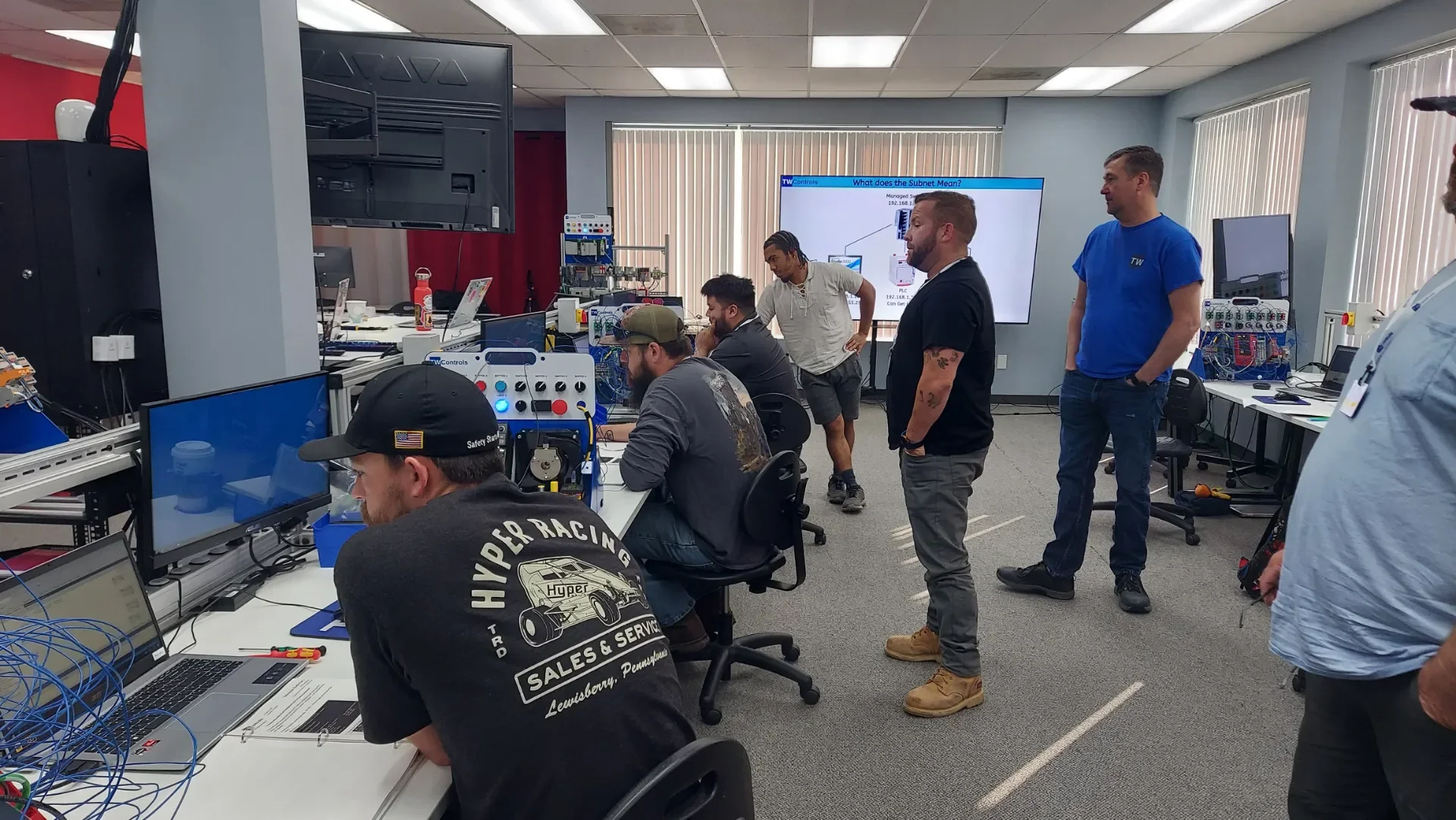
Gaining total panel confidence so you never have to hesitate when taking off-shift fault calls.
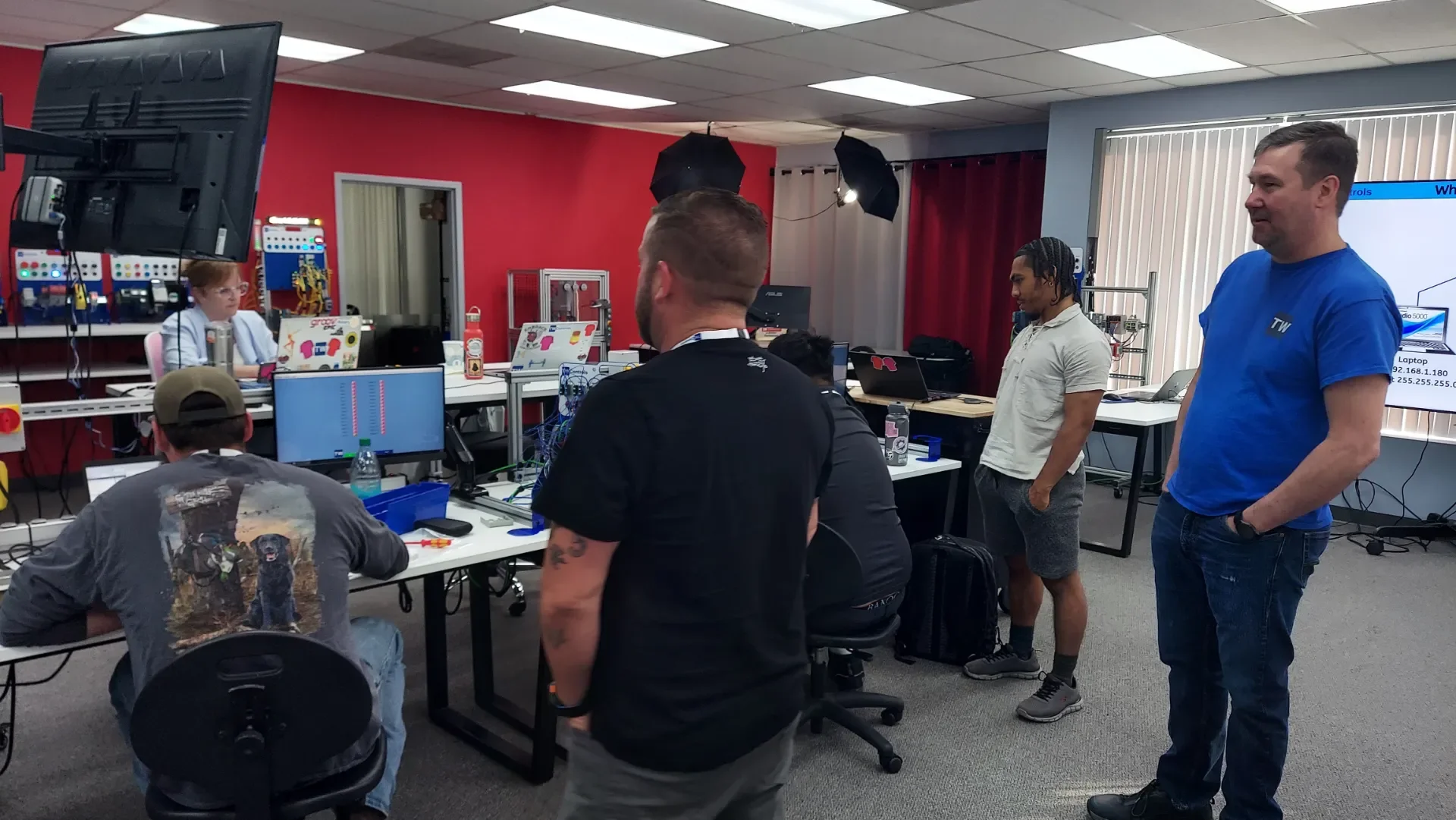
Developing systematic diagnostic workflows to troubleshoot live panels with absolute control.
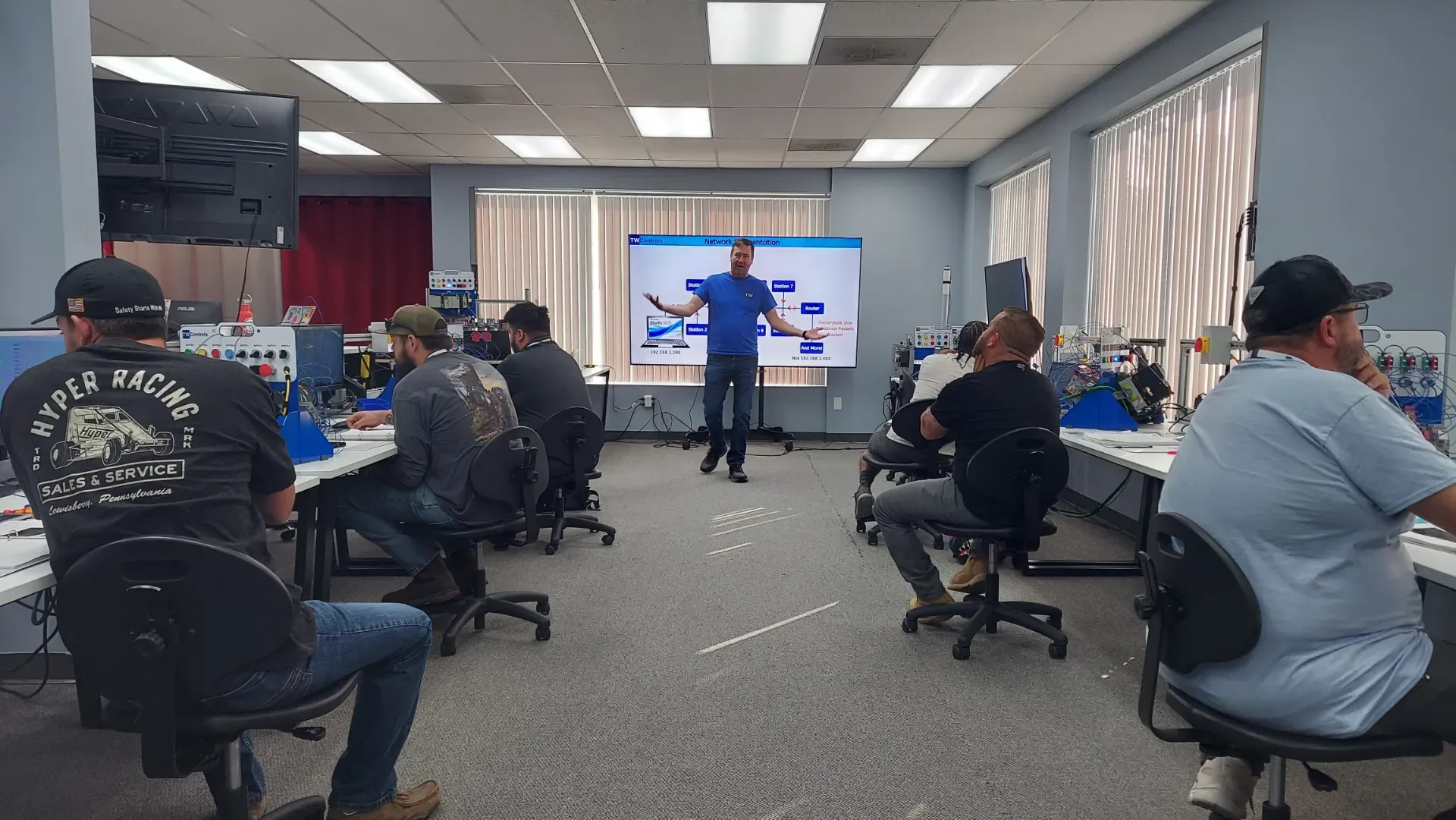
Analyzing live Studio 5000 tag values and rung execution to verify software intent against physical hardware.
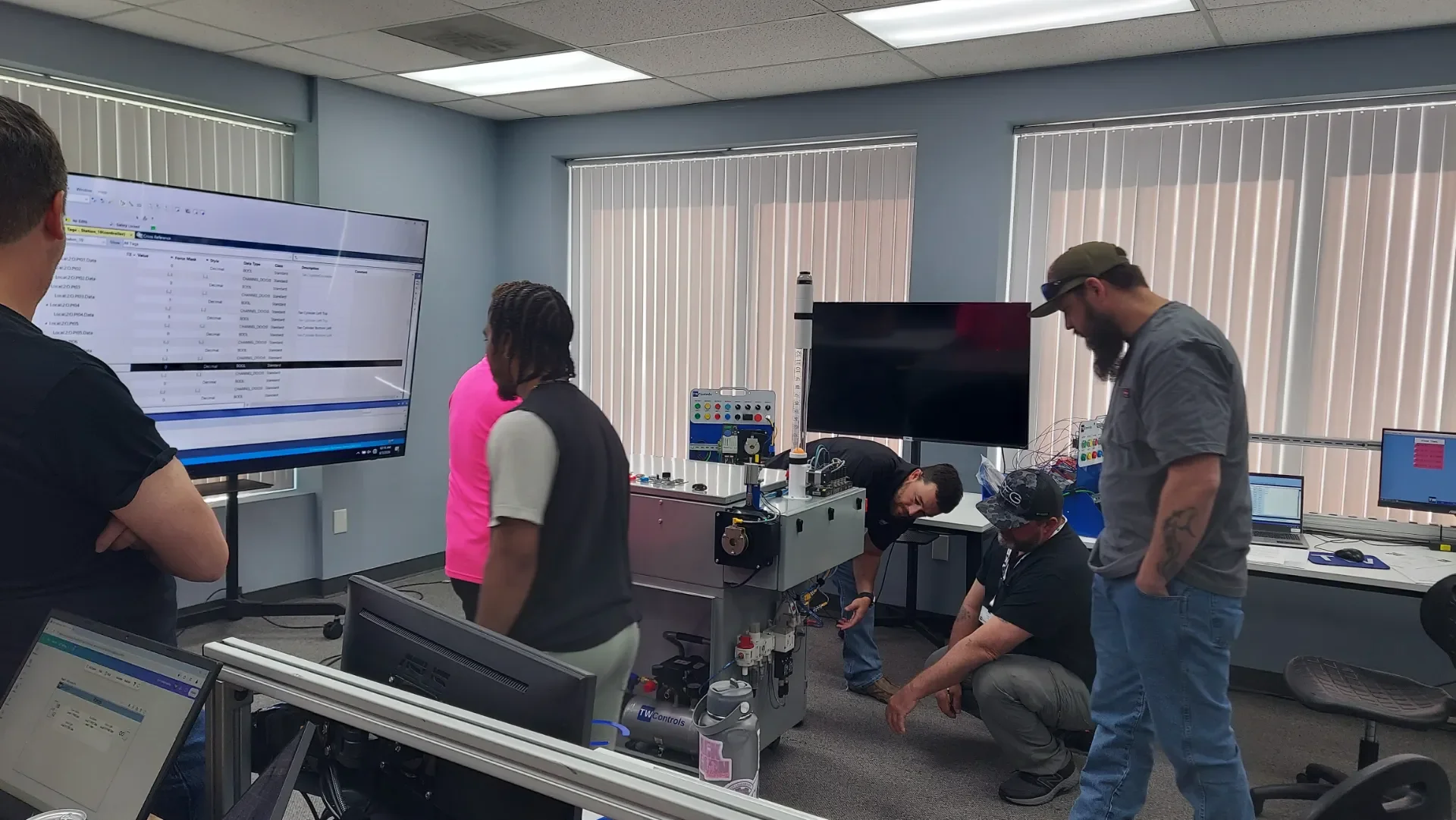
Methodically verifying field inputs and outputs to stop guessing which component failed.
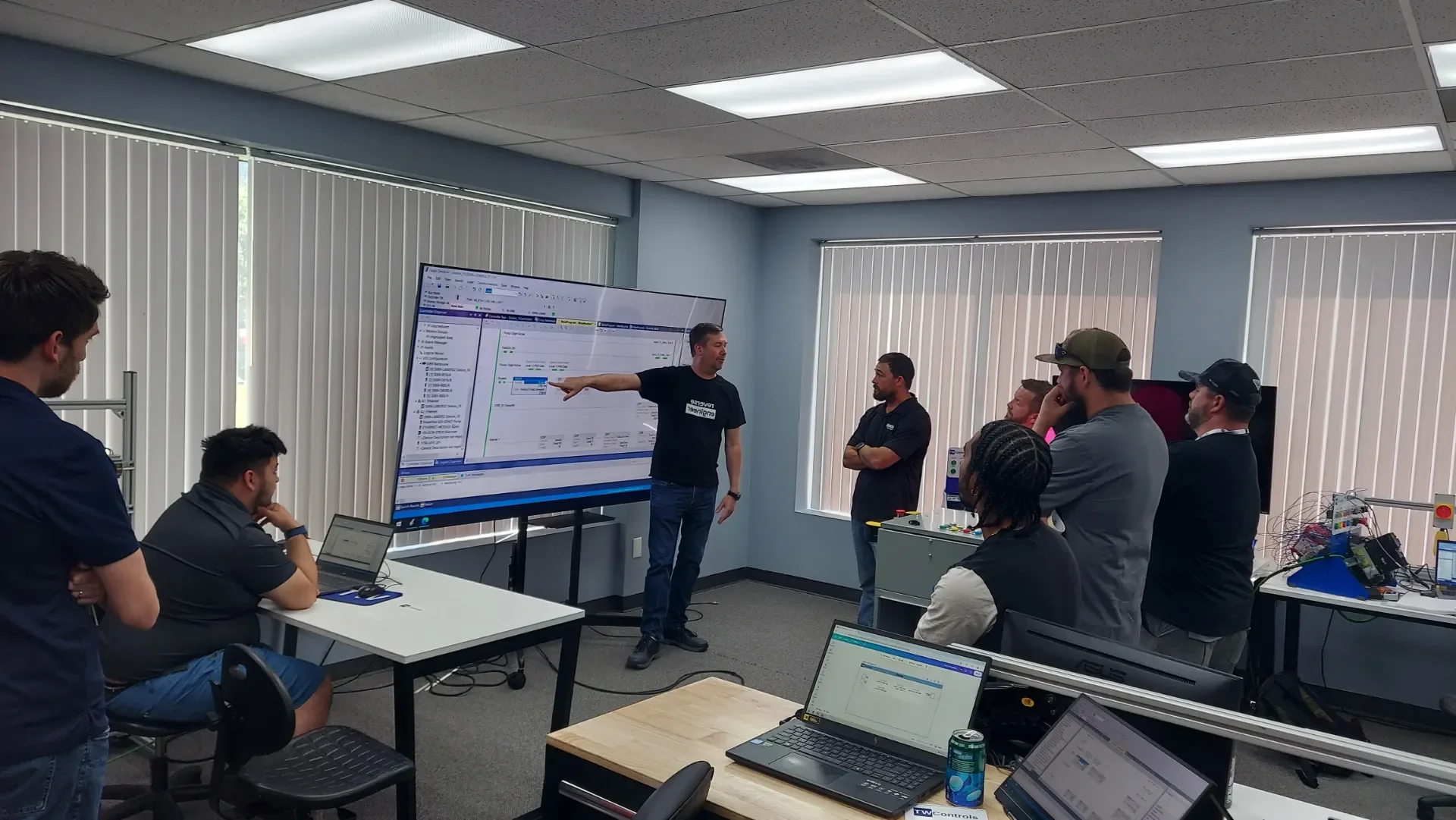
Breaking down complex control routines into actionable, step-by-step diagnostic procedures.
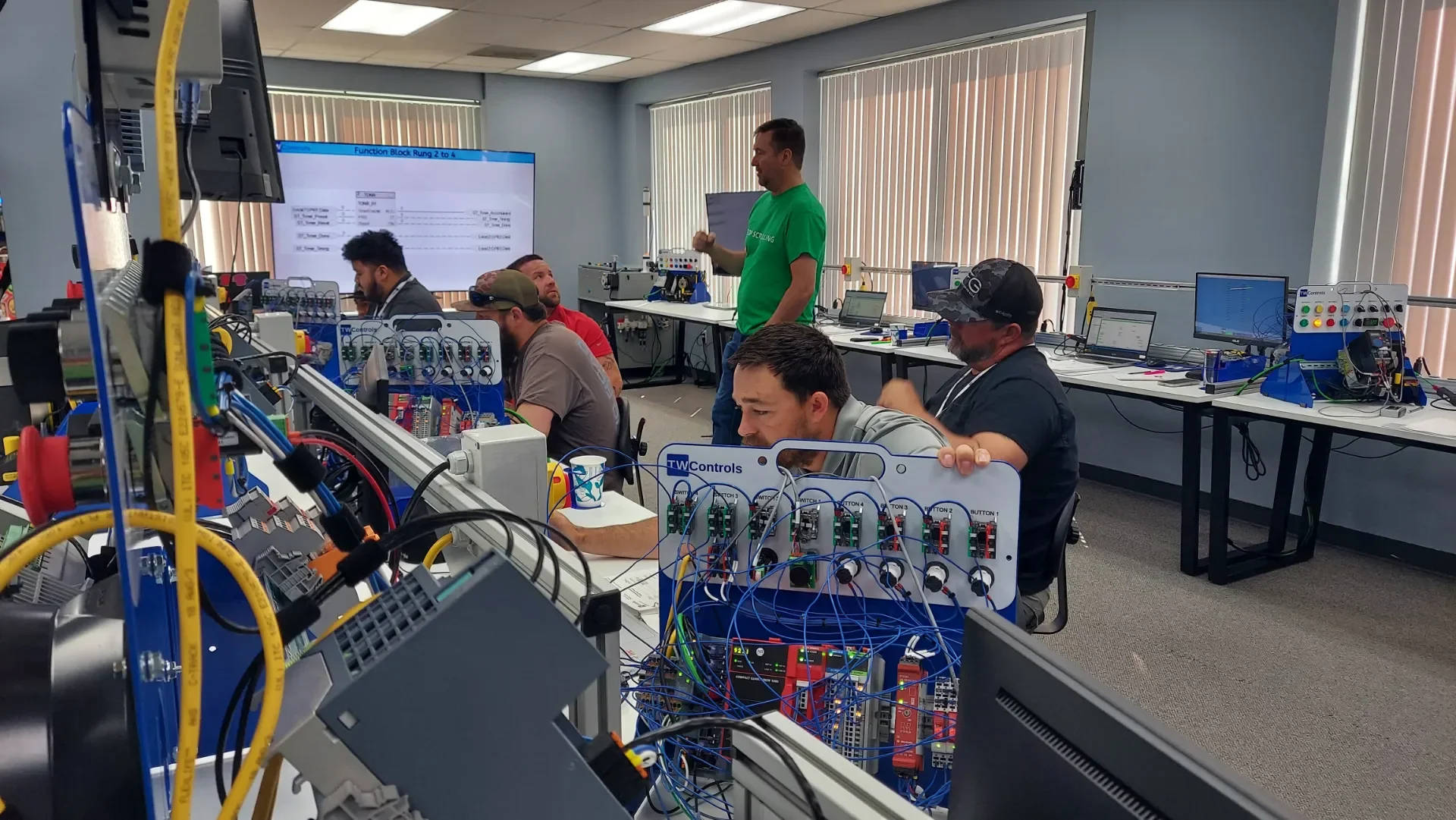
Tracing control voltage step-by-step through terminal strips, relays, and field devices.
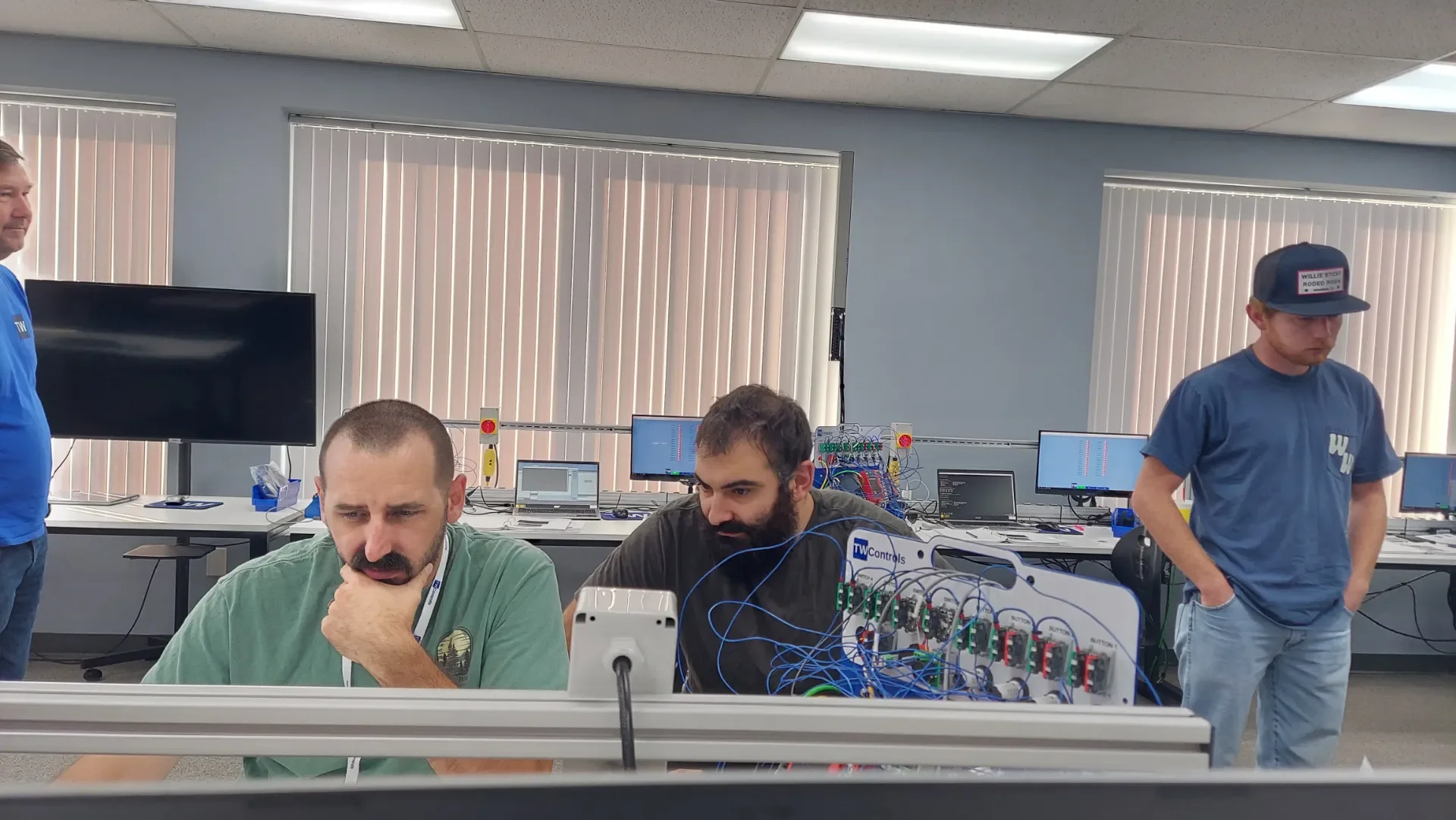
Pairing up at individual benches to isolate wiring faults, test inputs, and verify signal continuity.
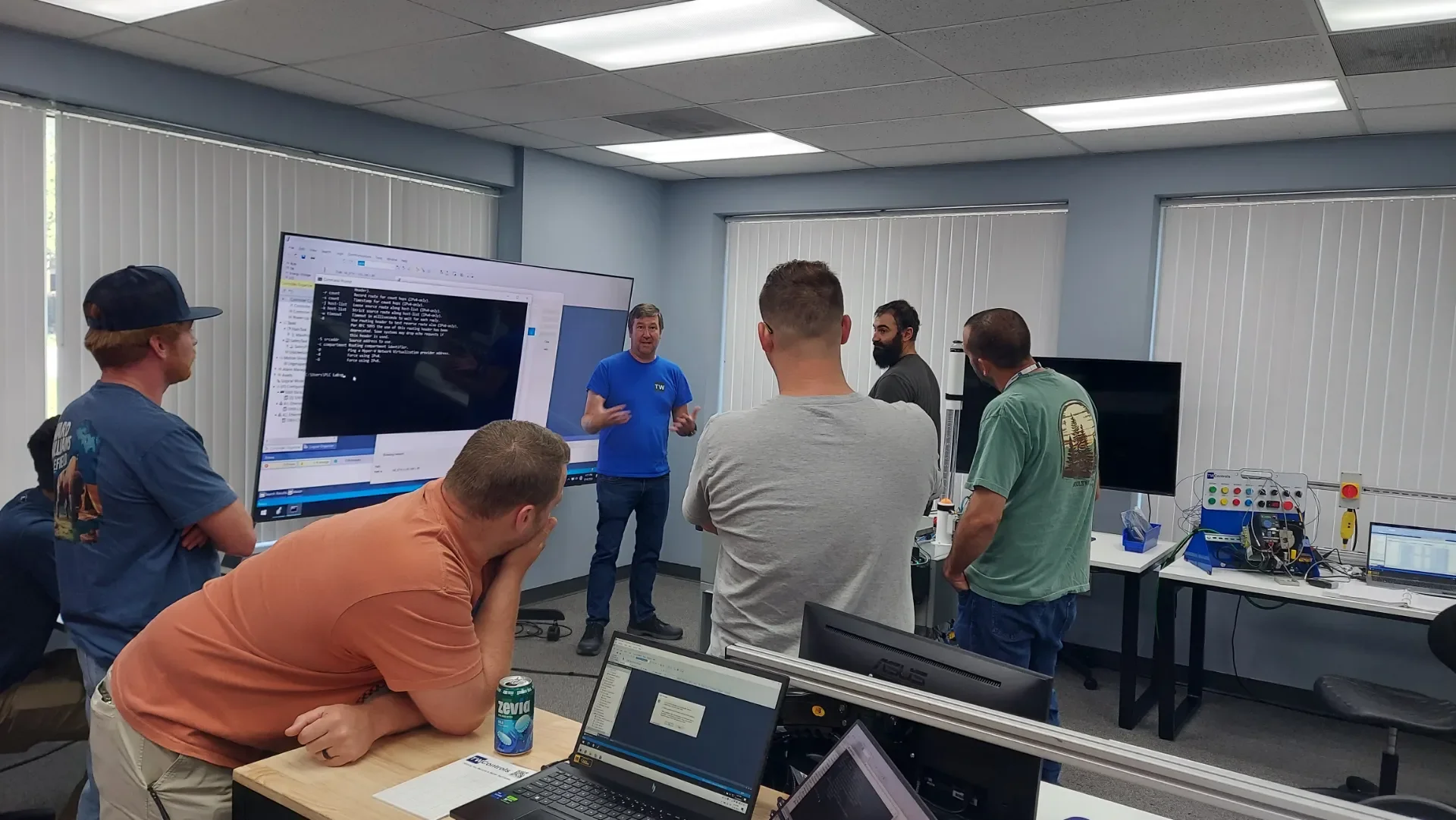
Working through simulated line stoppages to build fast, reliable plant-floor diagnostic habits.
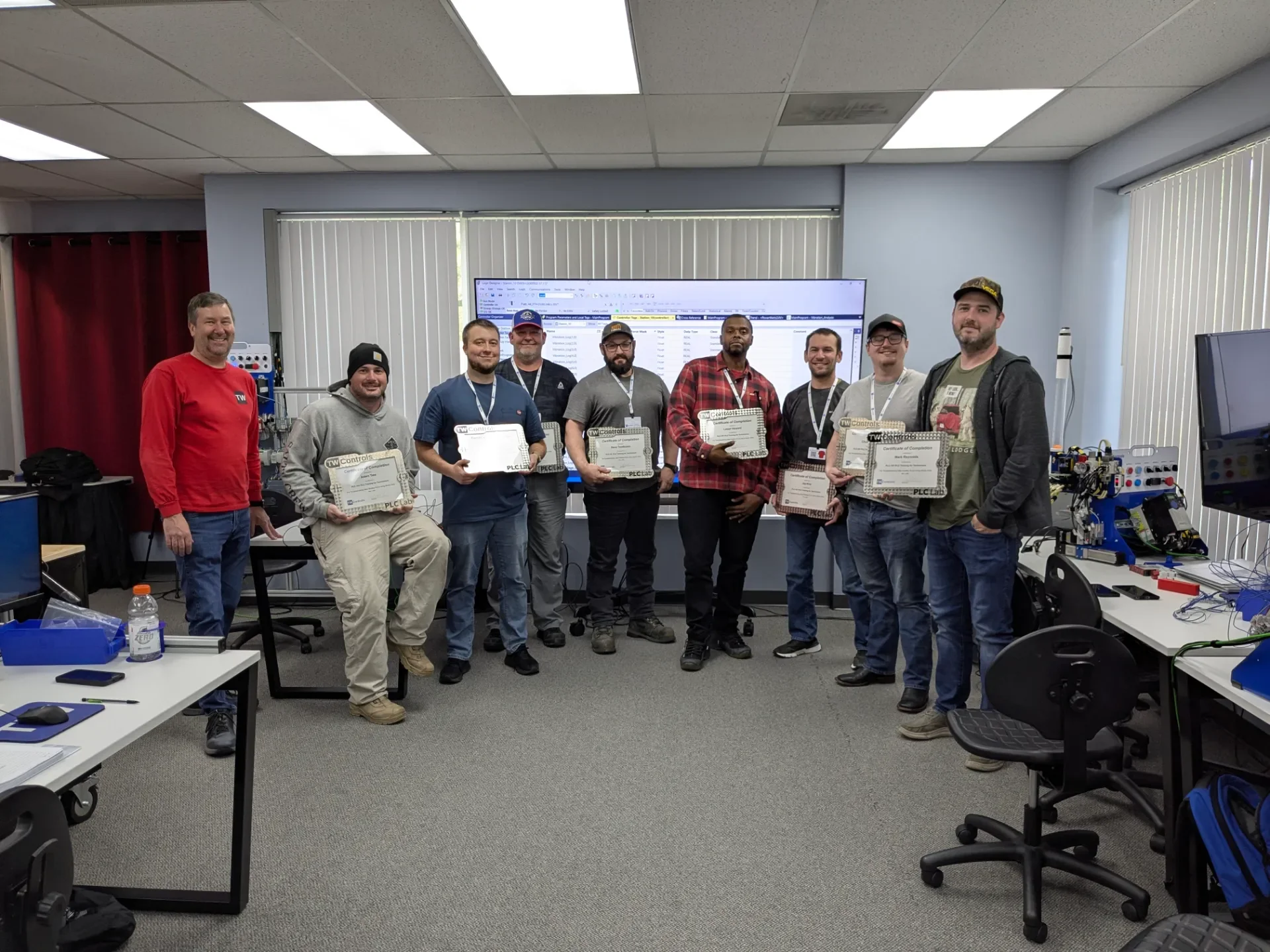
Verified graduates leaving Roanoke with practical skills to transform their daily plant operations.
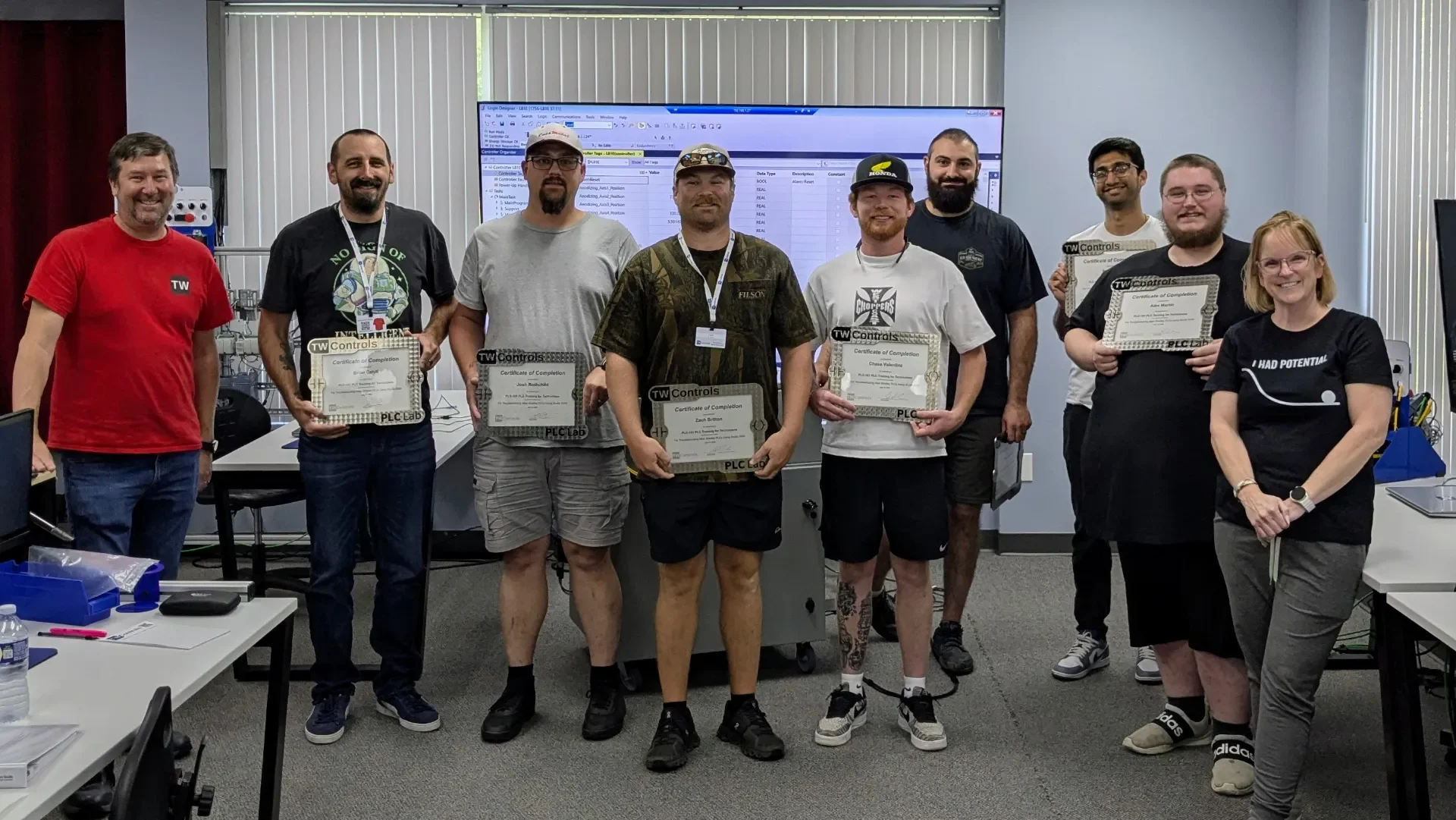
Earning hands-on credentials that prove your ability to step up and command higher earnings.
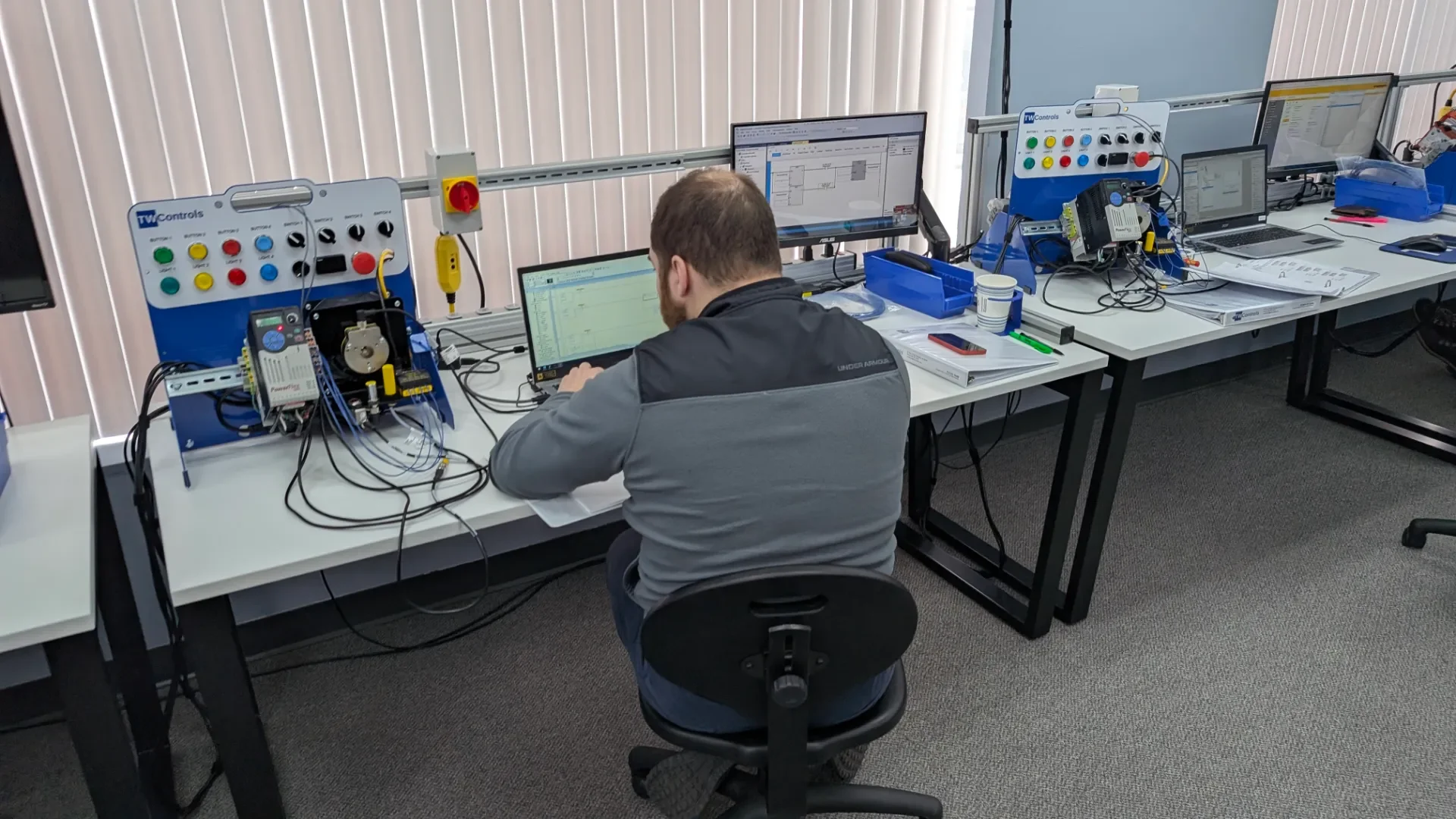
Individual lab stations engineered to give every technician maximum hands-on exposure.
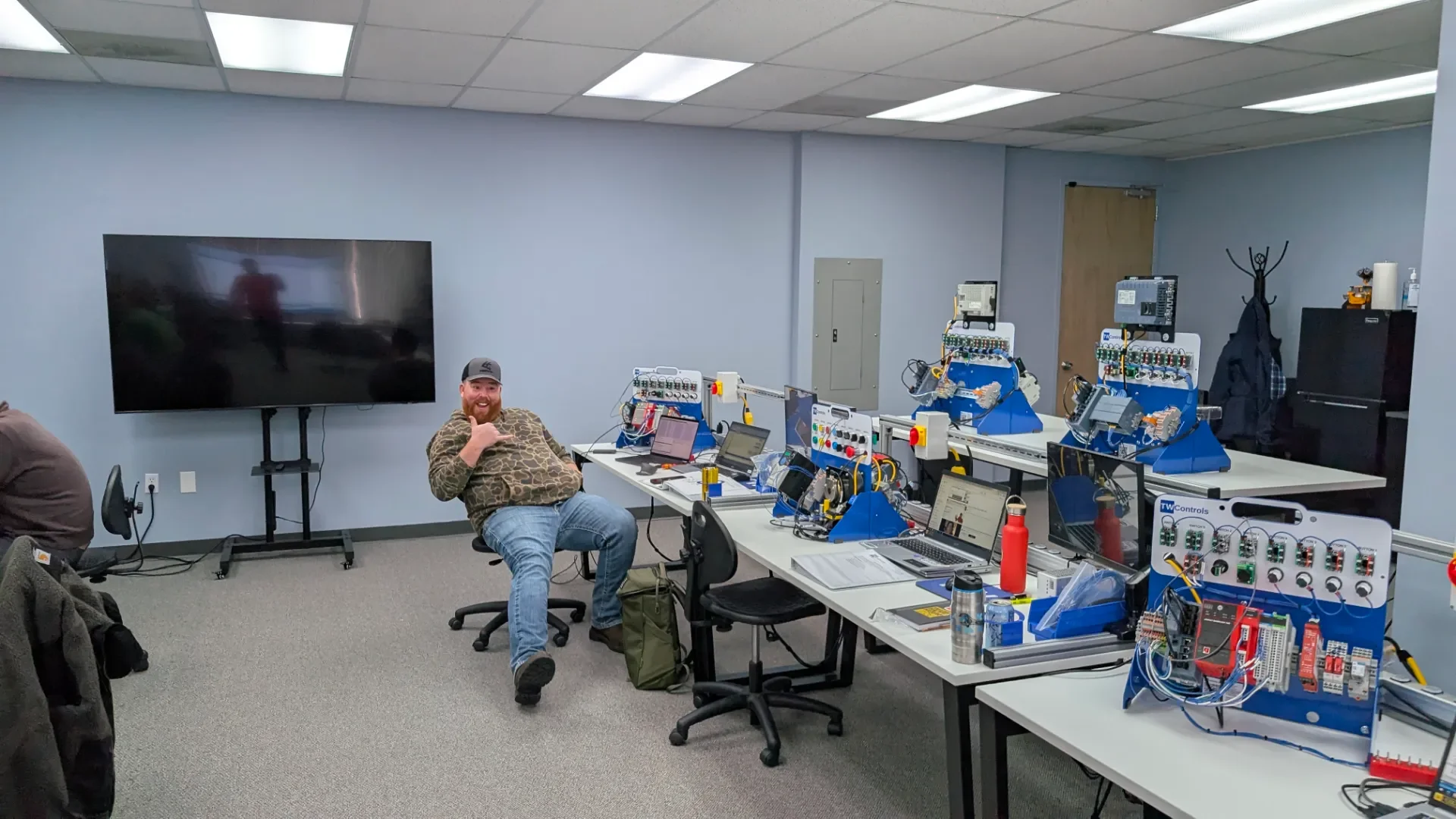
Fully equipped lab stations built specifically for real-world fault simulation and hardware testing.
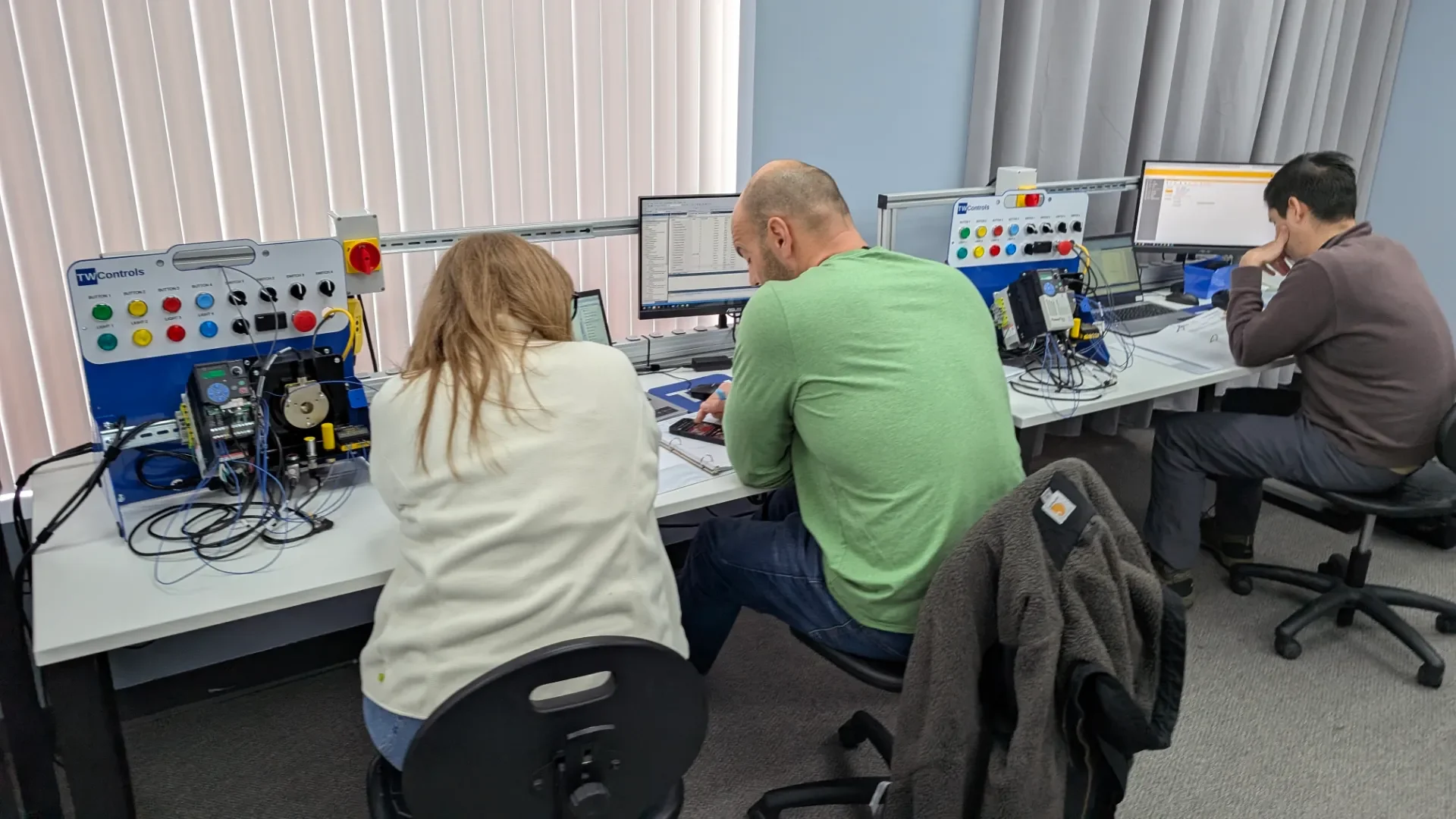
Mastering meter leads and signal isolation so you can confidently clear high-pressure line breakdowns.
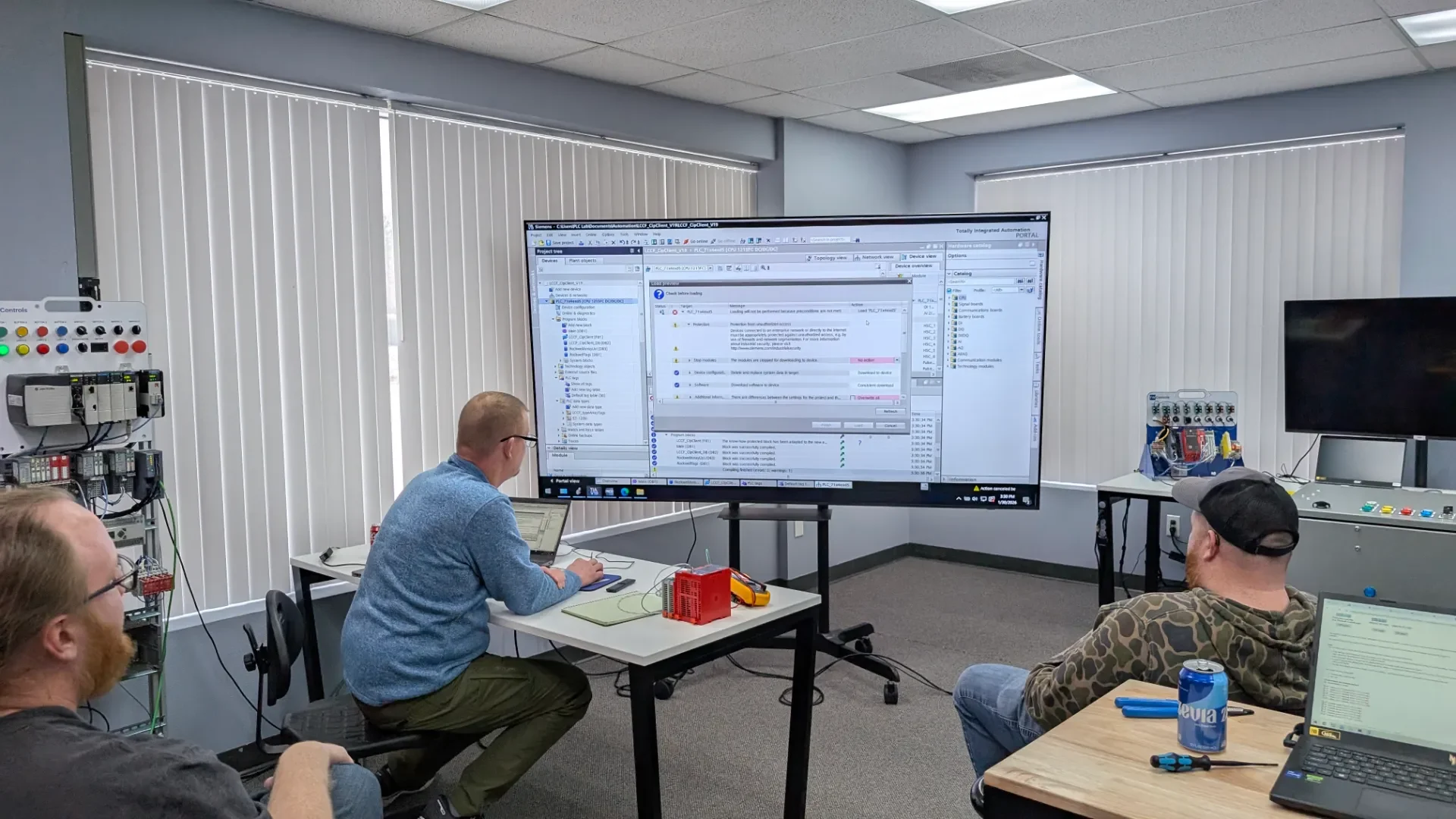
Correlating Studio 5000 logic execution directly to physical device behavior—zero theoretical guesswork.
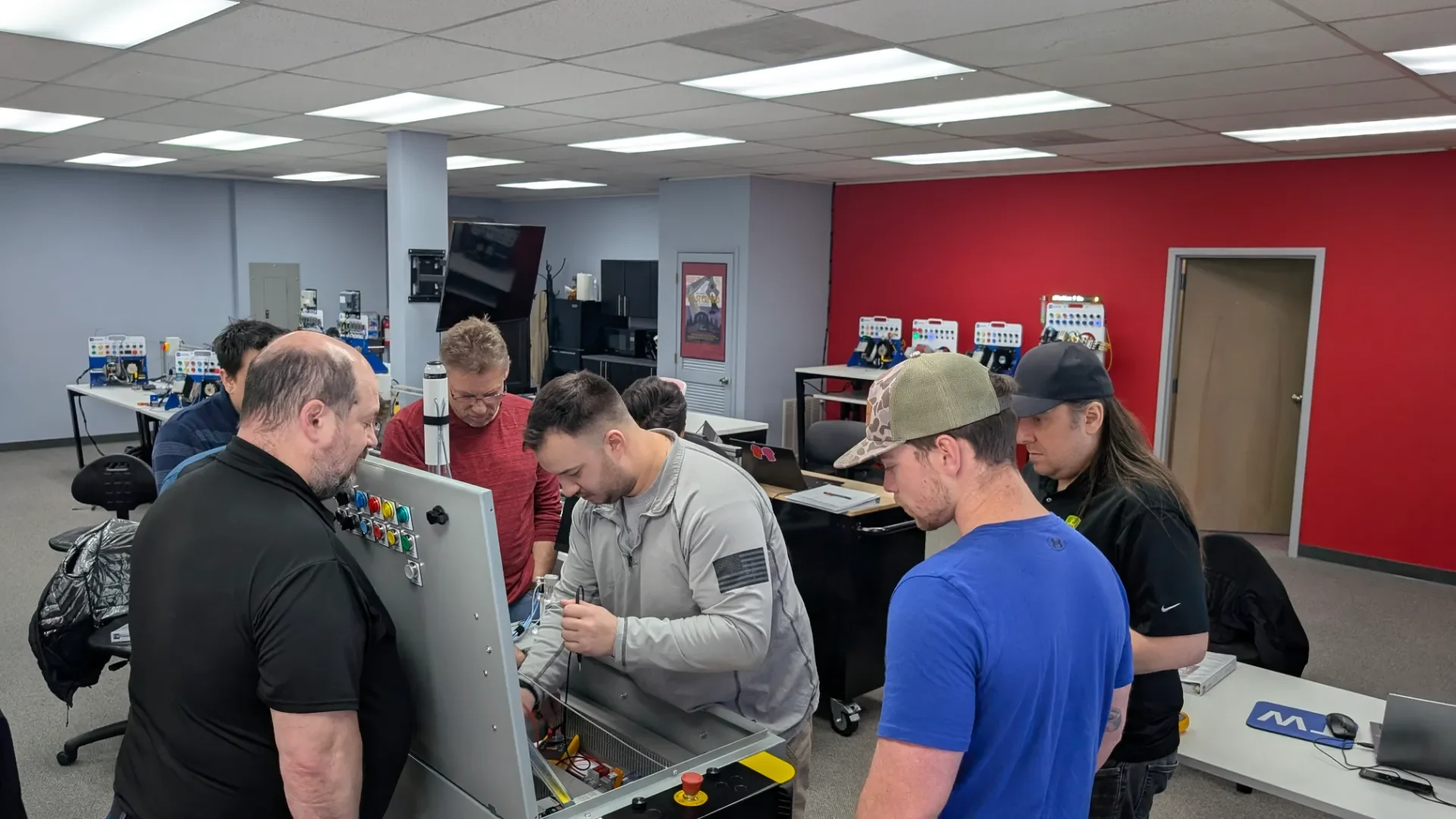
Isolating control panel wiring bugs and power distribution faults in a collaborative team setting.
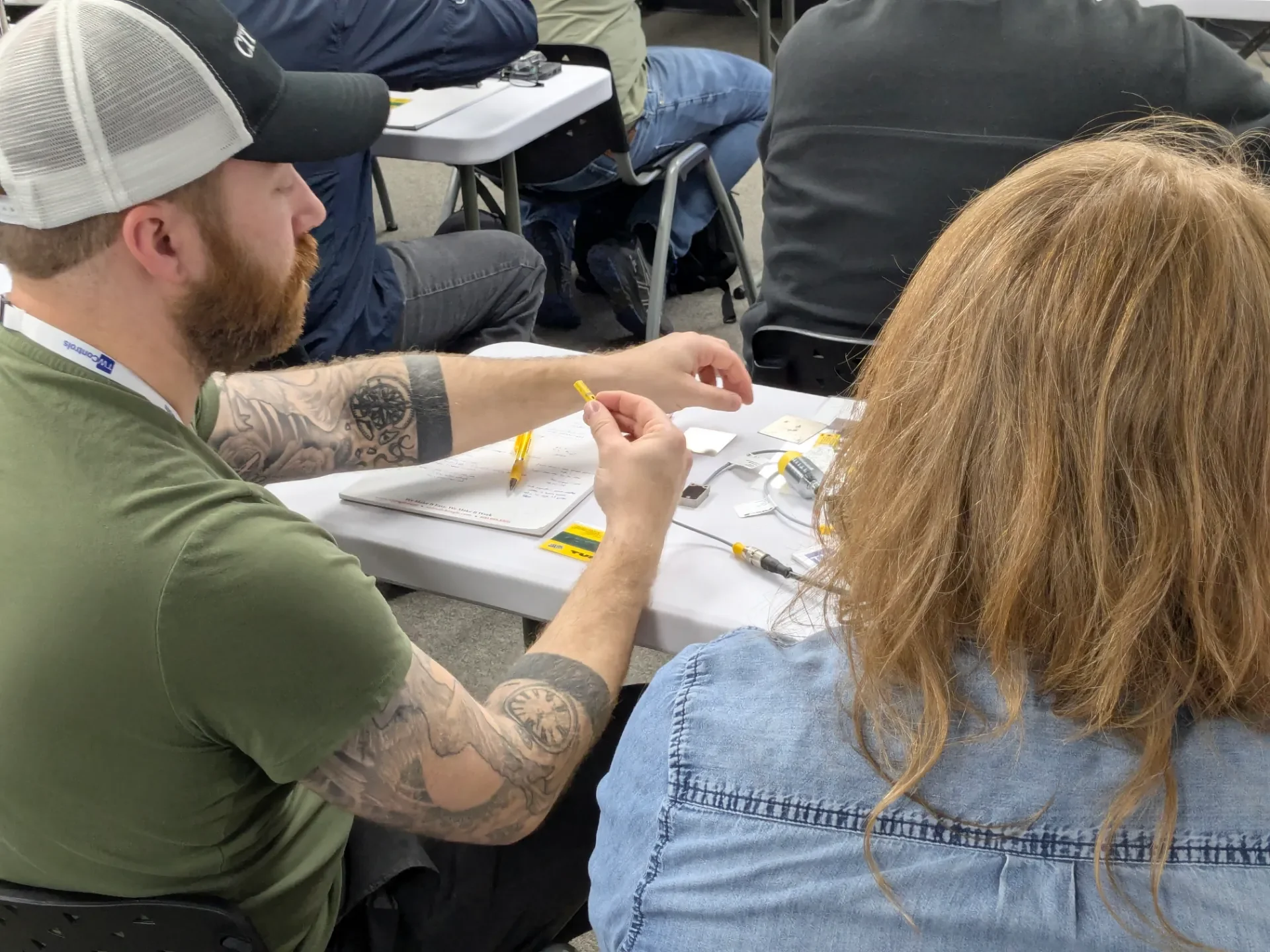
Hands-on fine wiring and device integration to master sensor connections and terminal landing.
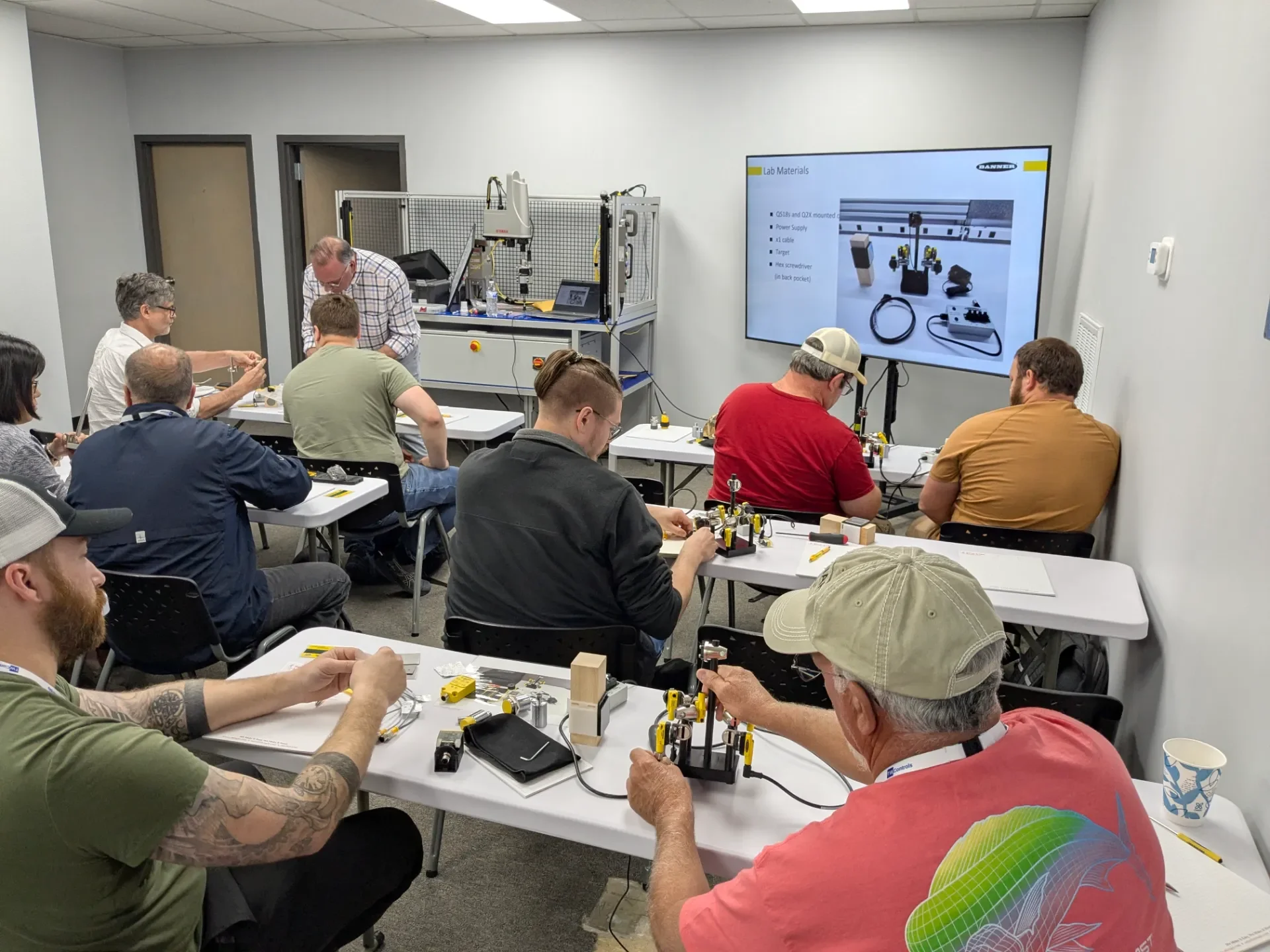
Building, wiring, and testing physical control components hands-on at individual student workbenches.
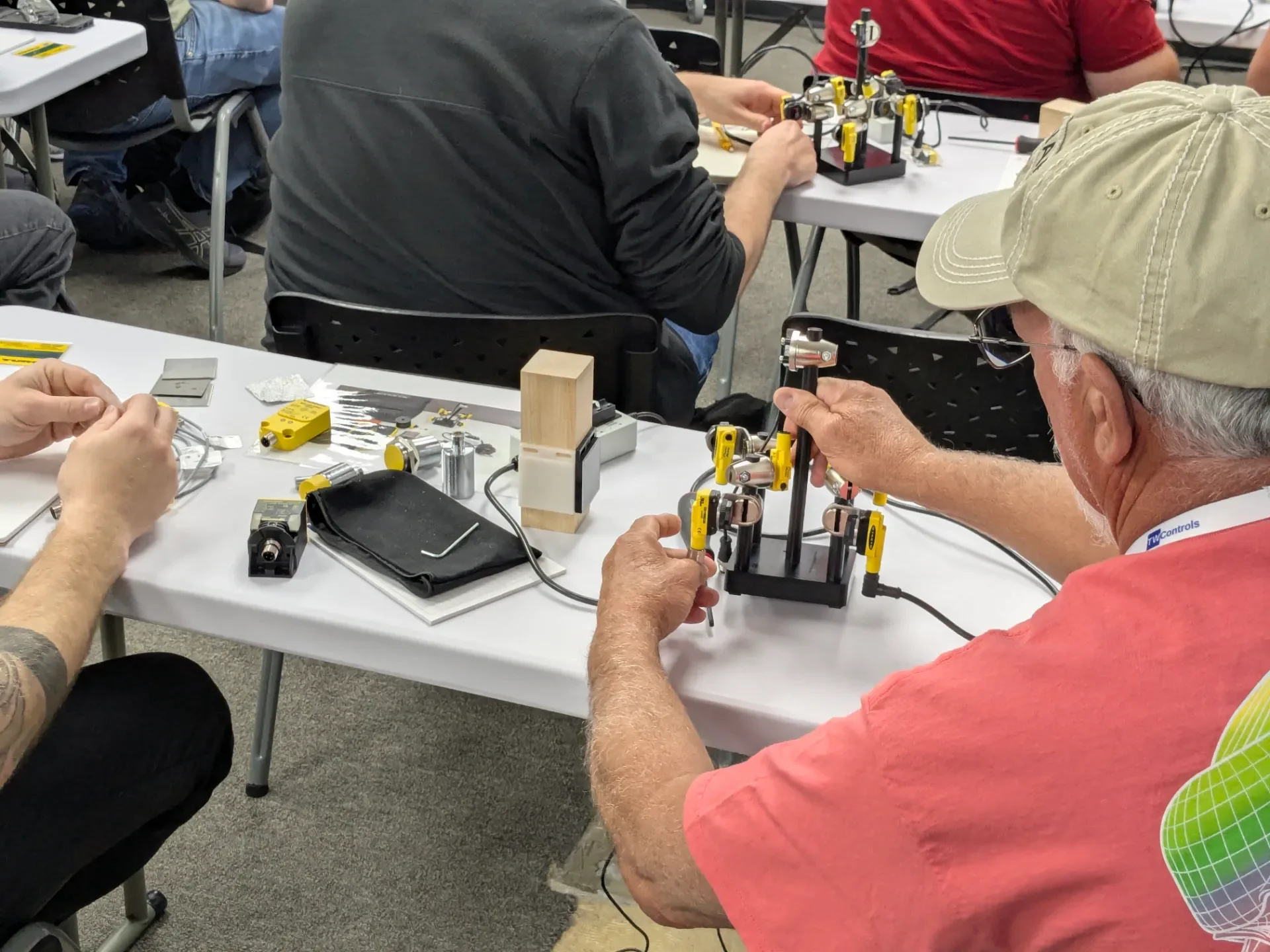
Building mechanical and electrical muscle memory by configuring physical switches, relays, and sensors.
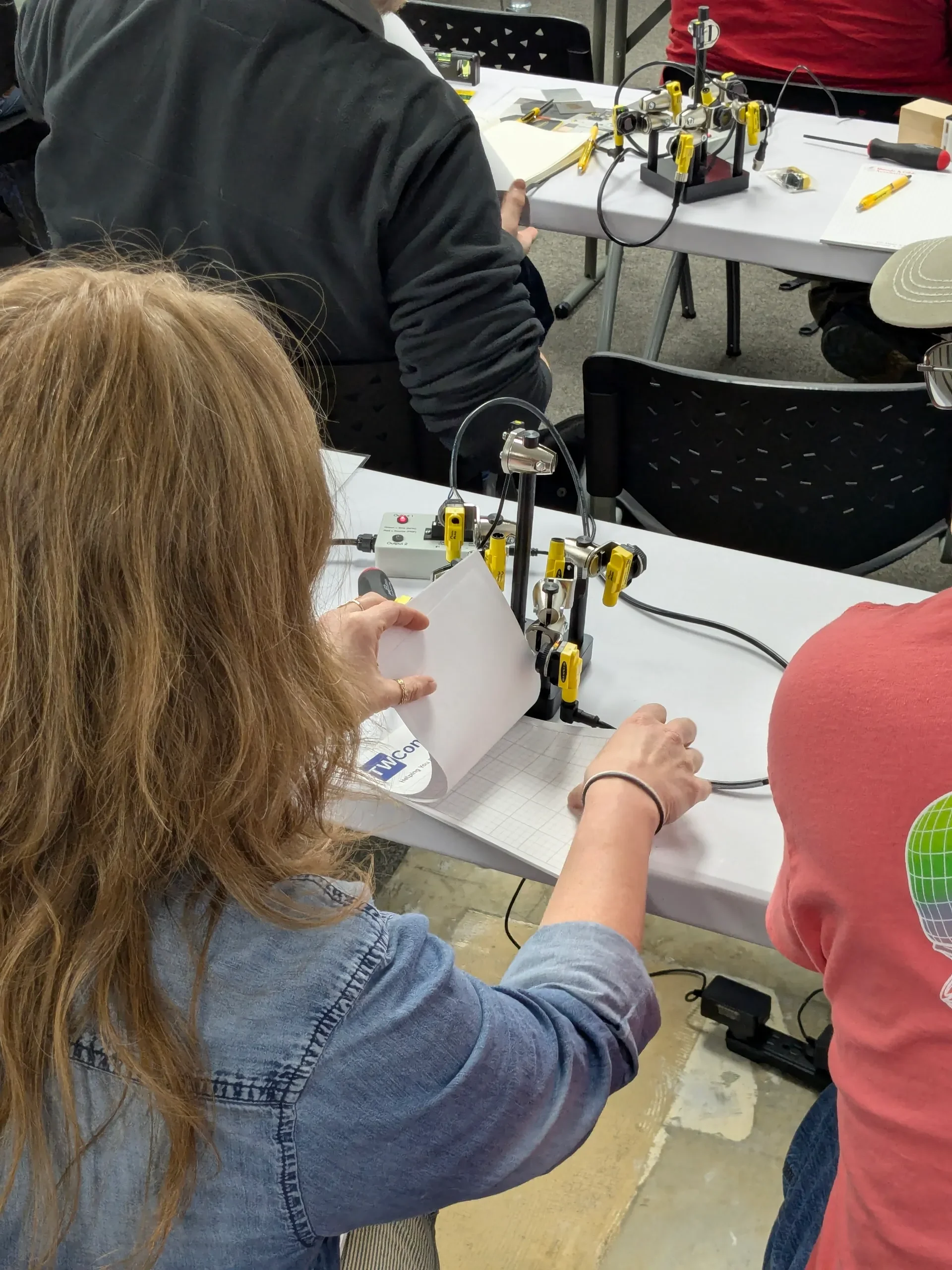
Verifying physical sensor activation and mechanical feedback loops step-by-step.
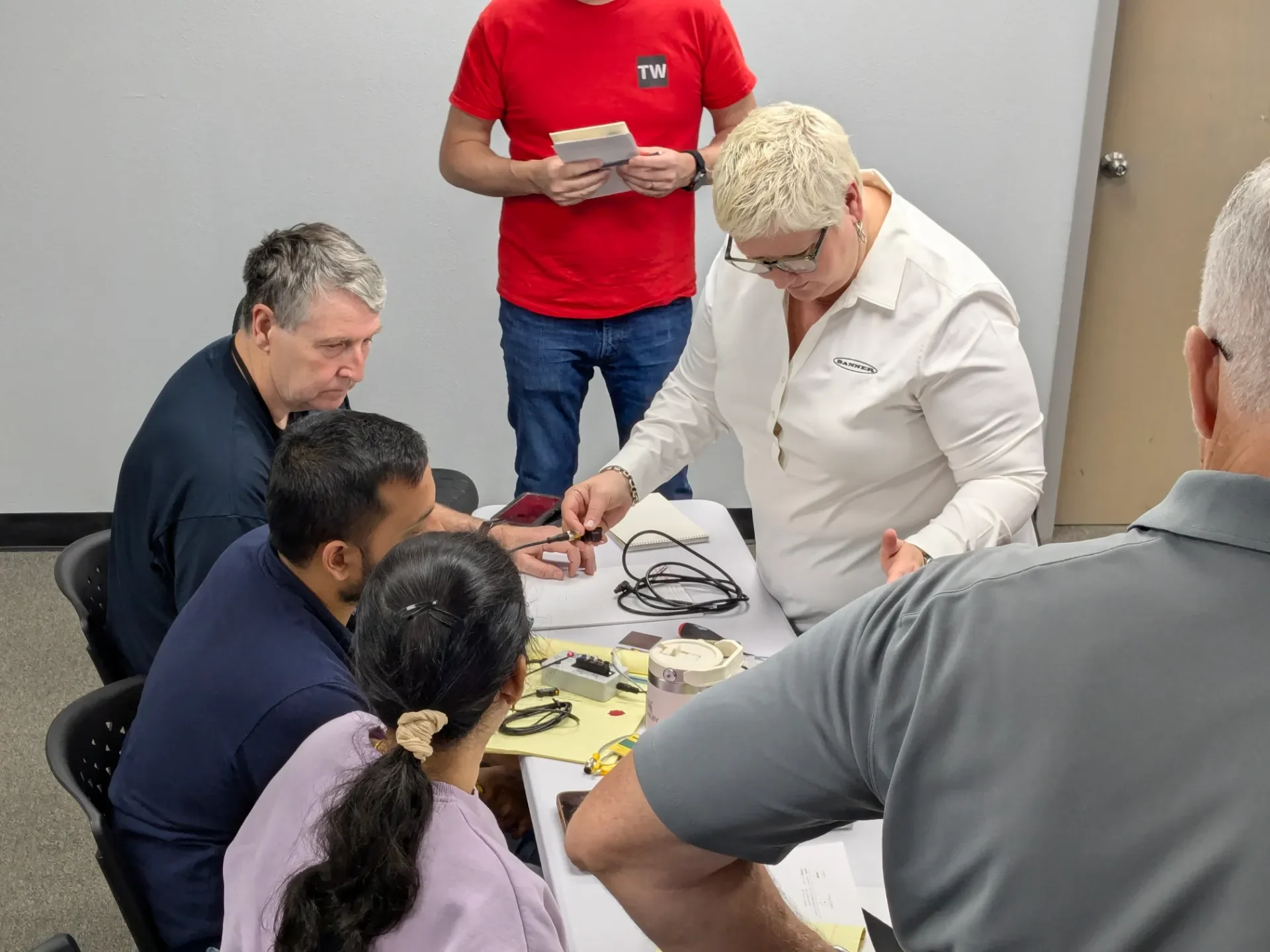
Collaborative component teardowns to understand exact internal failure modes before troubleshooting live panels.
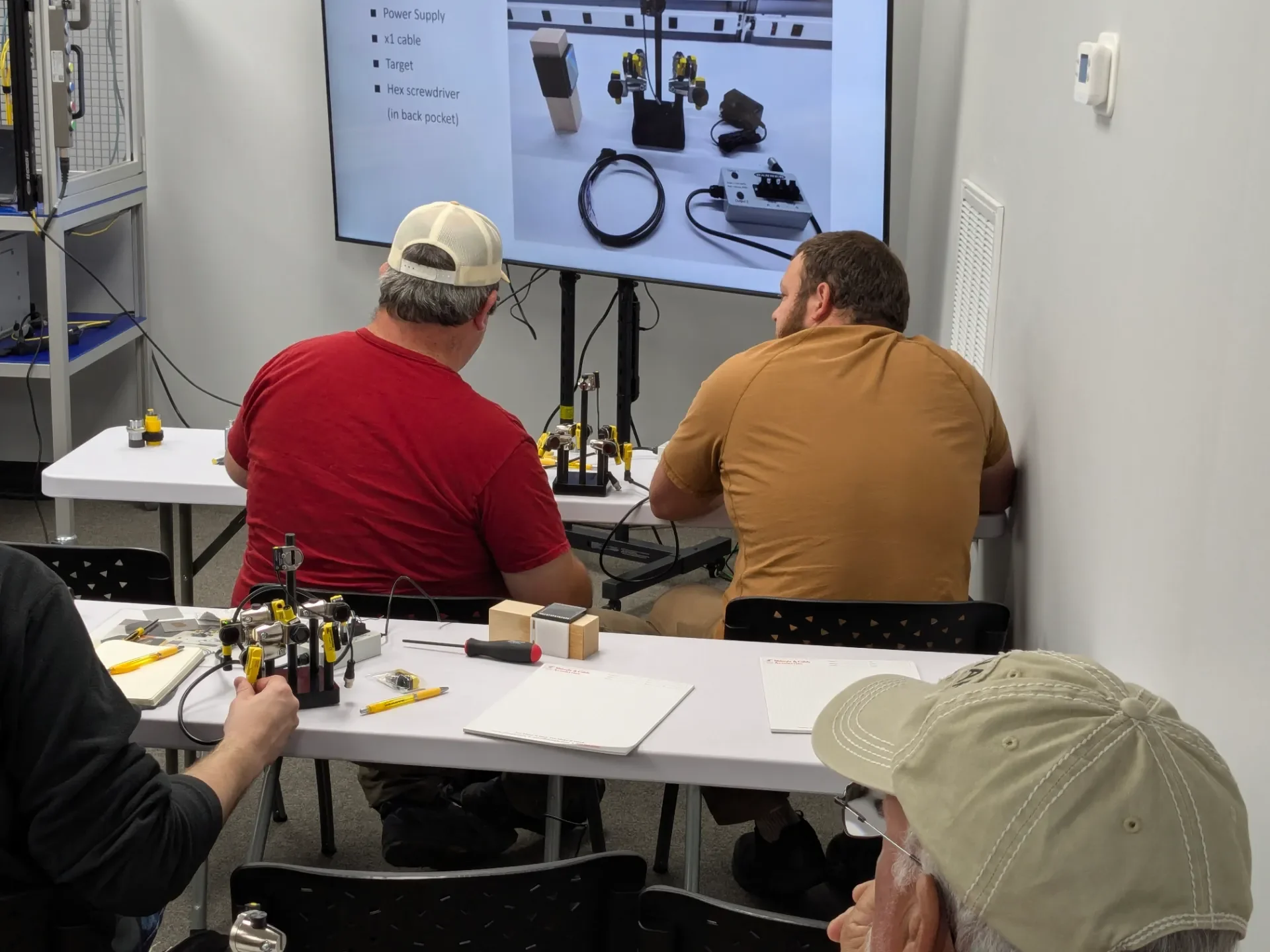
Tracing hardwired signal paths from physical field devices straight back into controller inputs.
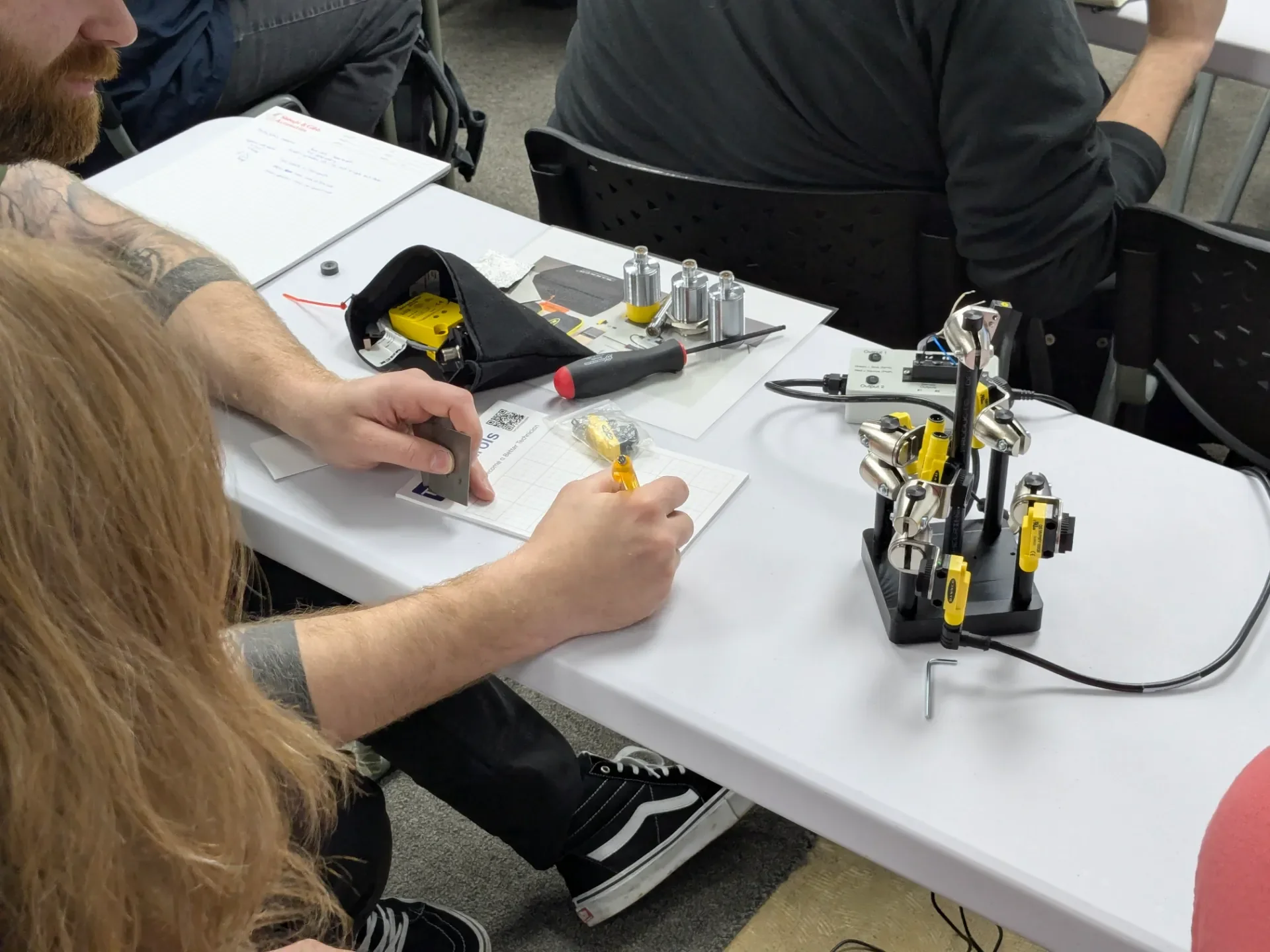
Verifying 24V I/O circuit integrity directly at the terminal strip before modifying program code.
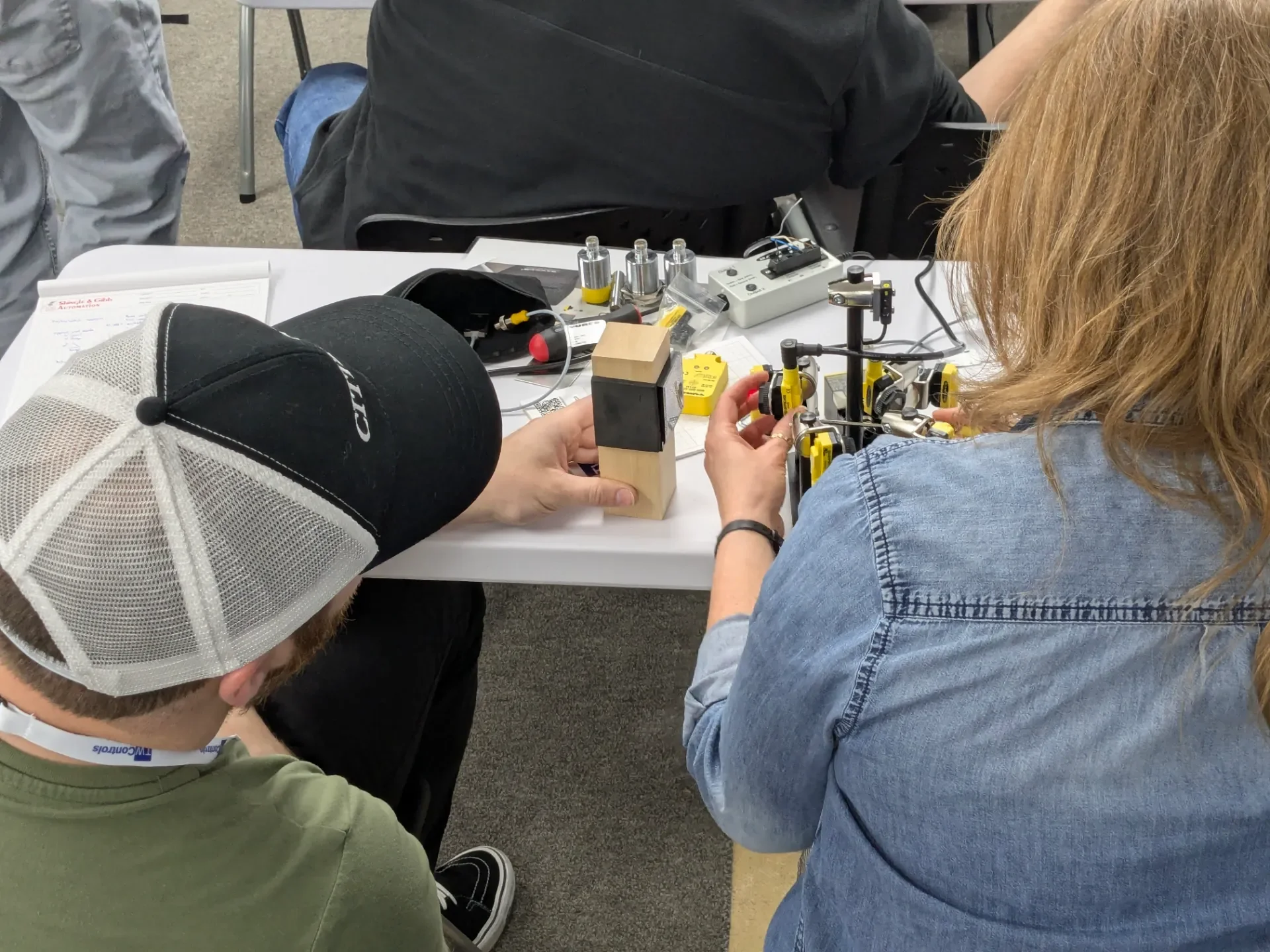
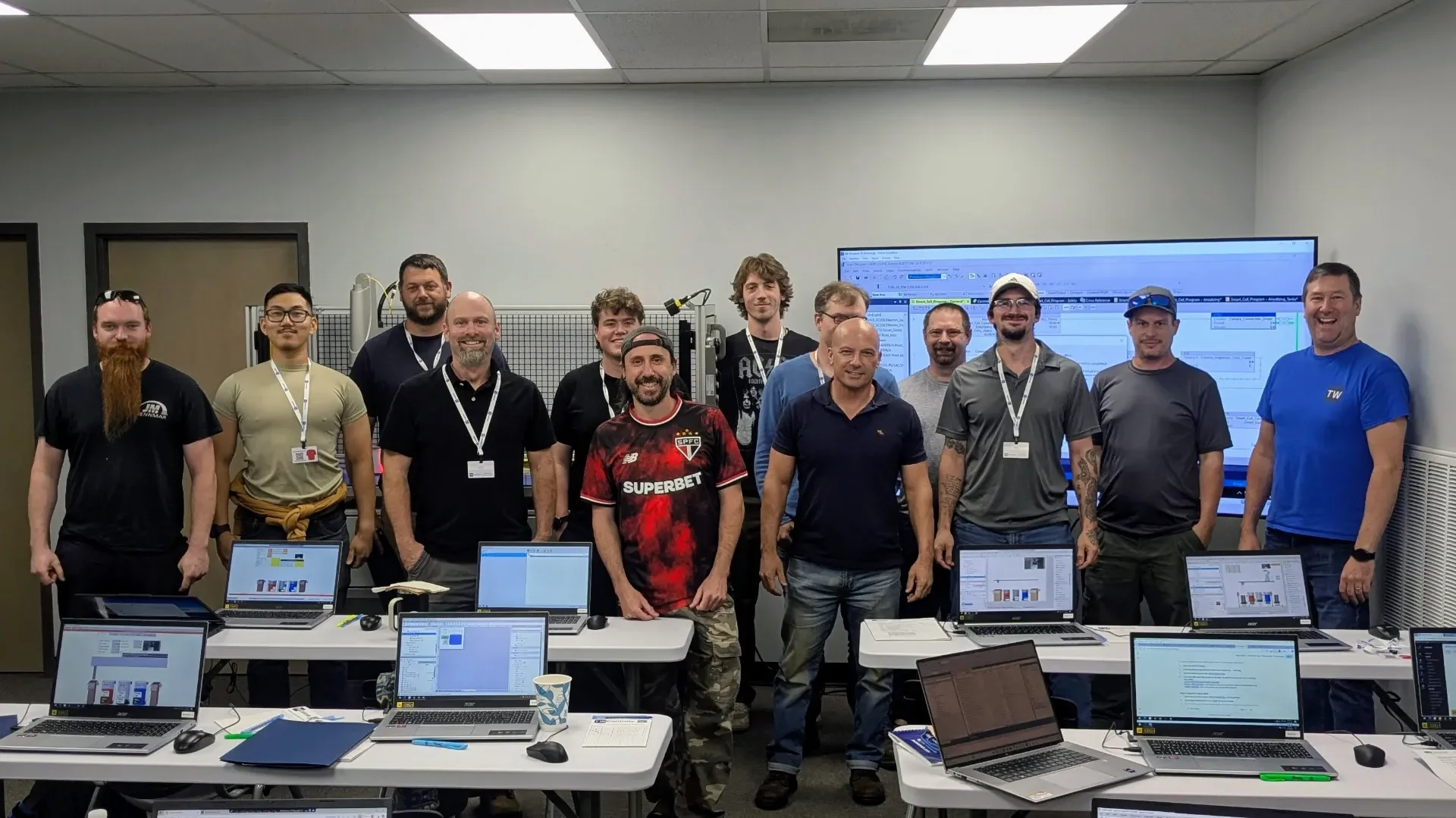
Small class sizes ensuring every technician gets direct coaching and maximum hands-on repetitions.
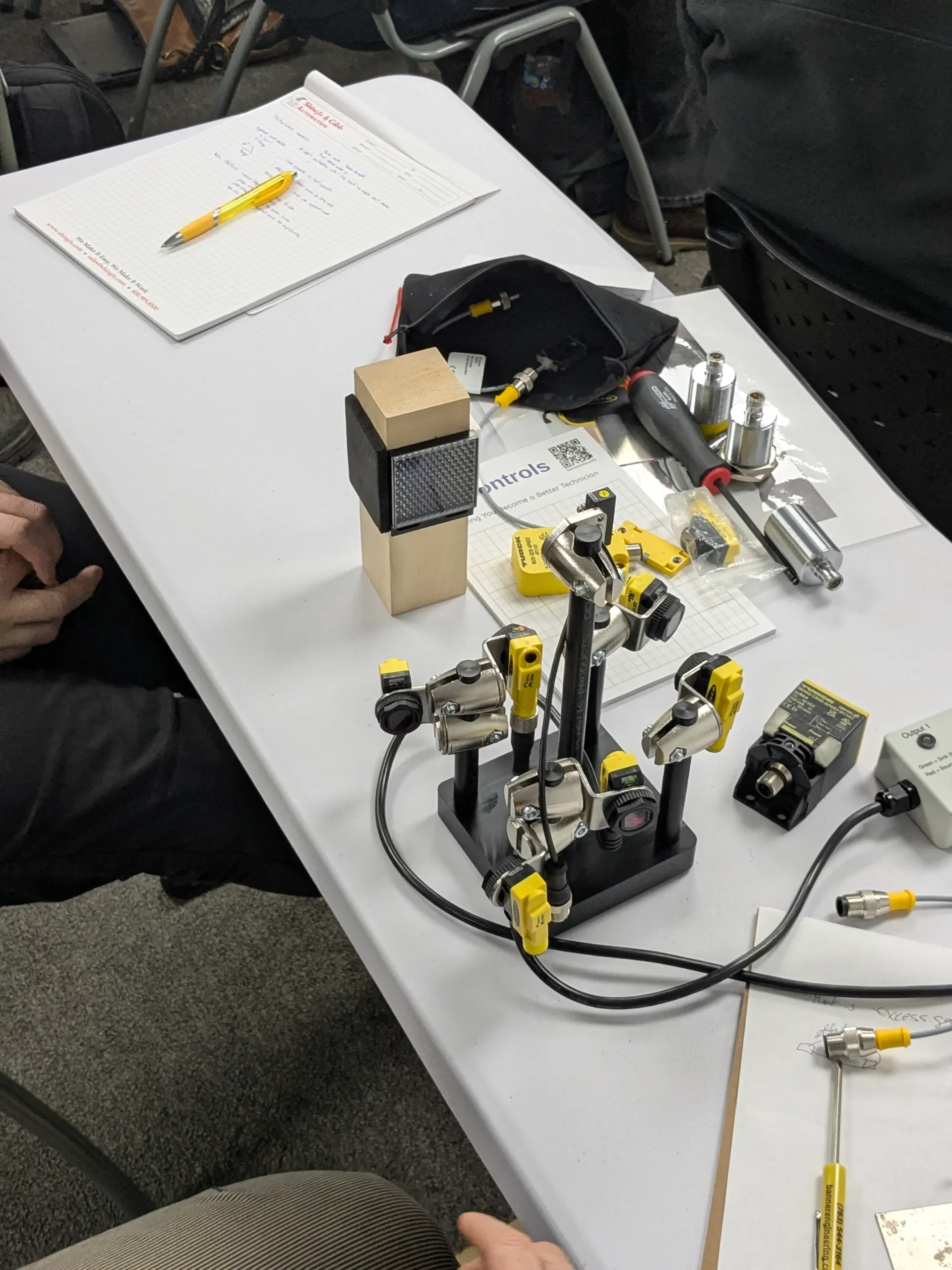
Deconstructing real-world sensor and switch failures to build systematic plant-floor diagnostic habits.
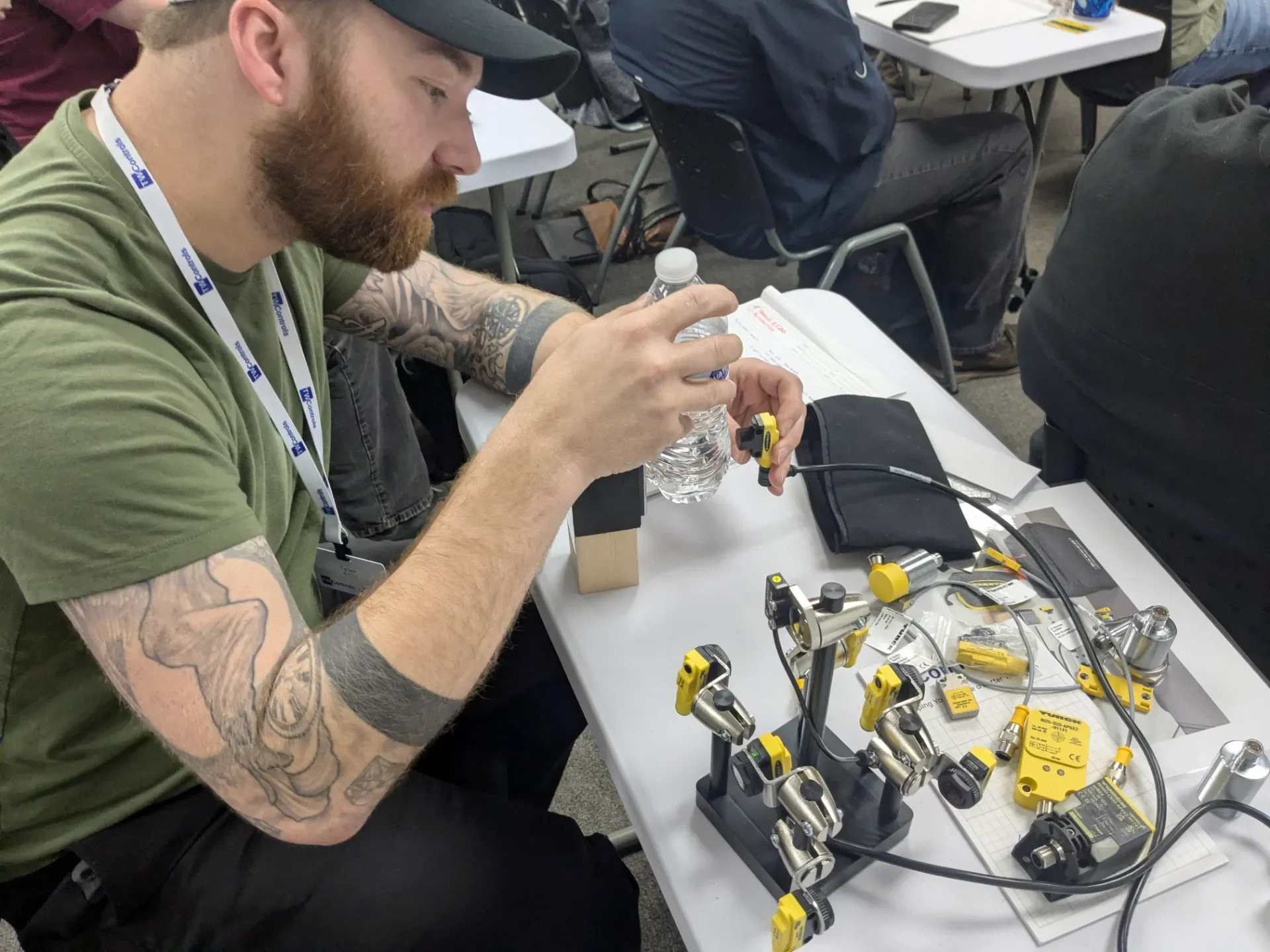
Gaining total panel independence so you can confidently step up and take charge on off-shift calls.
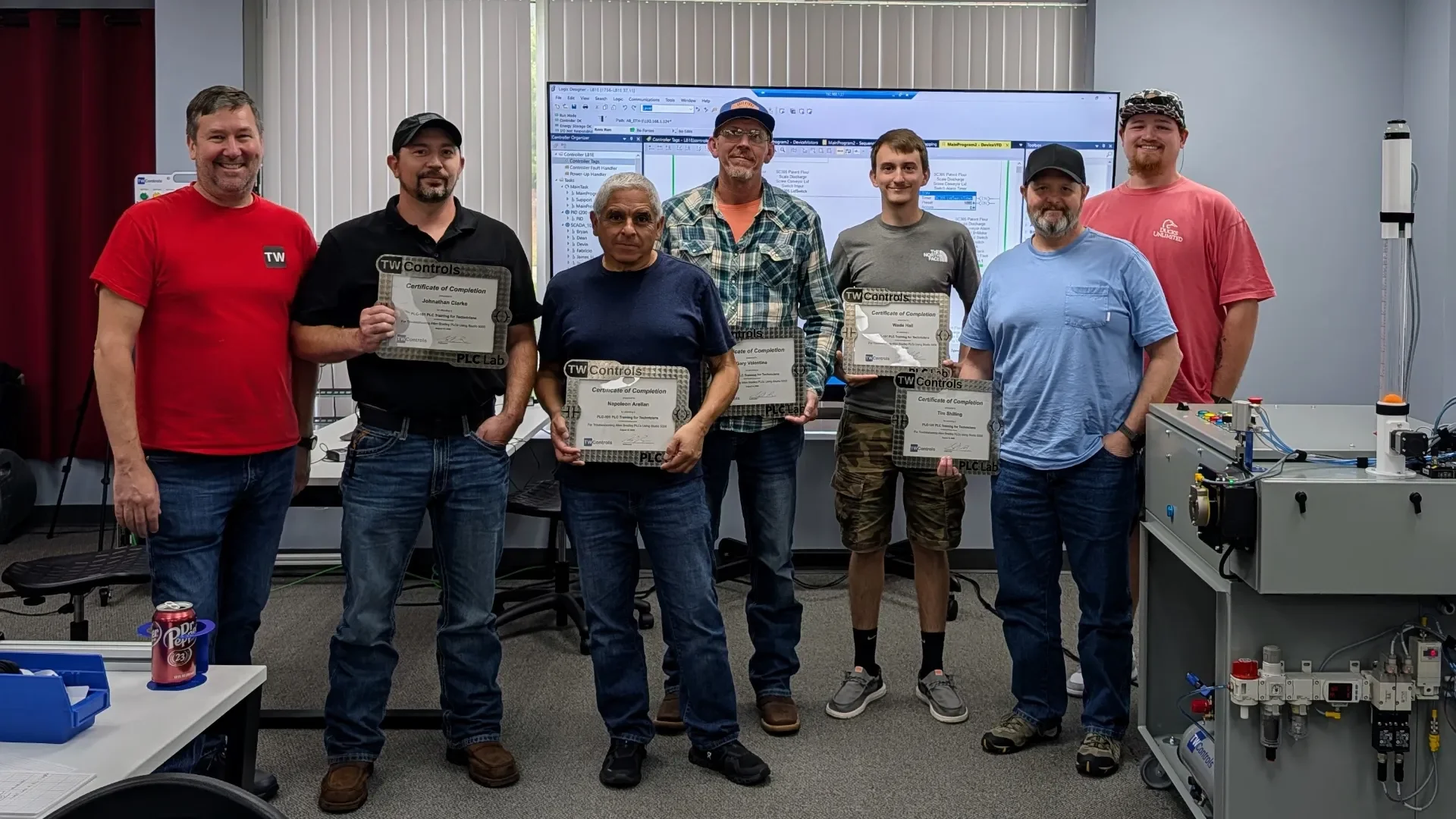
Graduates earning practical credentials that validate their ability to handle complex control systems.
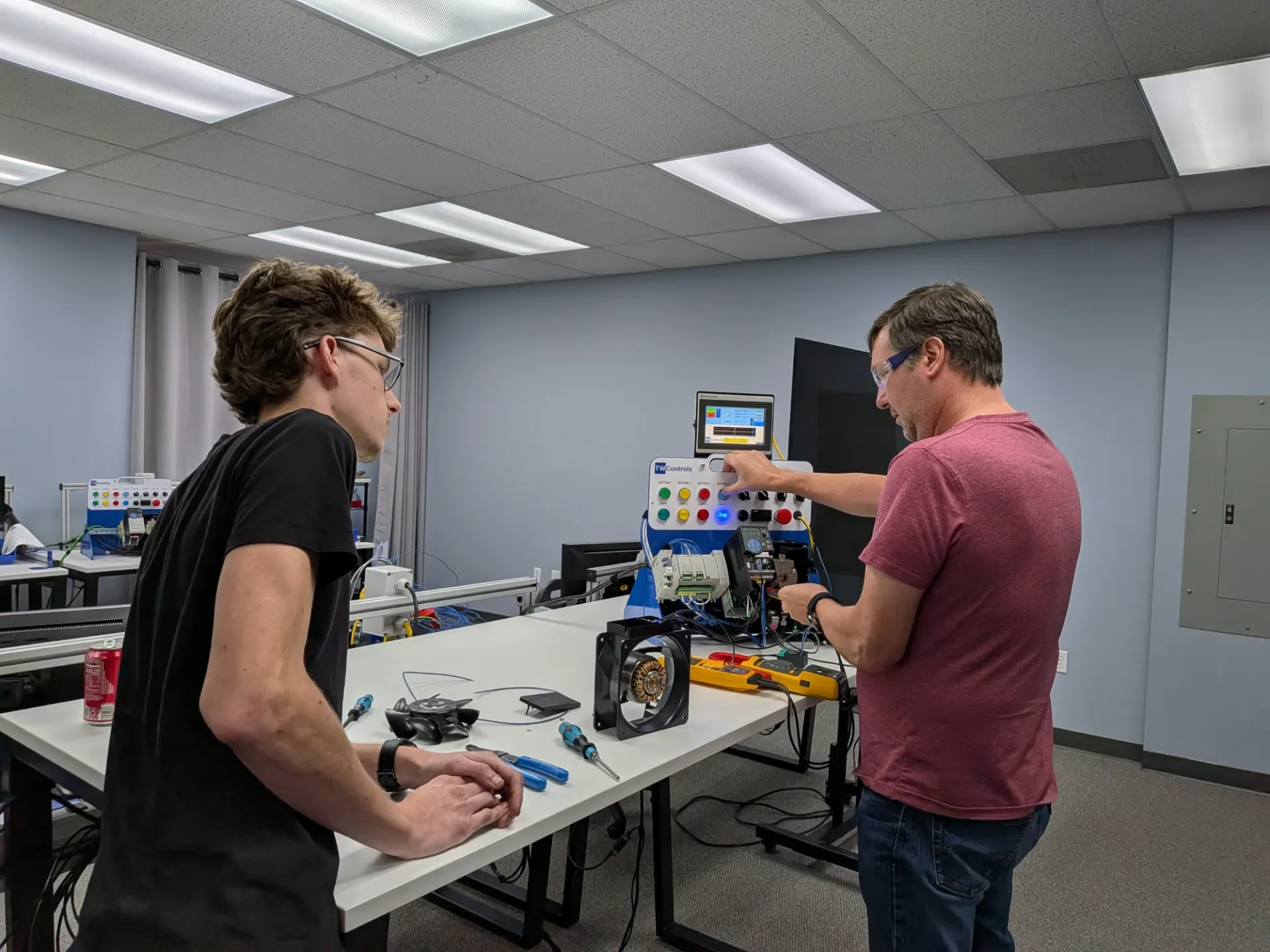
Fine-tuning sensor alignment and limit switch feedback on physical desktop mechanism models.
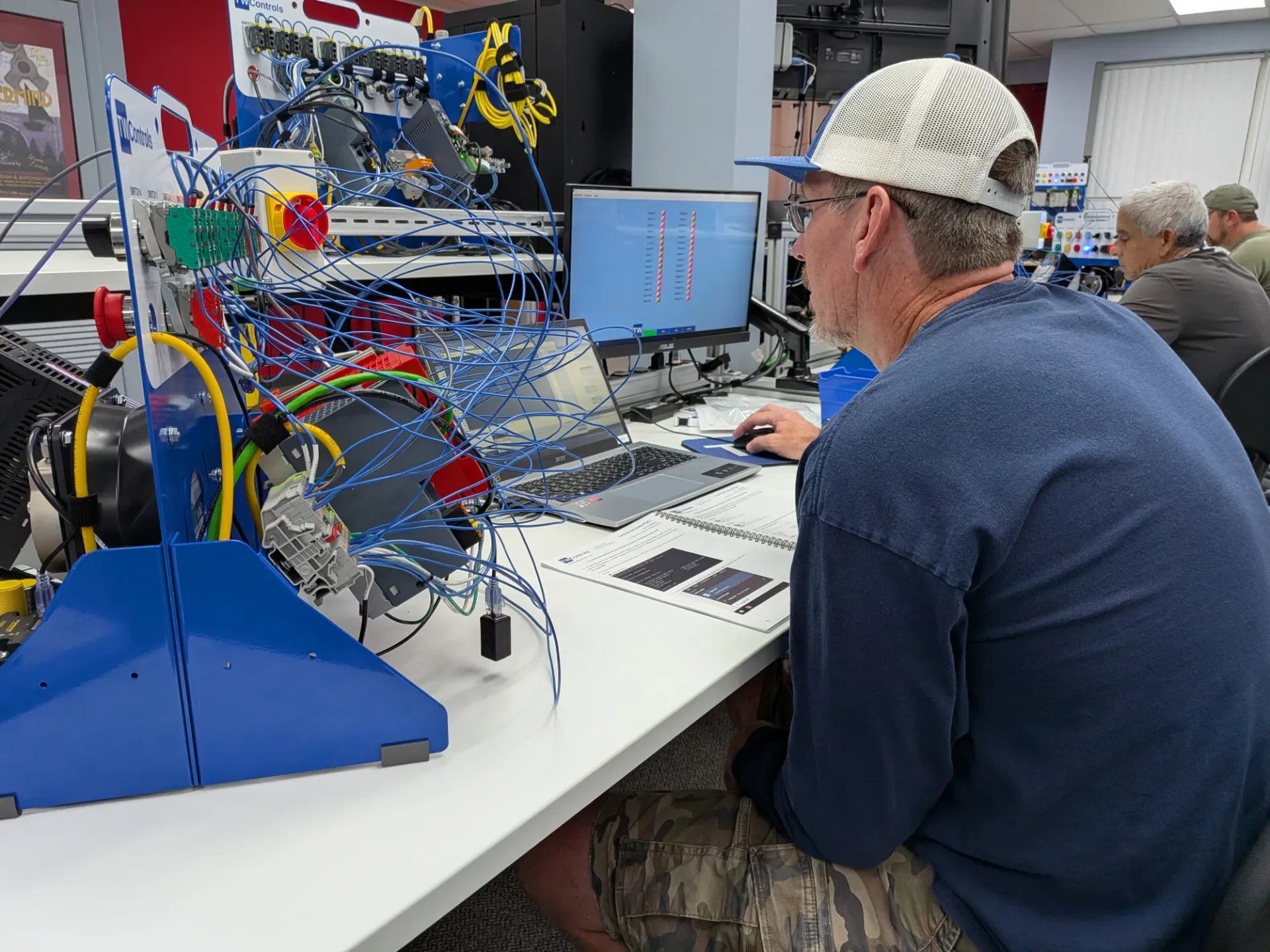
Handling real motor drives and sensor feedback loops without fear of causing plant downtime.
Maintenance professionals returning to their facilities ready to handle complex automation calls.
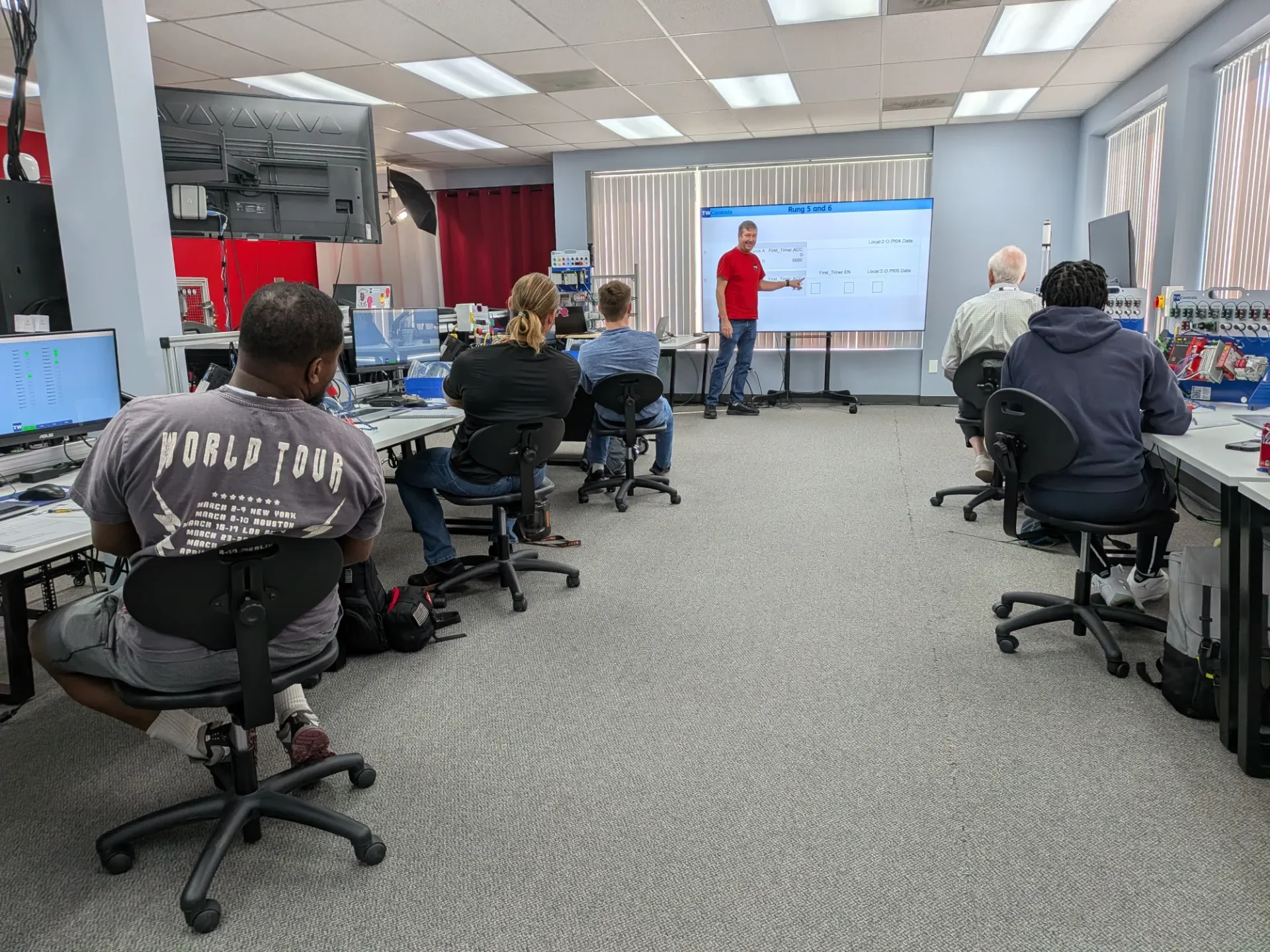
Connecting physical ladder logic behavior directly to live machine performance.
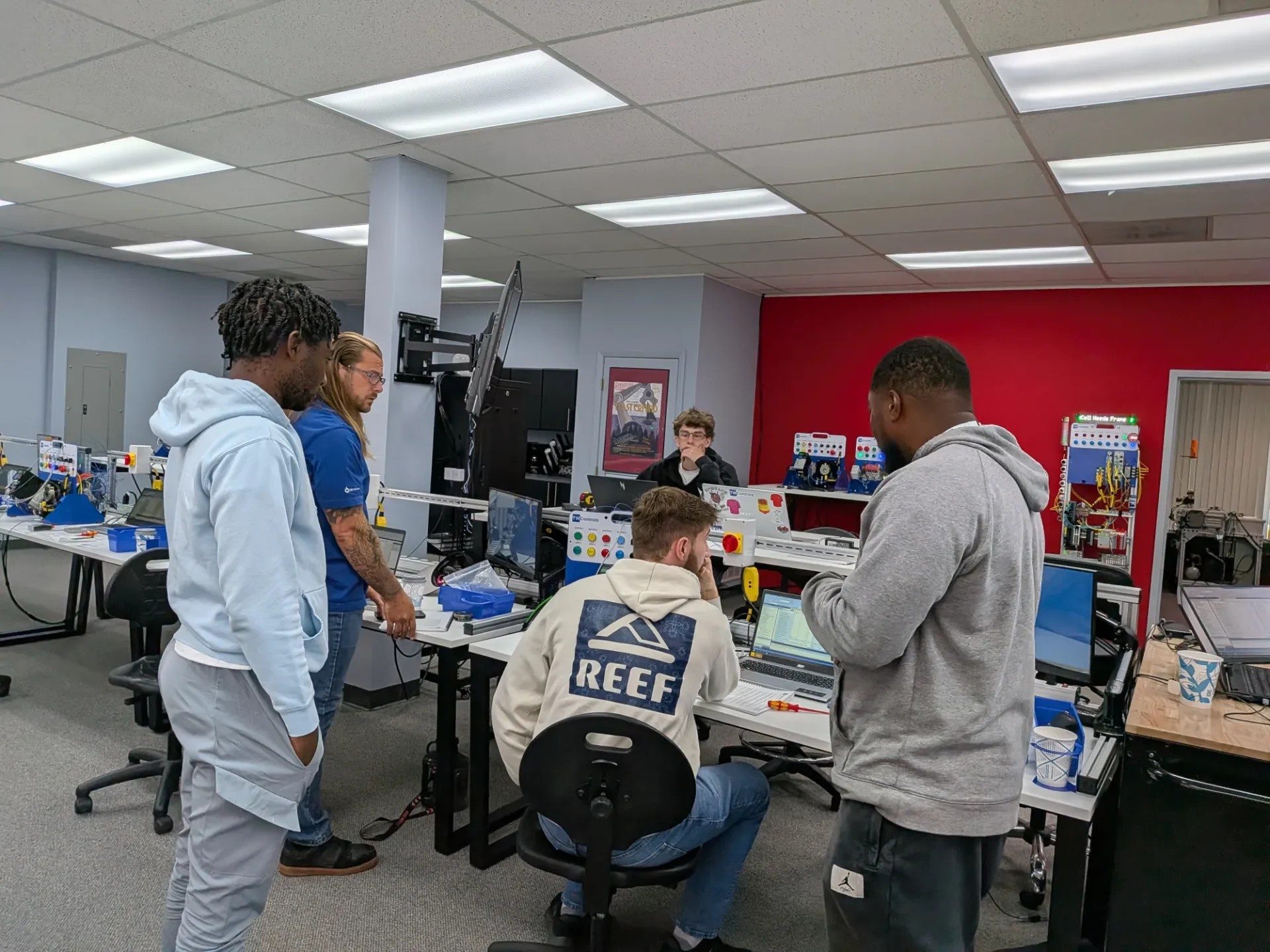
Collaborative diagnostic sessions that teach techs how to communicate and isolate faults under pressure.
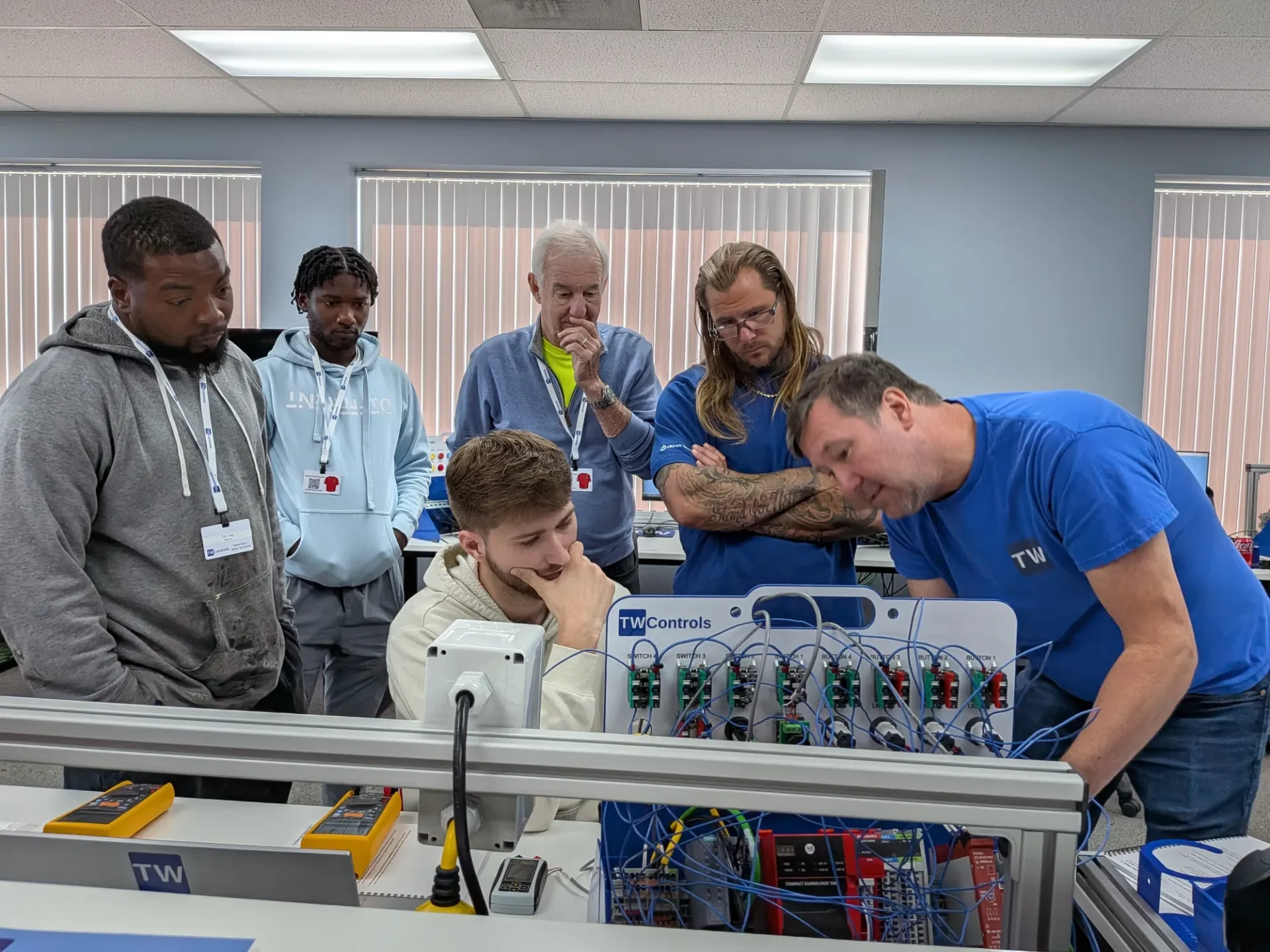
Following physical wiring loops straight from field sensors into PLC input channels.
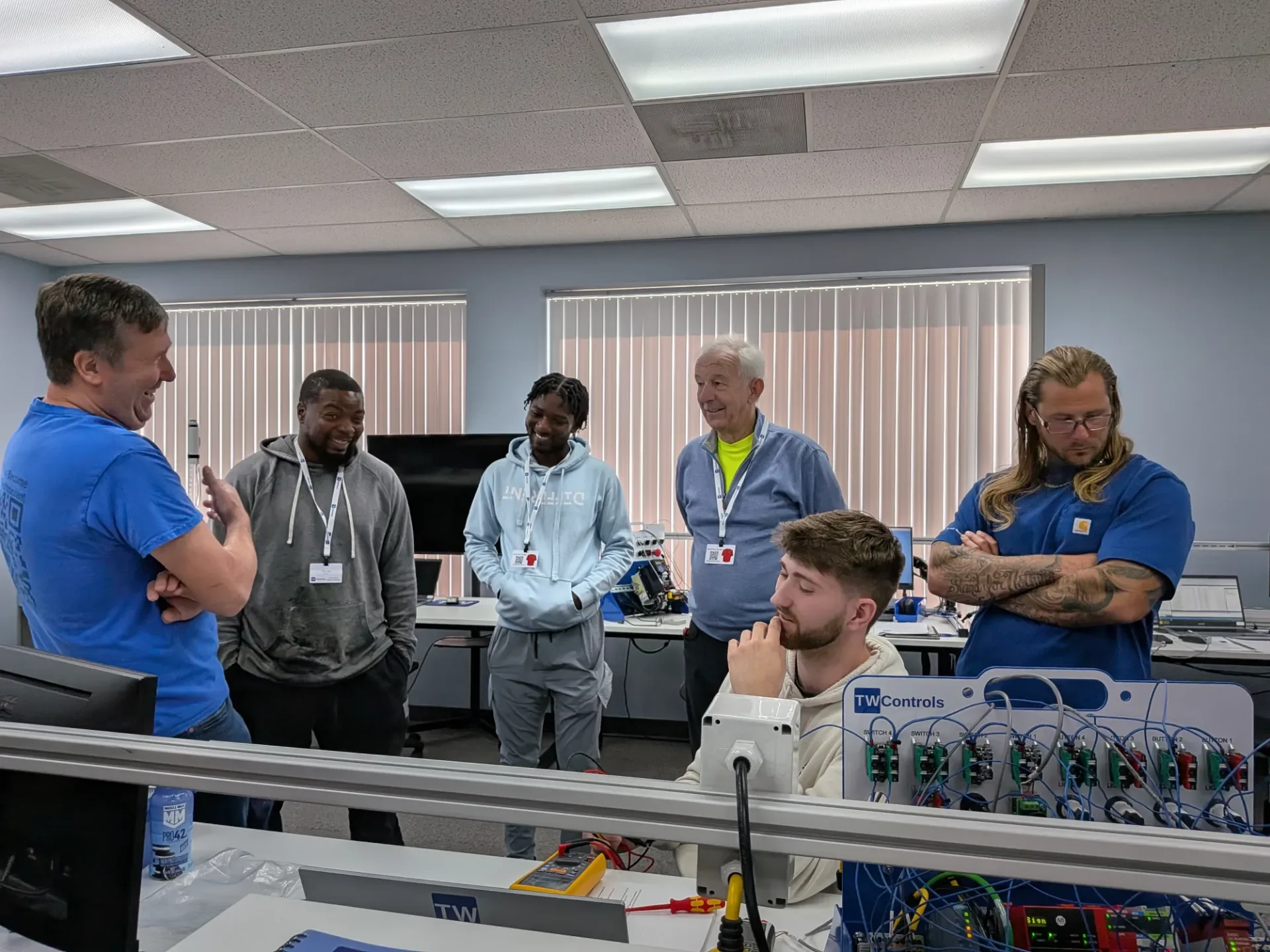
Analyzing real-world machine failures step-by-step to build reliable, high-pressure diagnostic habits.
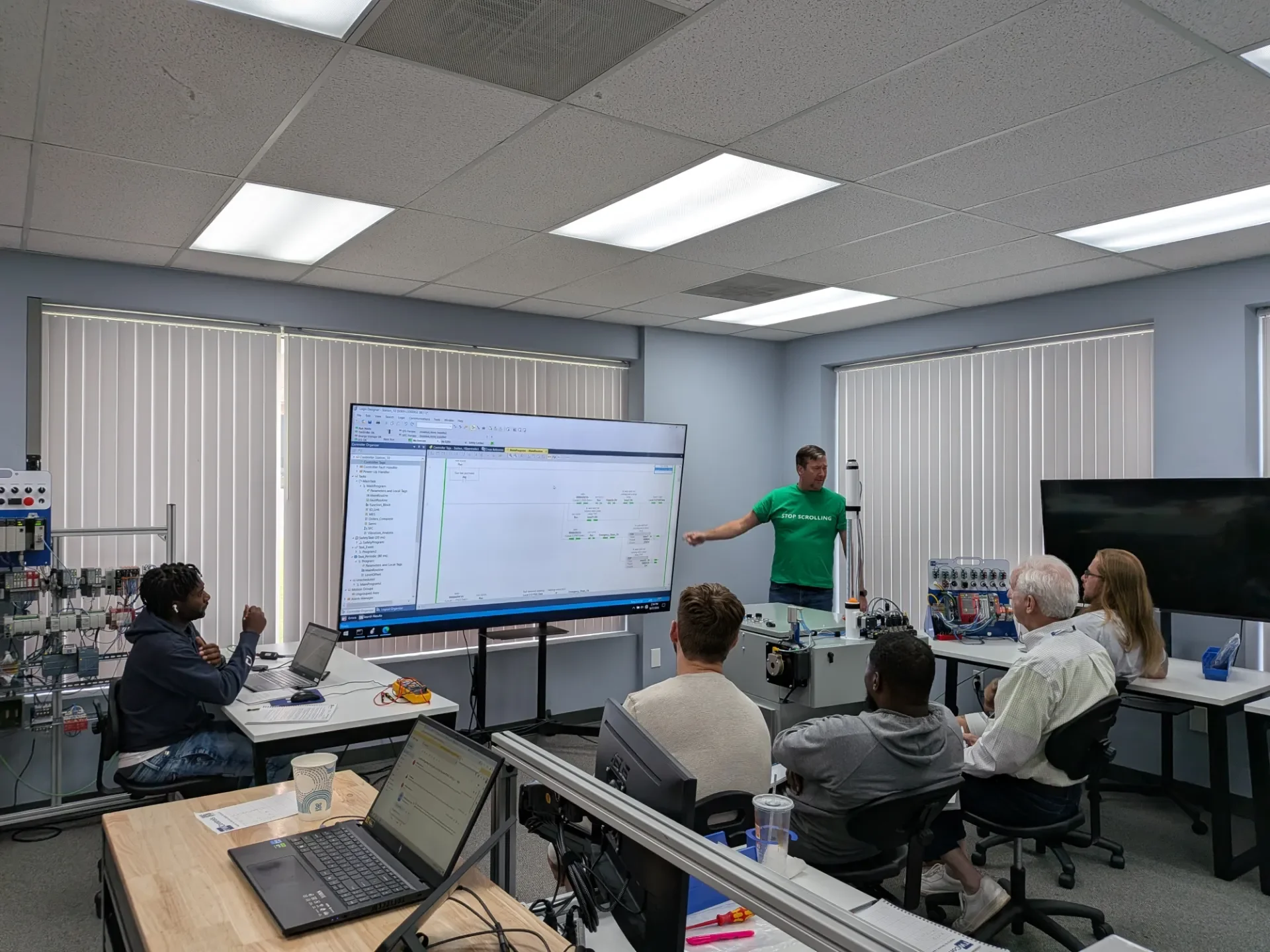
Transitioning from reactive part swapping to structured, logical troubleshooting before opening a control cabinet.
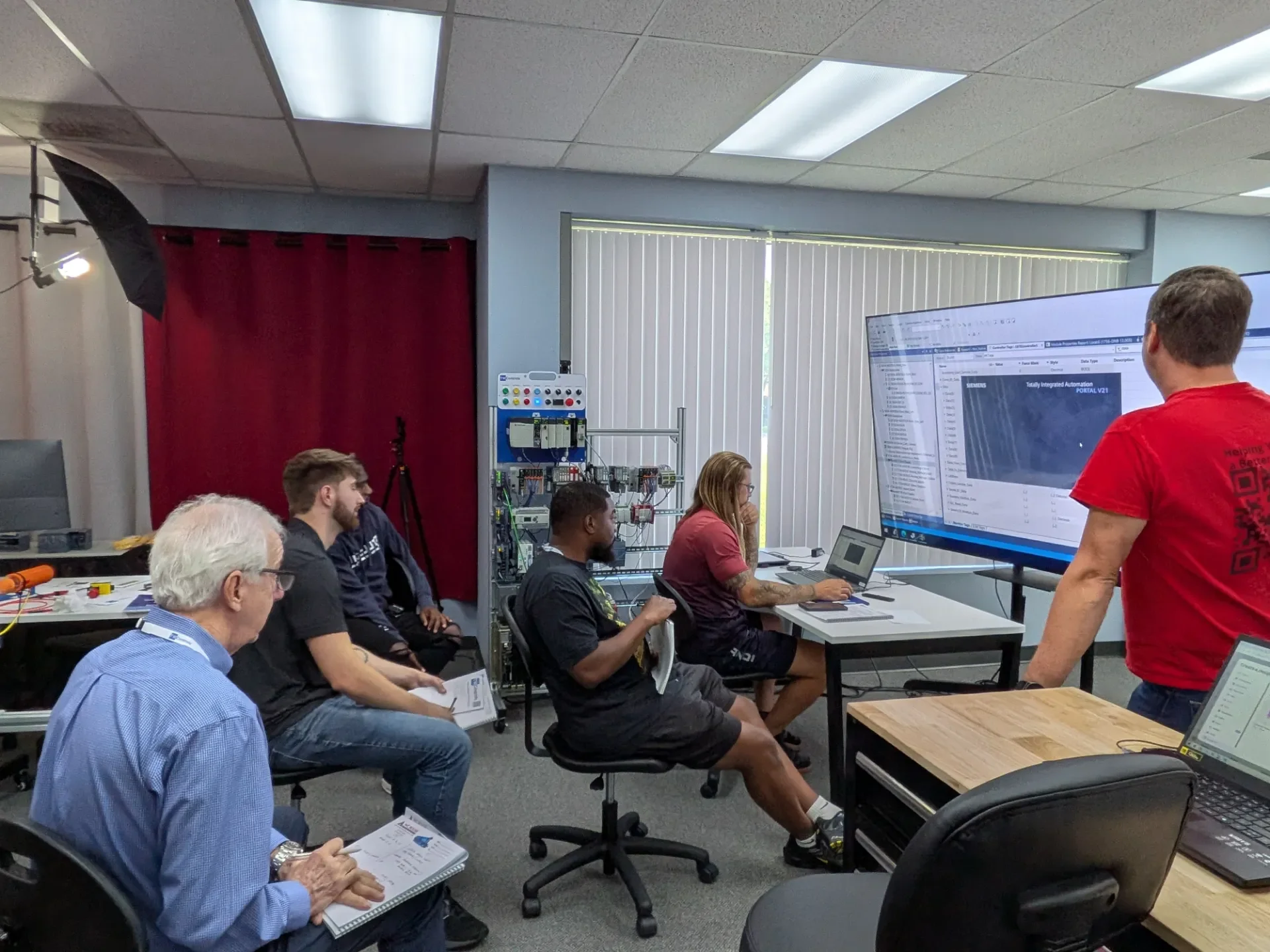
Analyzing Studio 5000 tag structures and rung execution to verify software intent against live hardware.
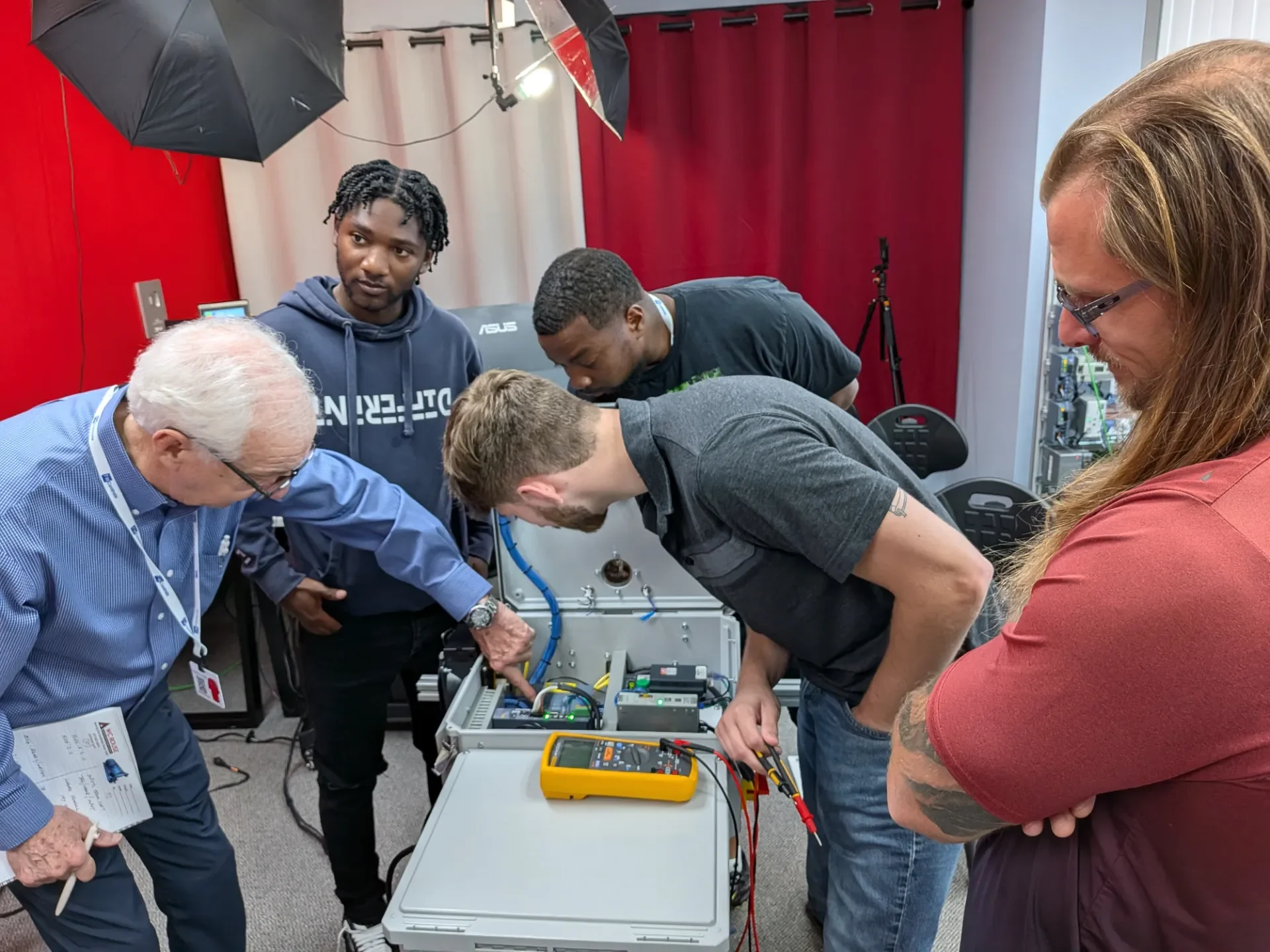
Proving circuit continuity and sensor states step-by-step using real industrial test meters.
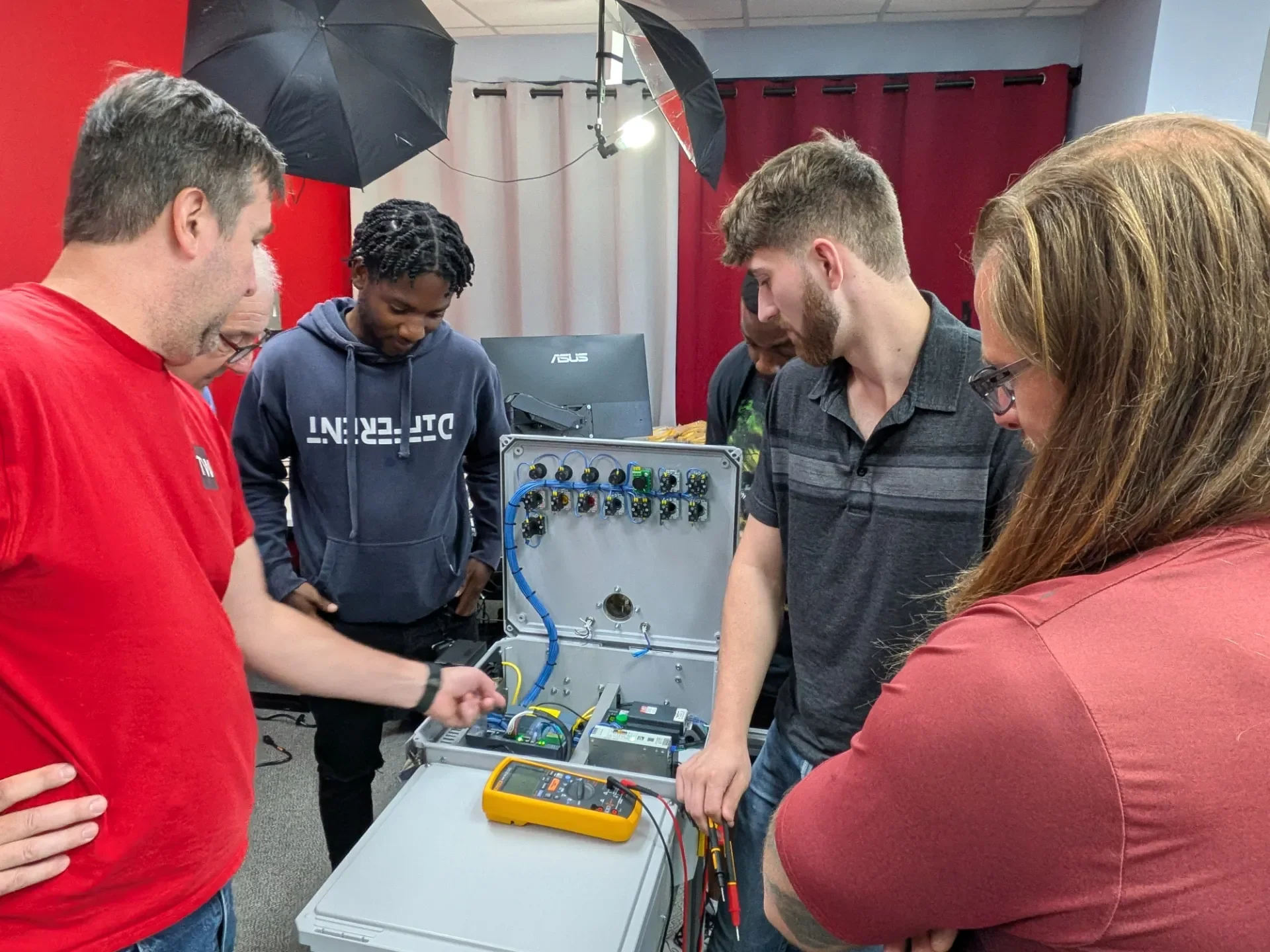
Developing absolute panel confidence to systematically clear complex electrical faults without hesitation.
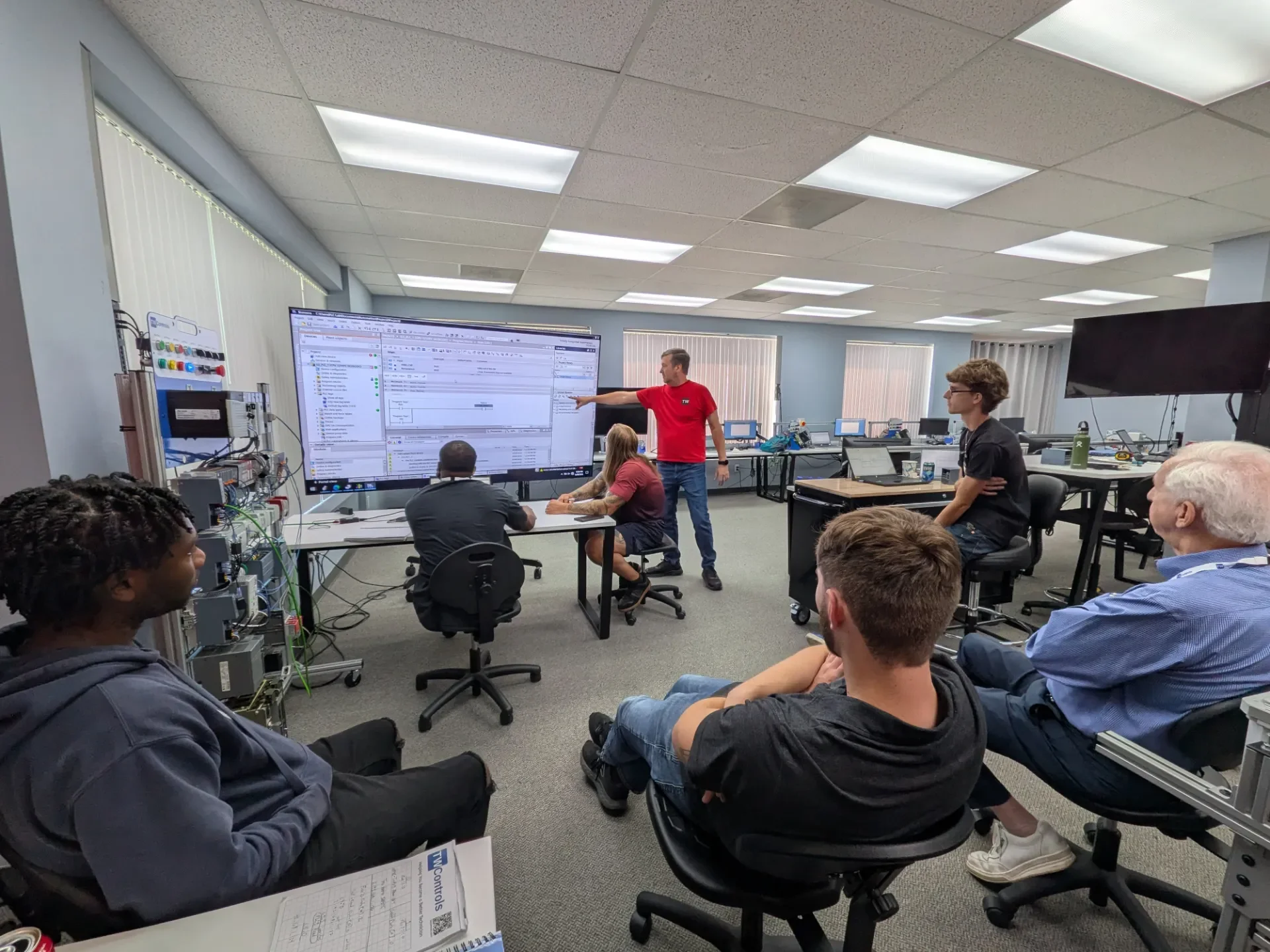
Connecting field wiring, network configuration, and PLC logic into one cohesive workflow.
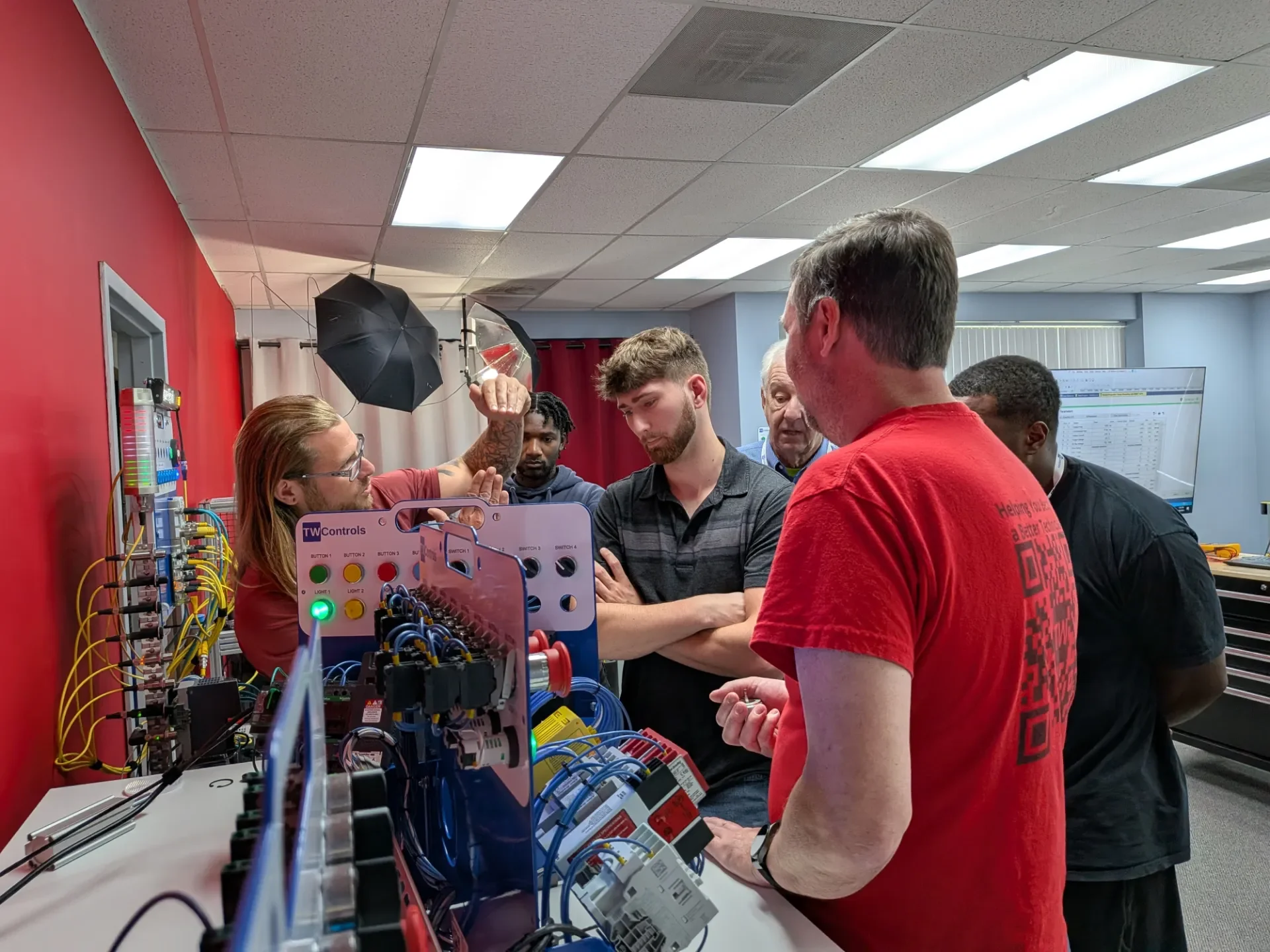
Instructor-led breakdown of control panel component layout, safety circuits, and 24V power distribution.
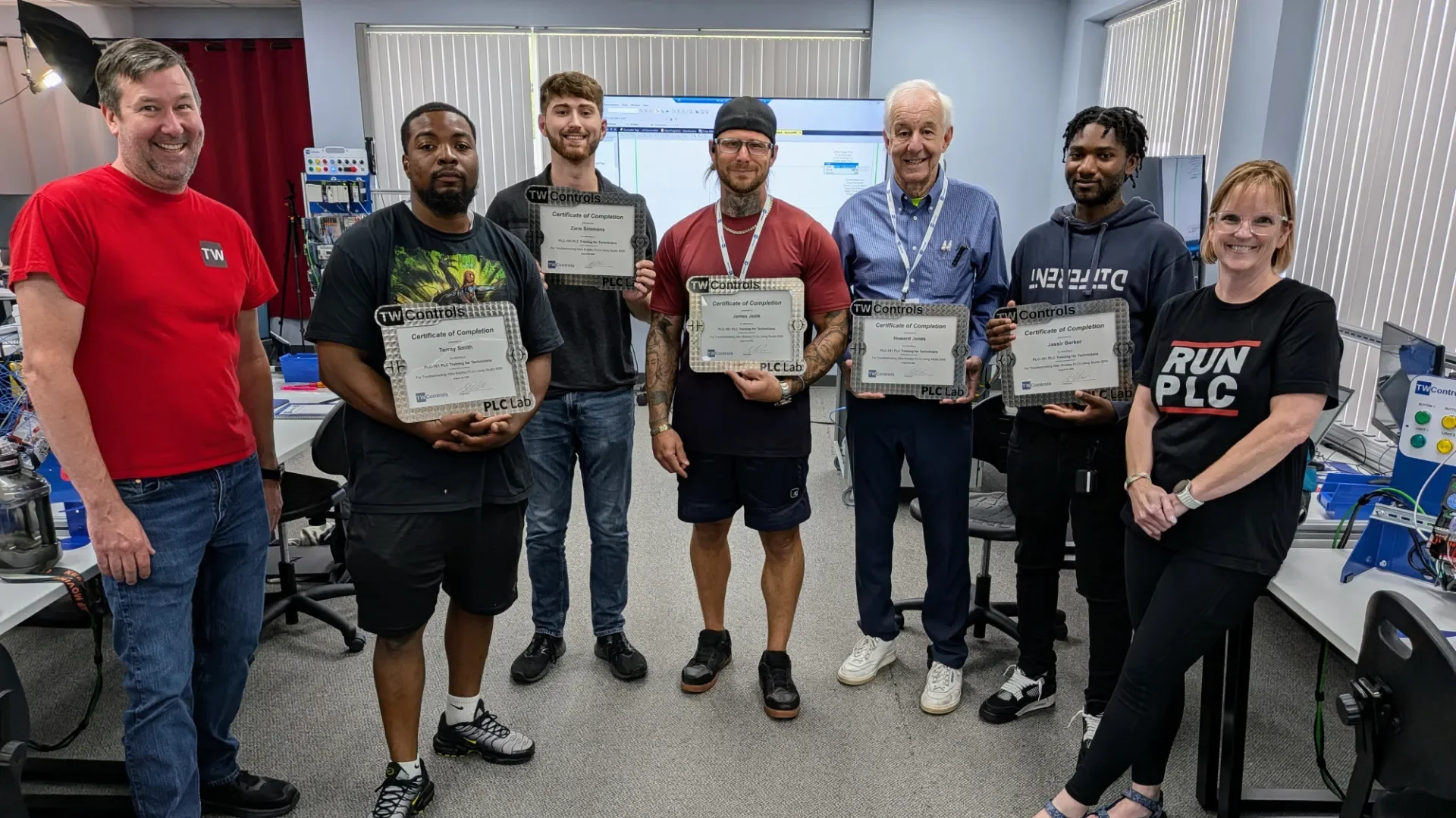
Graduates heading back to the plant floor with the exact skills needed to reduce emergency downtime.
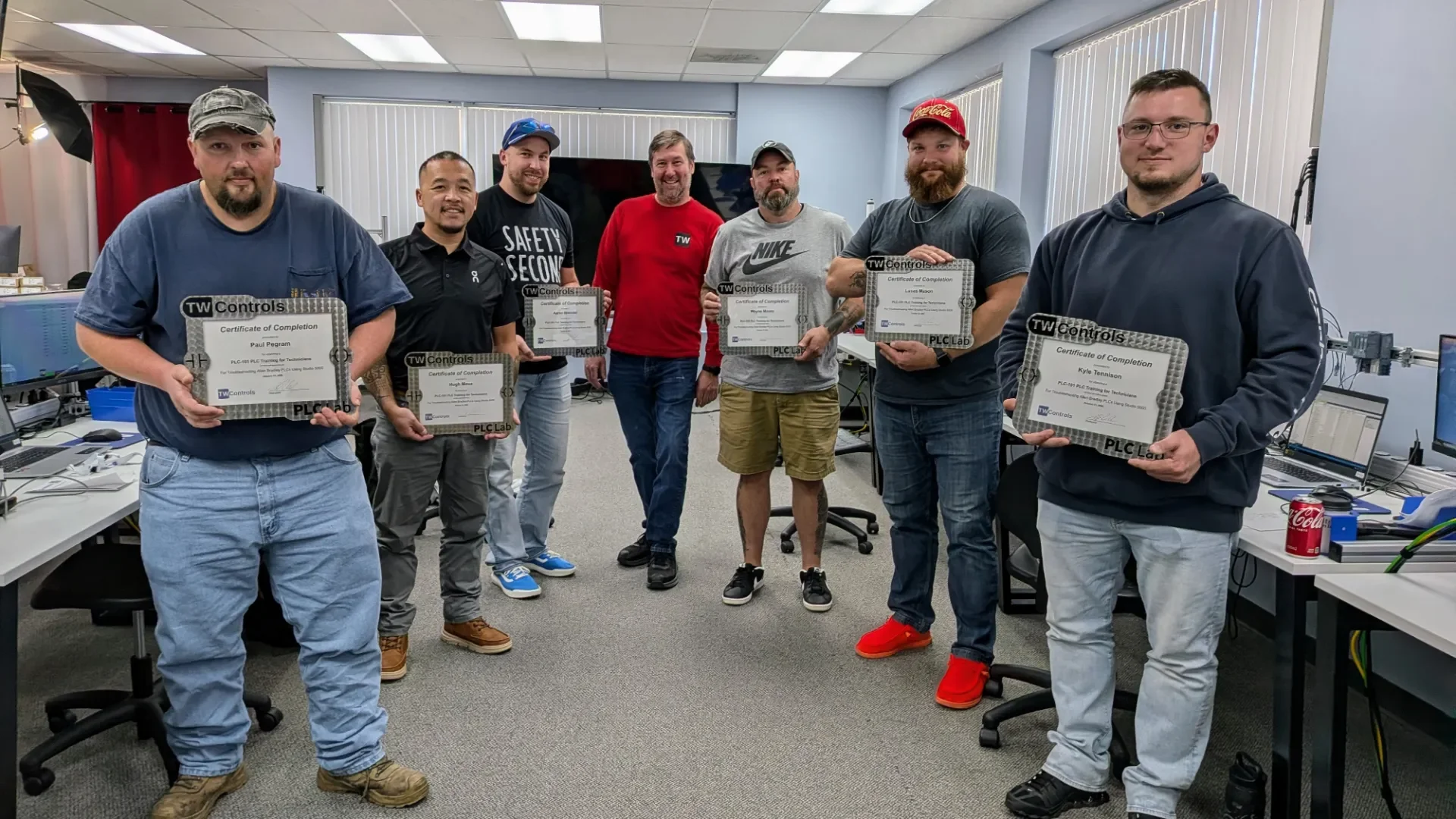
Earning practical credentials that turn maintenance techs into confident controls specialists.
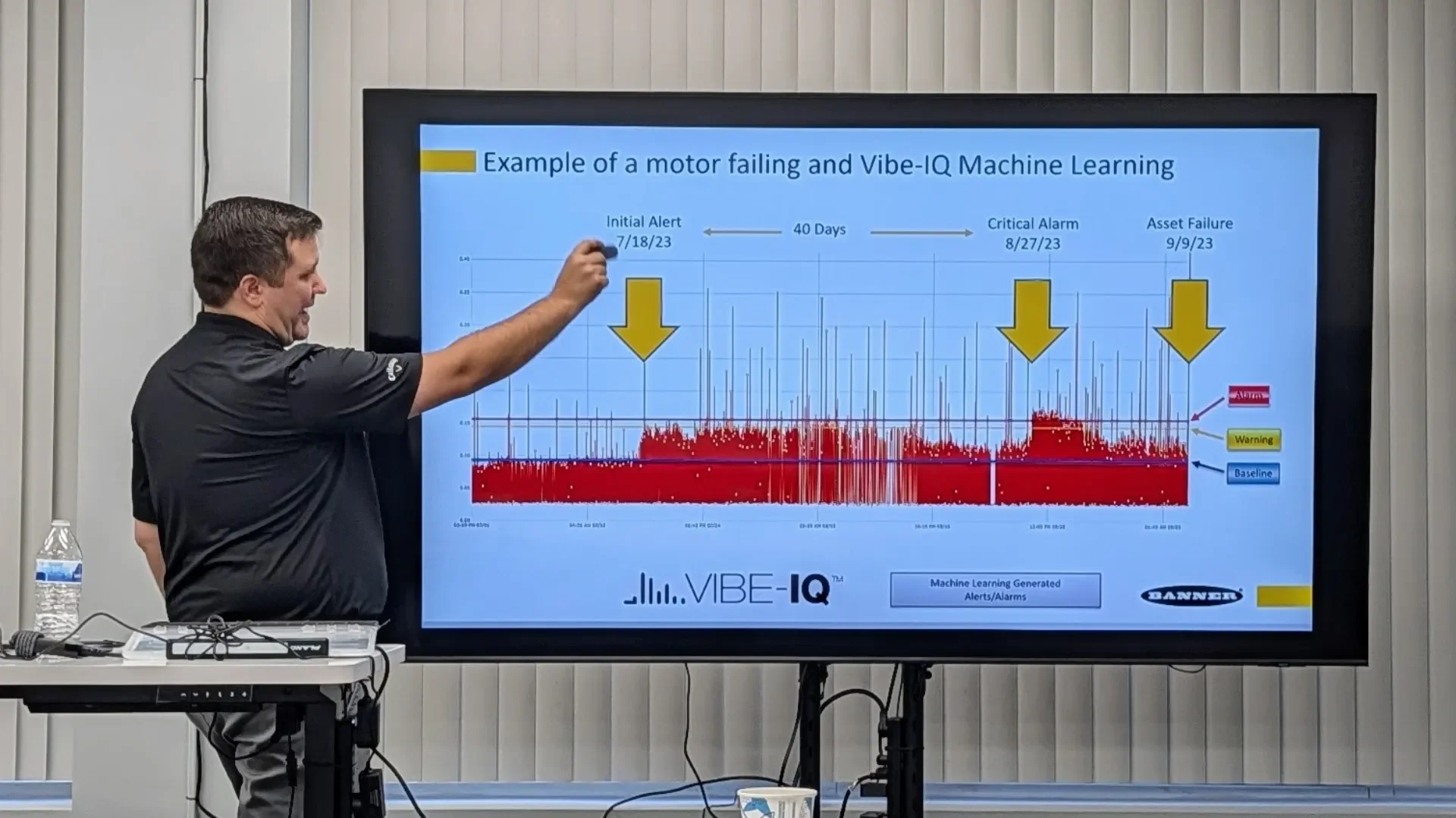
Leveraging live machine data and trend analysis to diagnose intermittent failures before total downtime.
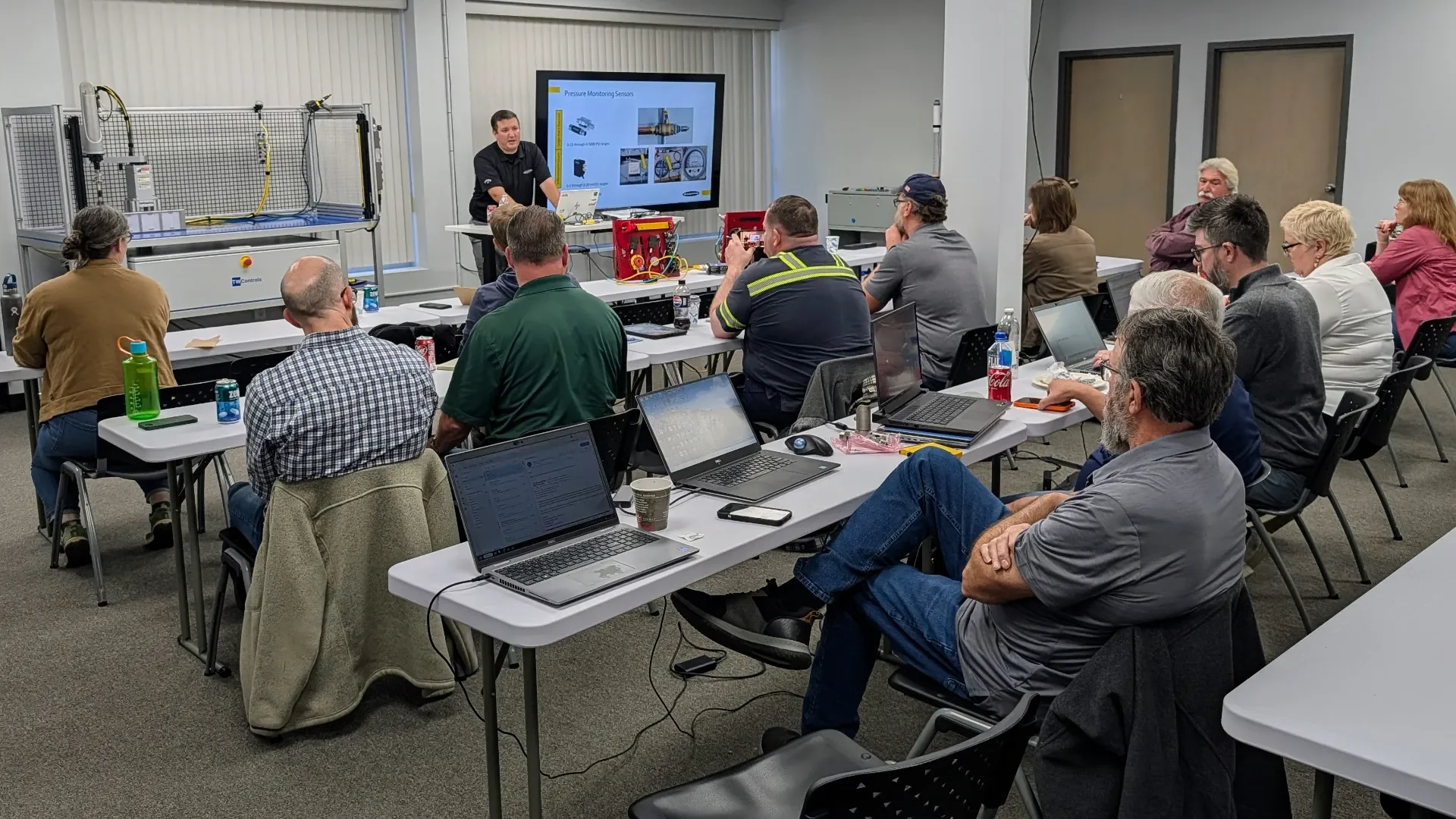
Interactive group discussions inside the Industrial Training Hub space to master core troubleshooting principles.