
 Image 1 of 5
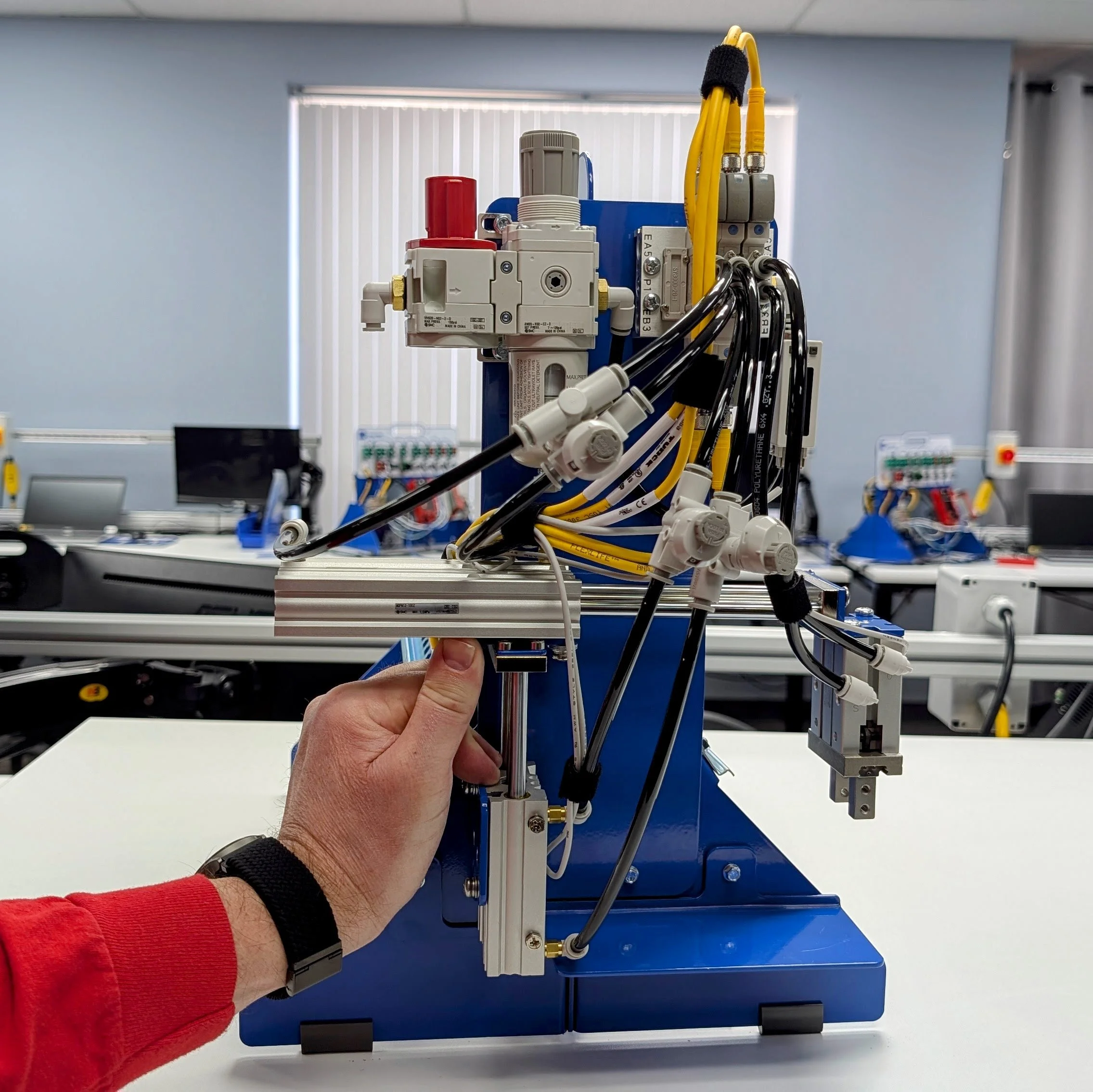 Image 2 of 5
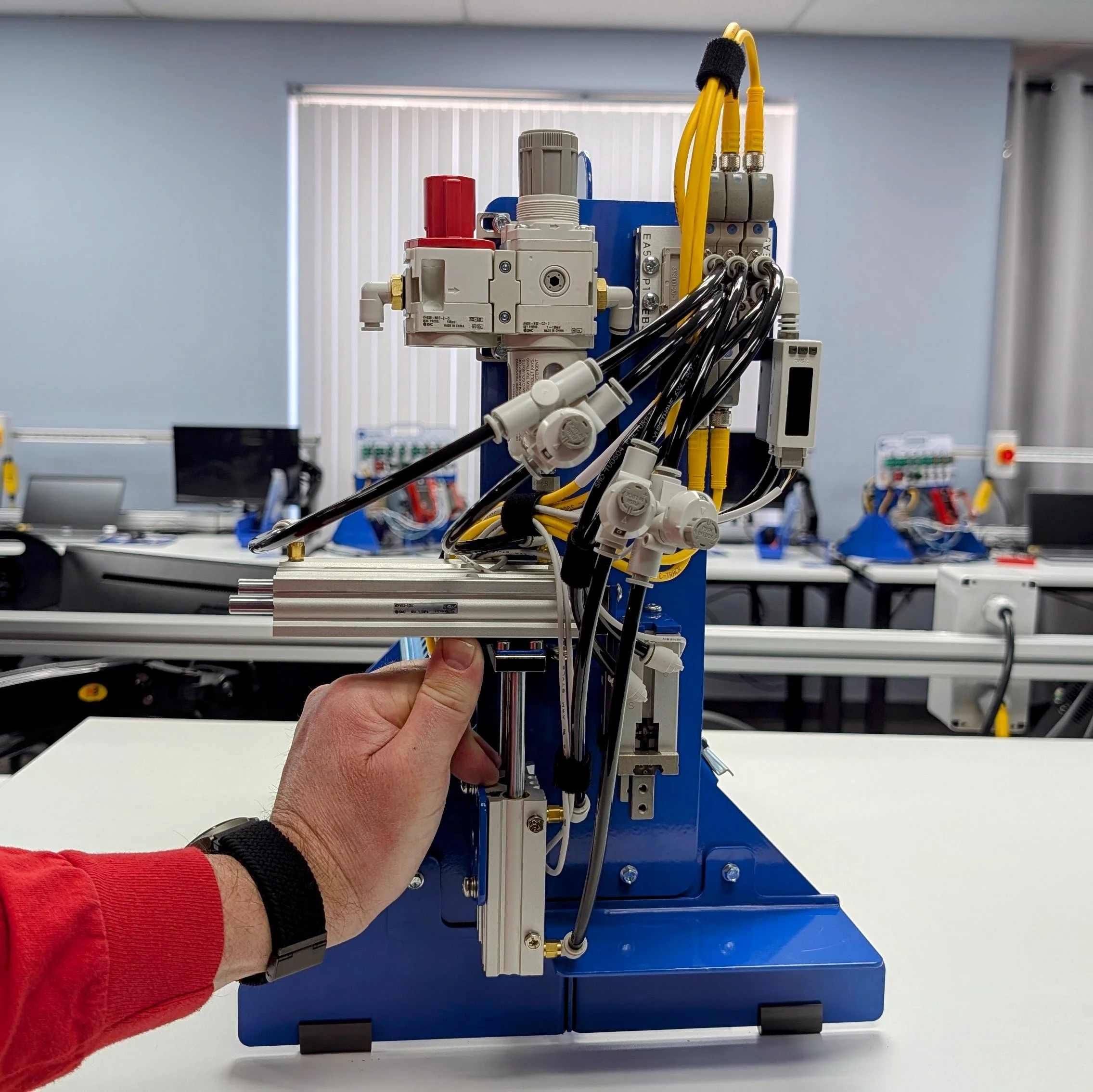 Image 3 of 5
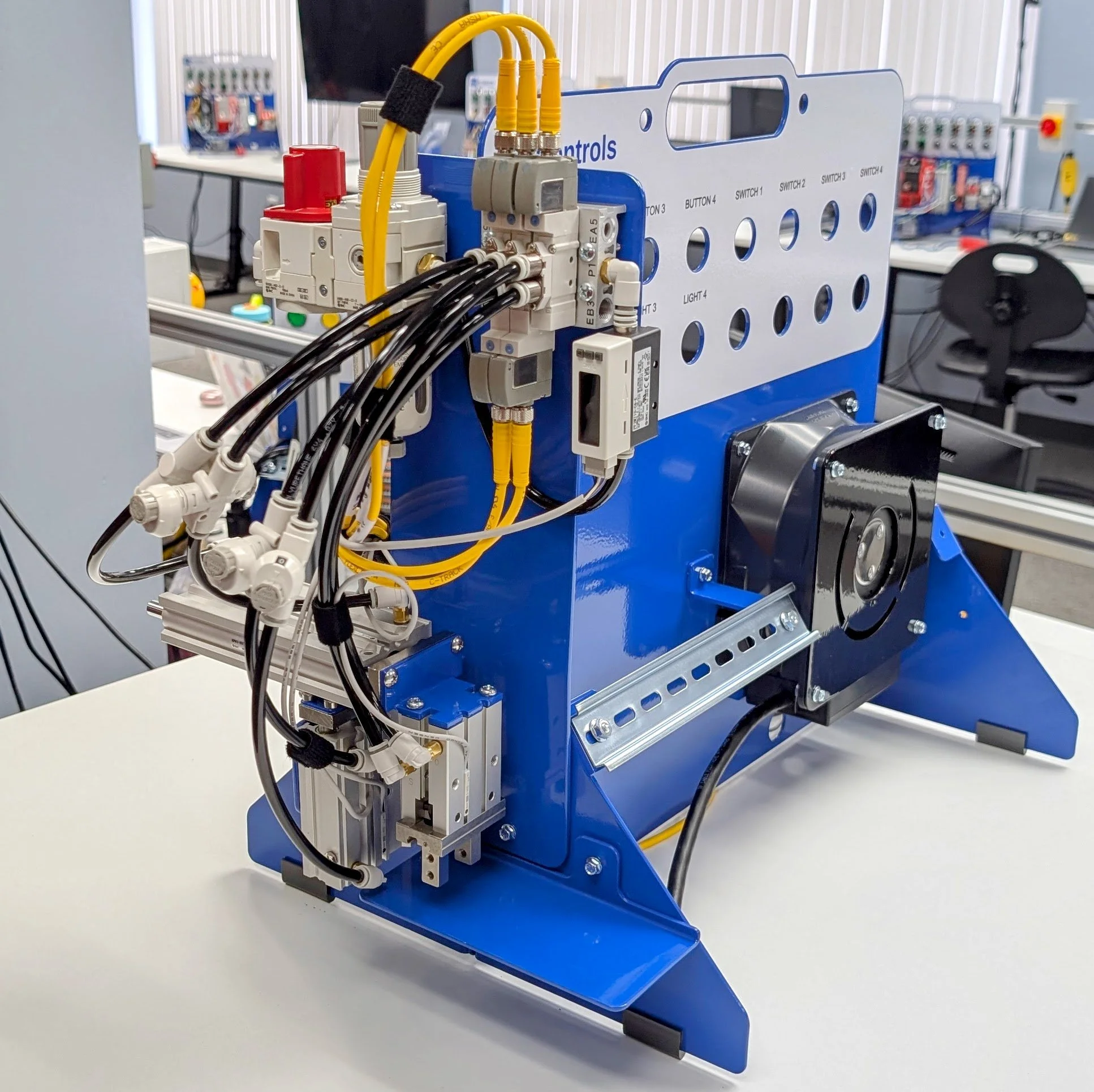 Image 4 of 5
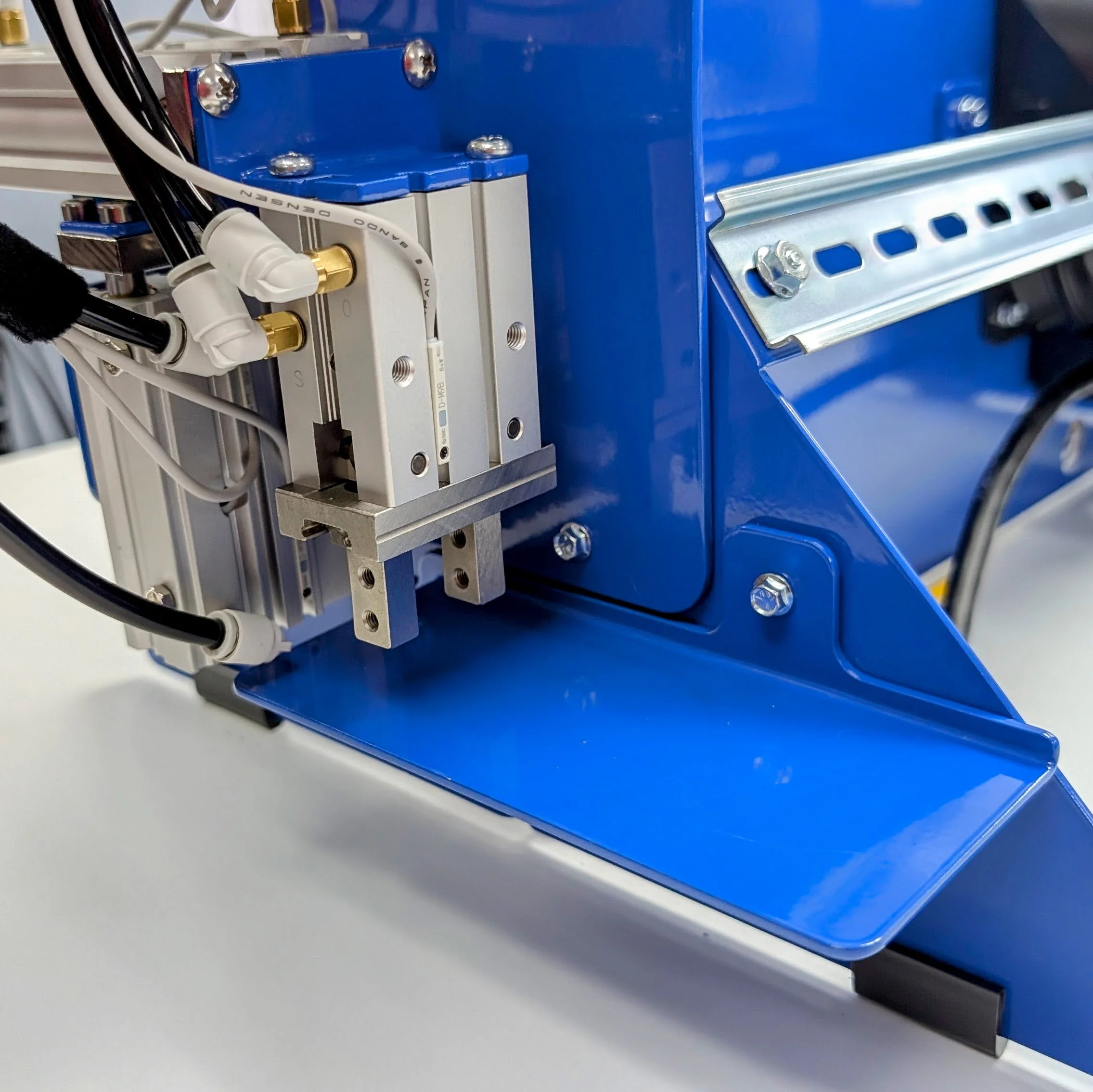 Image 5 of 5
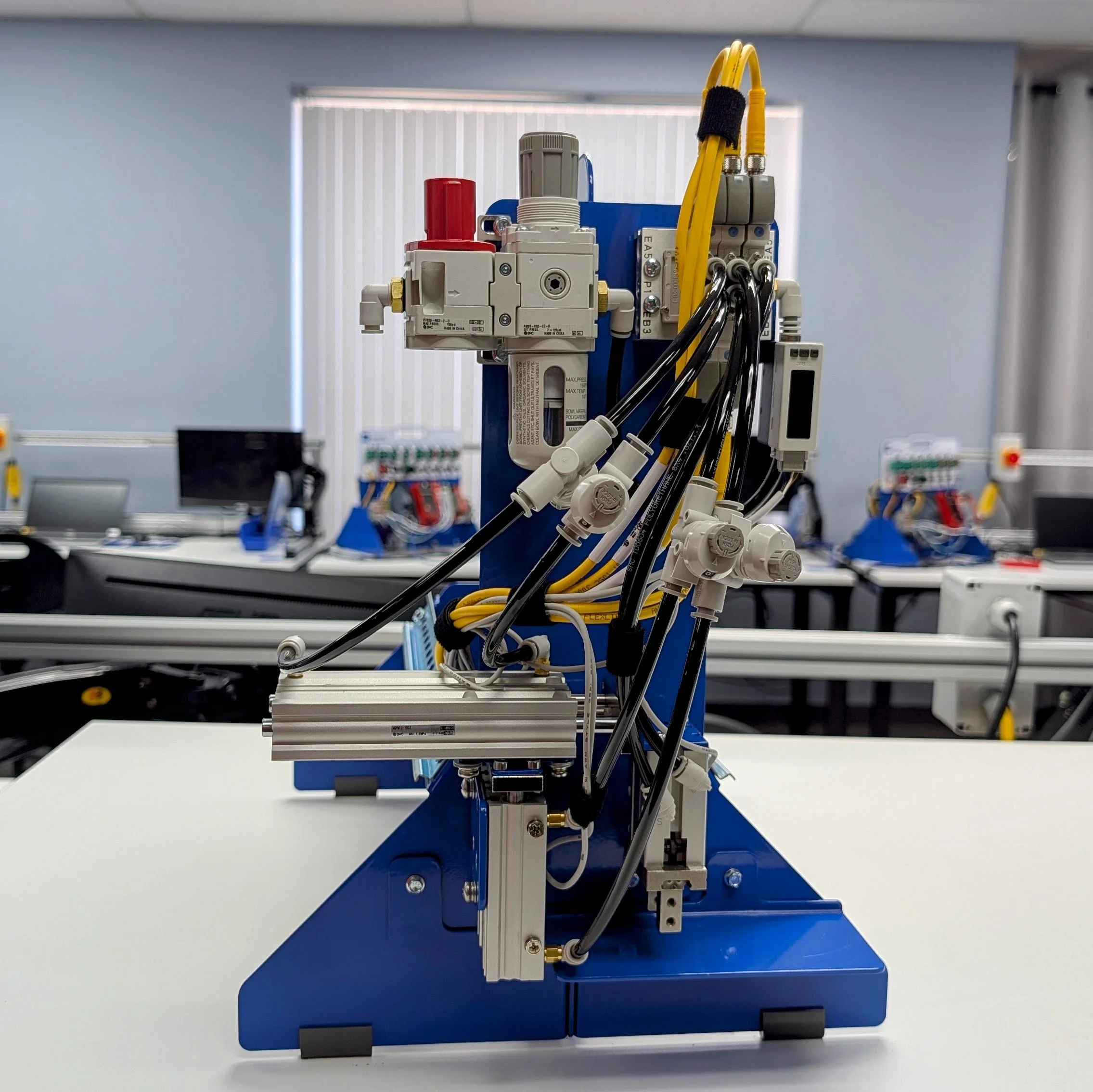
TW Controls Precision 2-Axis Pneumatic Training Station
This industrial-grade trainer is a high-performance X-Z axis pick-and-place module designed for technical education and rapid prototyping. Built with authentic industrial components, it provides a realistic platform for learning pneumatic sequencing, sensor calibration, and solenoid valve integration.
Core Capabilities
Dual-Axis Pick and Place: Features a horizontal slide for extension and a guided vertical lift for elevation, allowing for complex transfer cycles.
Mechanical Gripping: Equipped with a professional-grade pneumatic gripper, ideal for teaching form-fit and friction-fit part handling.
Energy Consumption Monitoring: Includes an integrated Digital Flow Switch on the main line. This allows technicians to monitor real-time air usage, track accumulated flow, and learn leak detection—a critical skill for reducing factory operating costs.
Industrial Air Prep: Includes a complete Filter-Regulator (FRL) assembly to ensure clean, consistent air pressure for all components.
Integrated Safety: Features a dedicated manual lockout (LOTO) valve, providing a vital training point for industrial safety and energy isolation standards.
Feedback-Ready: The cylinders include mounting slots for magnetic reed switches, enabling closed-loop control and "end-of-travel" logic via a PLC.
System Requirements & Compatibility
I/O Requirements: The station requires 6 Digital Inputs (for cylinder and gripper position sensors) and 5 Digital Outputs (to control the solenoid valve manifold).
Flexible Integration: It can be purchased as a factory-installed option on any new TW Controls PLC Trainer or as an add-on for TW Controls units you already own.
What You Can Do With This Trainer
Program Automated Sequences: Practice writing Ladder Logic to control a complete "Pick, Move, and Place" routine.
Optimize Cycle Times: Experiment with flow controls to find the balance between high-speed production and mechanical longevity.
Calculate Operating Costs: Use the digital flow meter to determine exactly how much money in compressed air a specific automated process costs over a simulated shift.
Troubleshoot Industrial Faults: Simulate common field issues like clogged filters, leaking seals, or misaligned sensors to build diagnostic confidence.
Master Safety Protocols: Perform authentic Lockout/Tagout procedures during maintenance simulations to reinforce workplace safety habits.